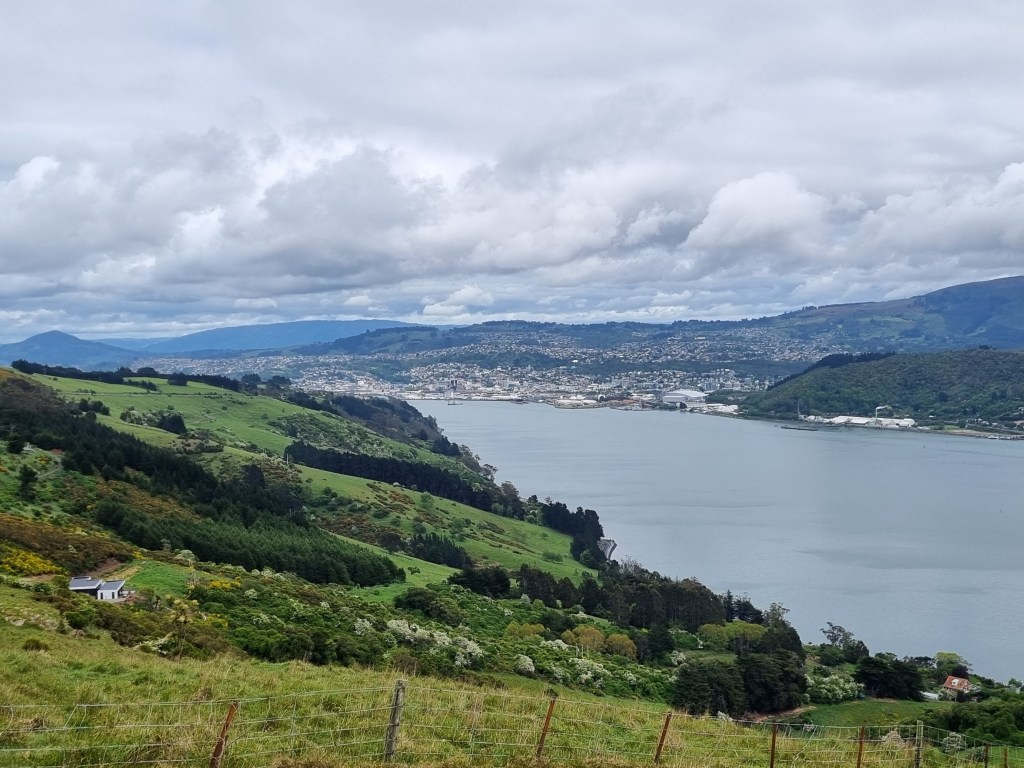
Leaving Oamaru behind, we headed south to Dunedin. It’s around a 90 minutes drive along State Highway 1, with farmland rolling along one side and the coast on the other, until turning inland. As we approached the city, the hills began to close in forming a backdrop, and you could see the harbour between buildings.
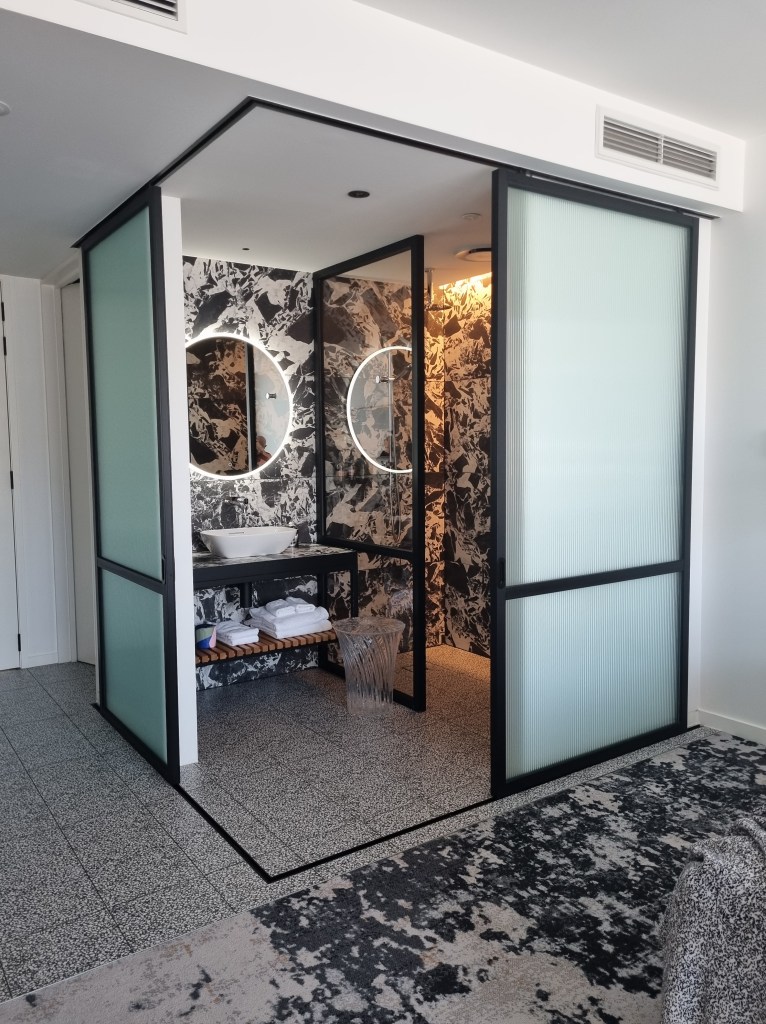
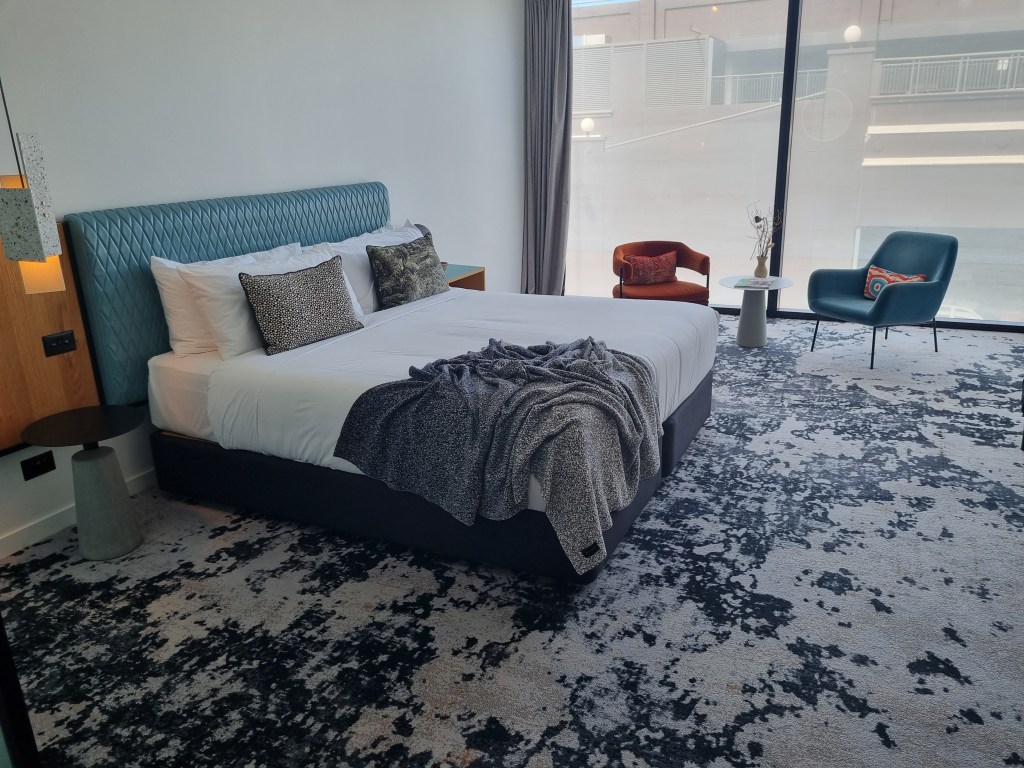
We chose to stay at the Ebb-Dunedin. A funky modern boutique hotel that felt cosy and luxurious. It’s centrally located with a cafe downstairs and easy walking distance to many restaurants.
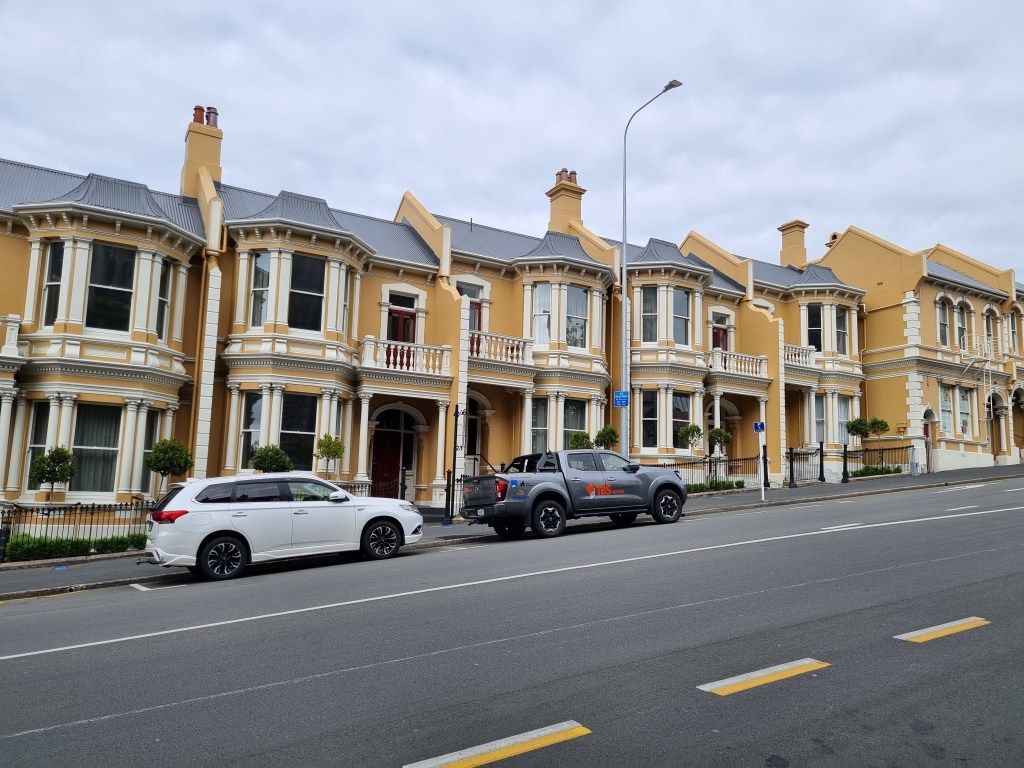
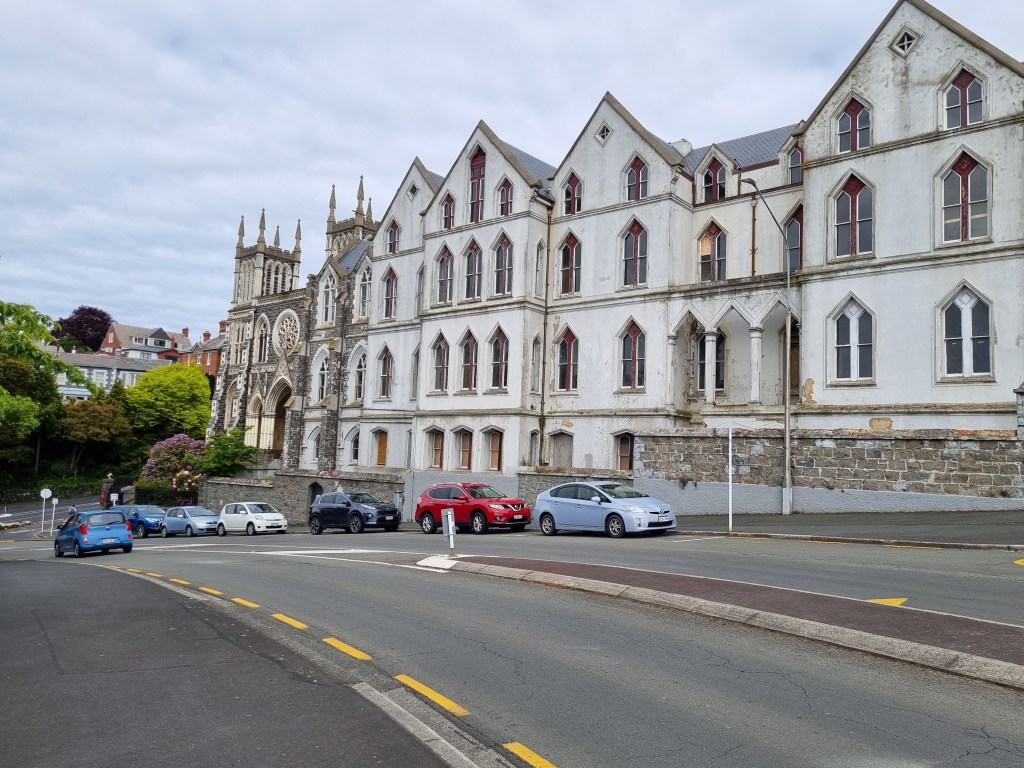
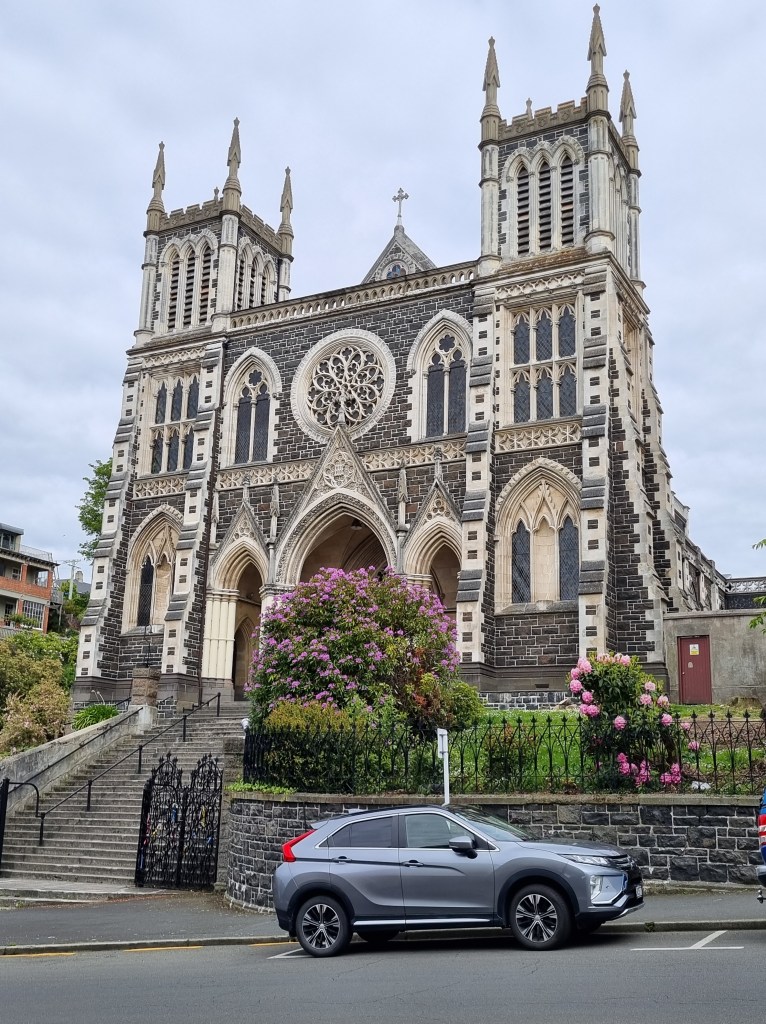
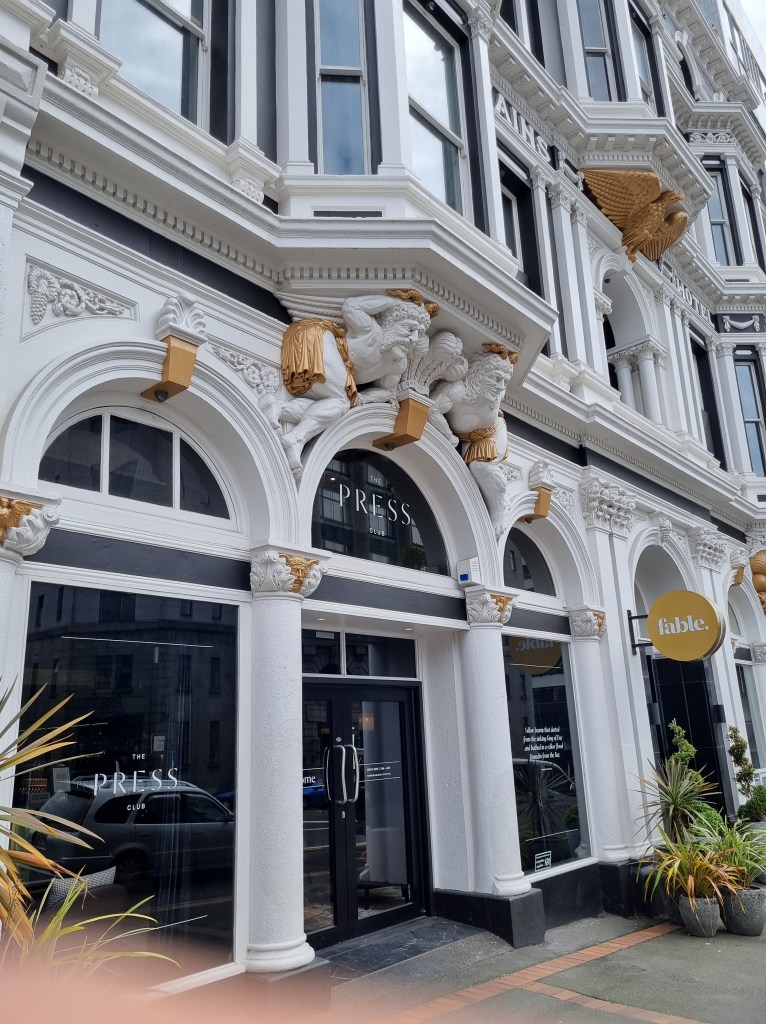
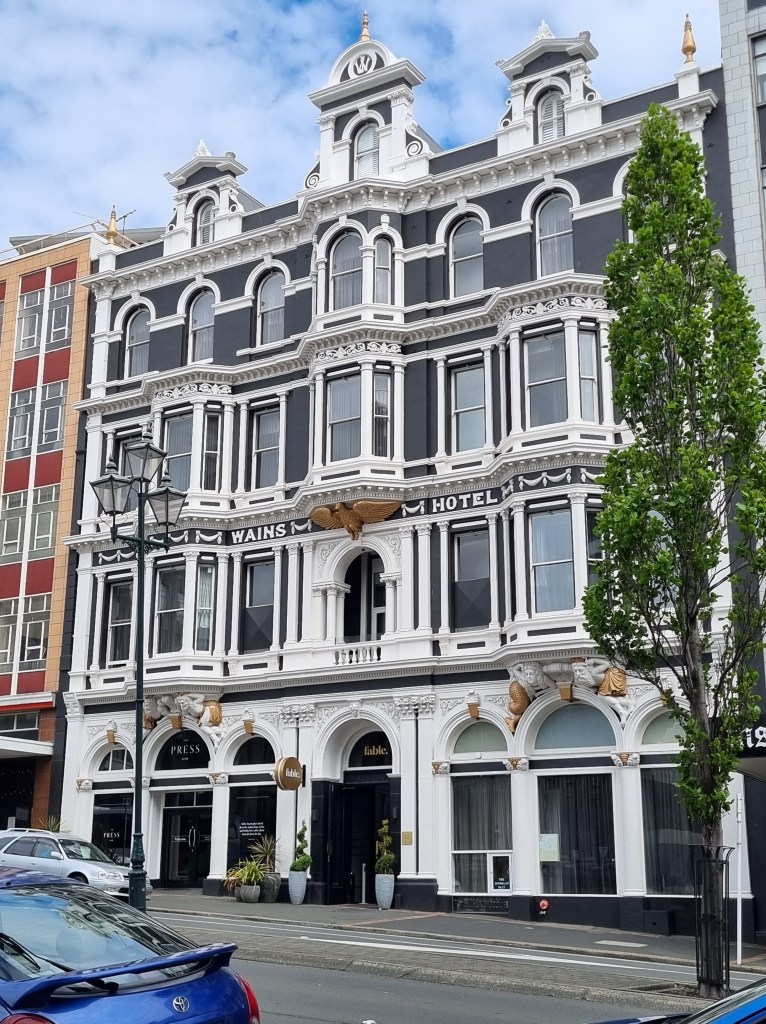
Driving into Dunedin you could see the strong Scottish heritage coming into view. Grand buildings with ornate facades, hints of Gothic and Edwardian influence lined the streets. This was a city shaped by 19th-century wealth and ambition of those settling here.
One thing we enjoy in a new city is walking the streets. This is the best way to get a feel for the history, the architecture, the people going about their usual days – the vibe. Dunedin is hilly in some areas boasting the “steepest street in the world” with Baldwin Street. We got a good workout!
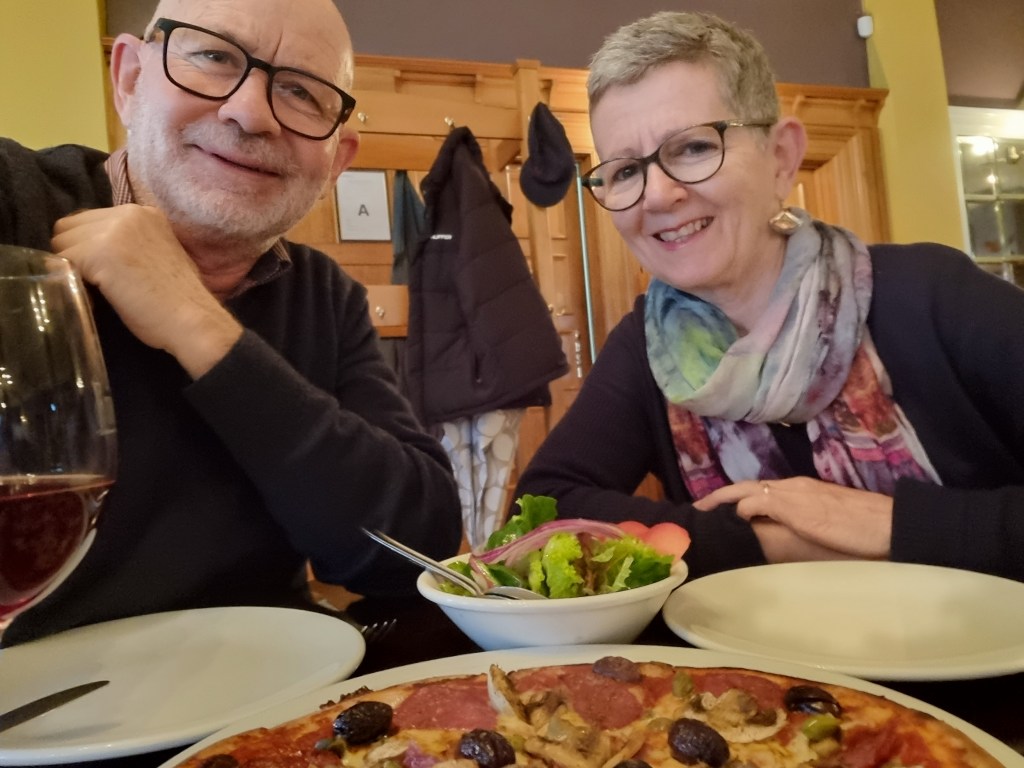
Friends had given us a high recommendation to eat at the Etrusco at the Savoy. It’s been a Dunedin institution since 1990, operating from the historic Savoy building and serving generous, traditional Italian food in a cosy setting enhanced with stained glass windows, warm ambient lighting and the inviting glow of a fireplace in winter. It was cold outside and the fireplace was blazing. Nothing fancy tonight – pizza and salad was perfect for our first dinner in Dunedin.

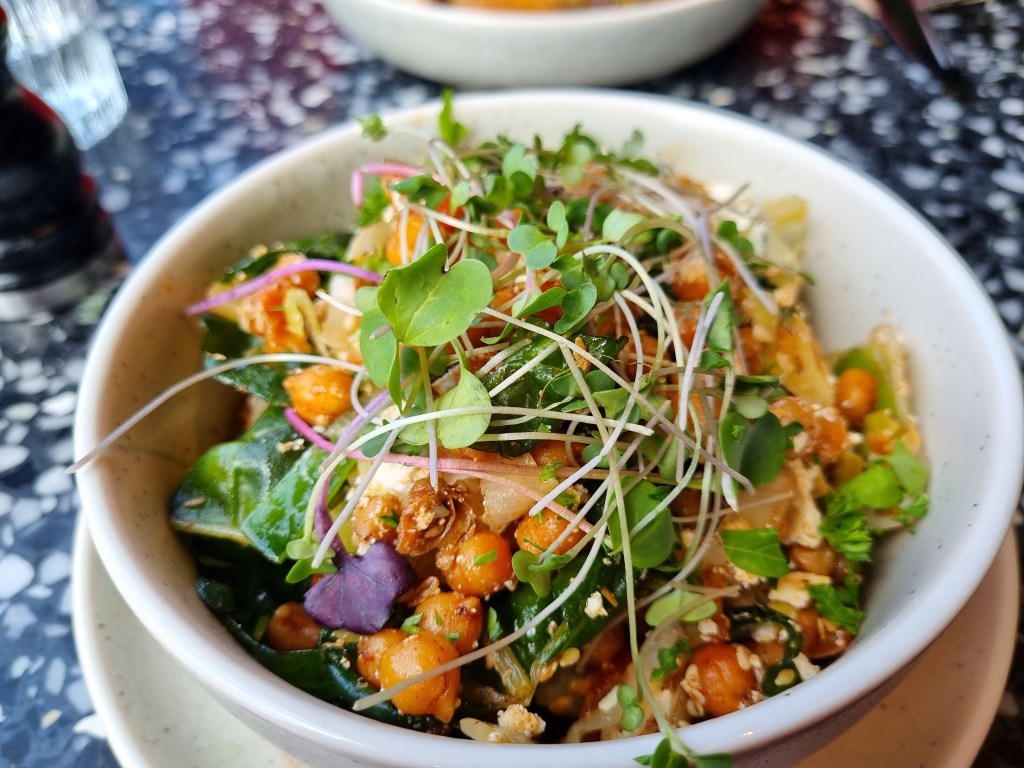
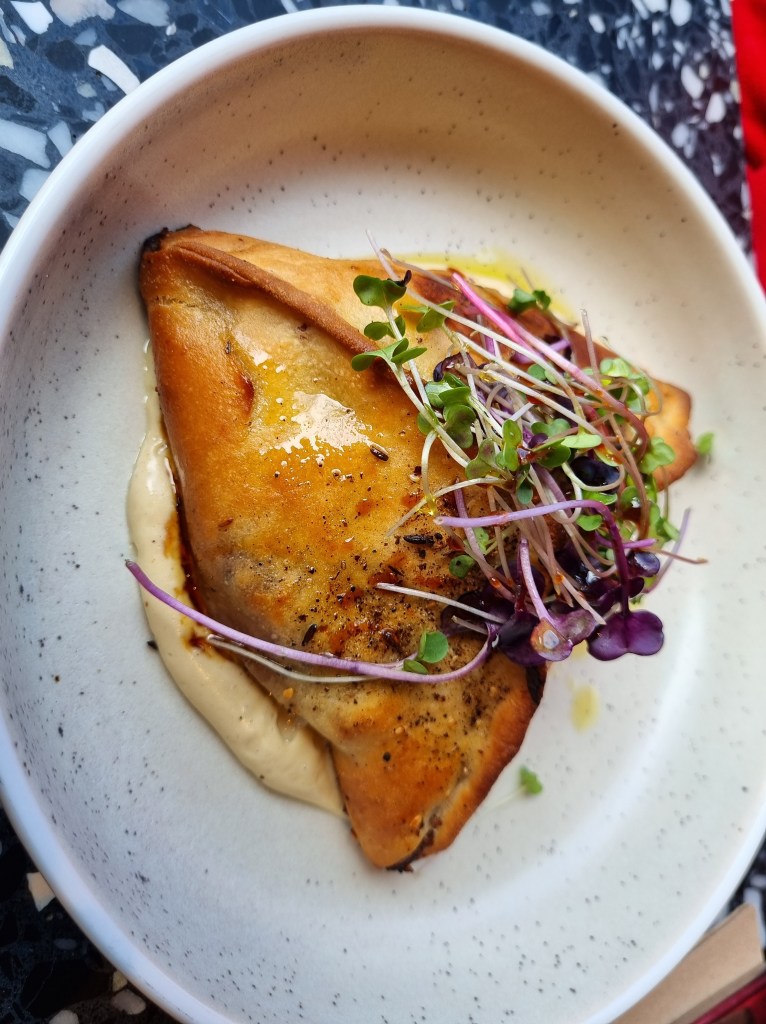
One eating choice we often make when discovering a city, is making lunch our main meal. That frees us up for a small snack in the evening because when you’re travelling eating out for all meals can be hard on your digestion as well as your metabolism. We enjoyed this deliciously healthy meal for lunch at Ebb-Kitchen attached to our hotel – a chickpea salad with a fancy pastry filled with meat.
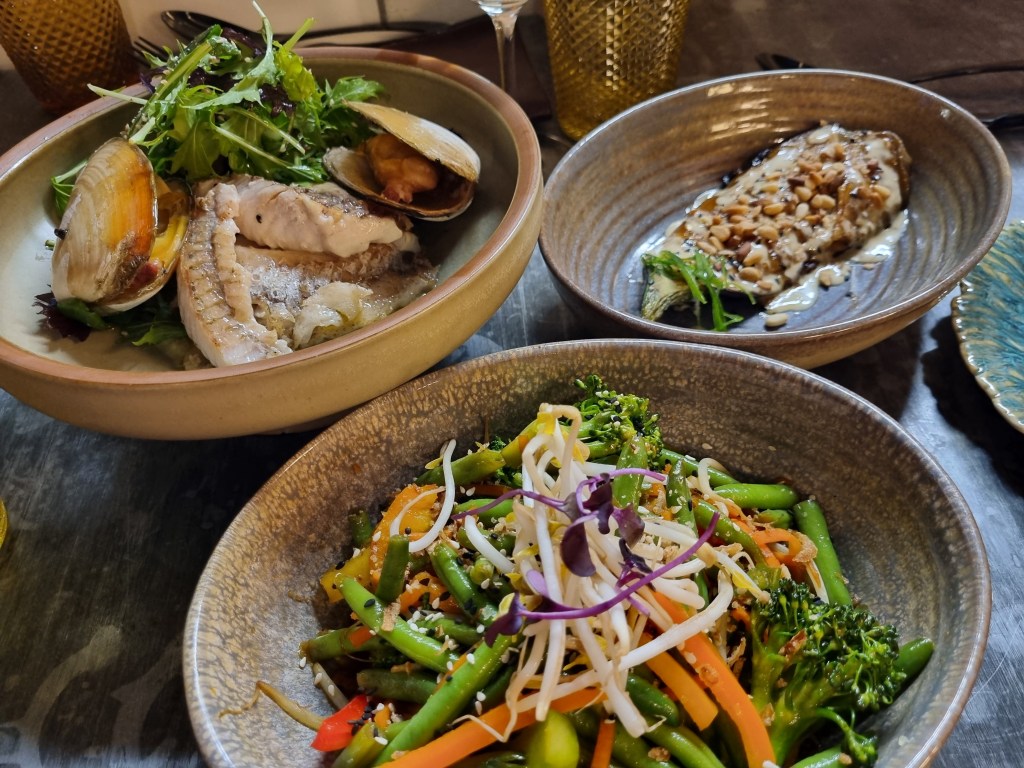
If planning to eat out at night, lunch is often very light. Another night, we left room for a bigger meal, dining at Vault 21, a restaurant that Jeff had scoped out, reviews were great and we were looking forward to this dining experience. They serve contemporary asian fusion food that didn’t disappoint.
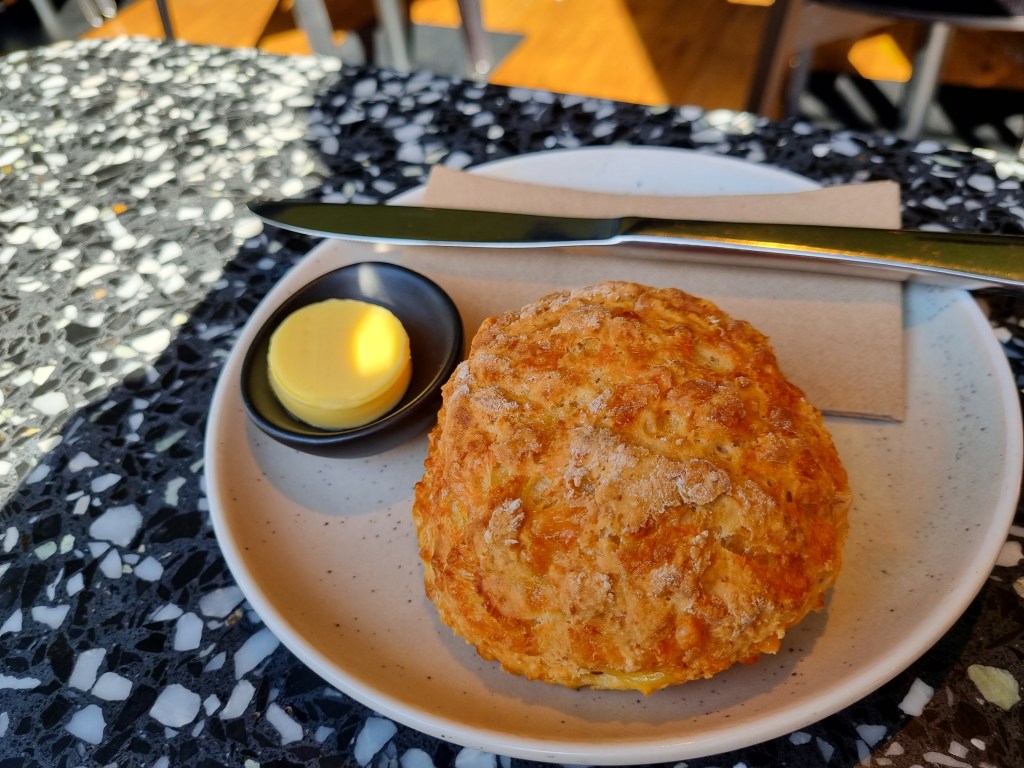
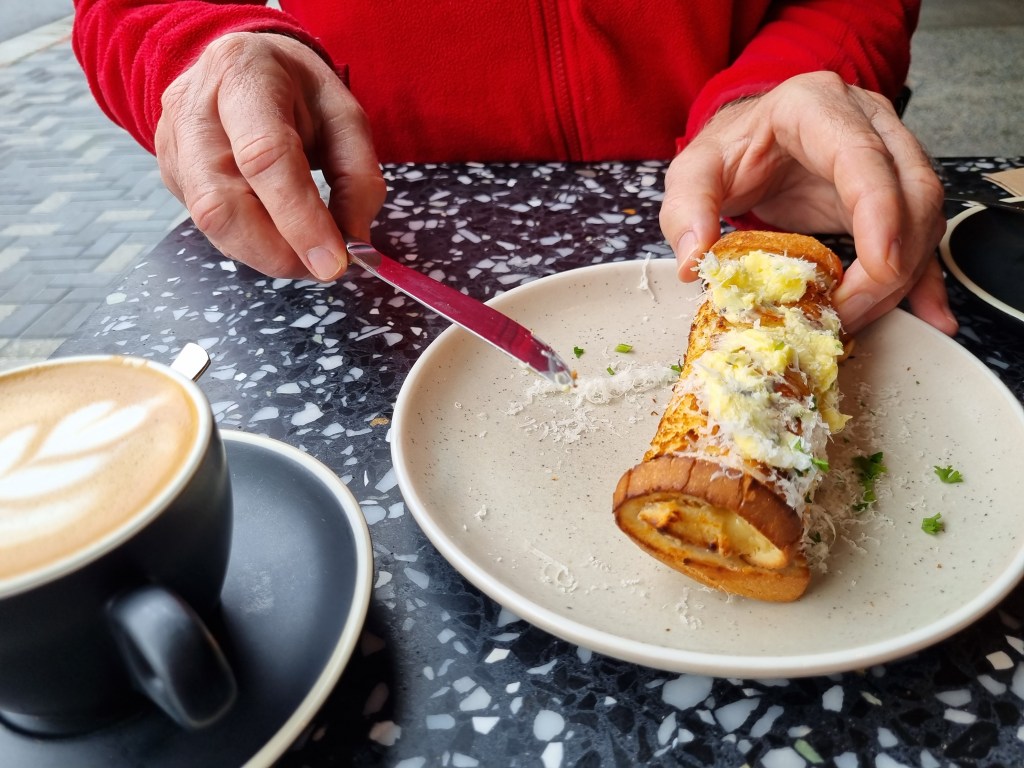
New Zealanders love their cheese! On the South Island, Cheese Scones and the famous Cheese Roll are in most cafes. Of course, we had to try them. Thumbs up for both.
Dunedin Street Art
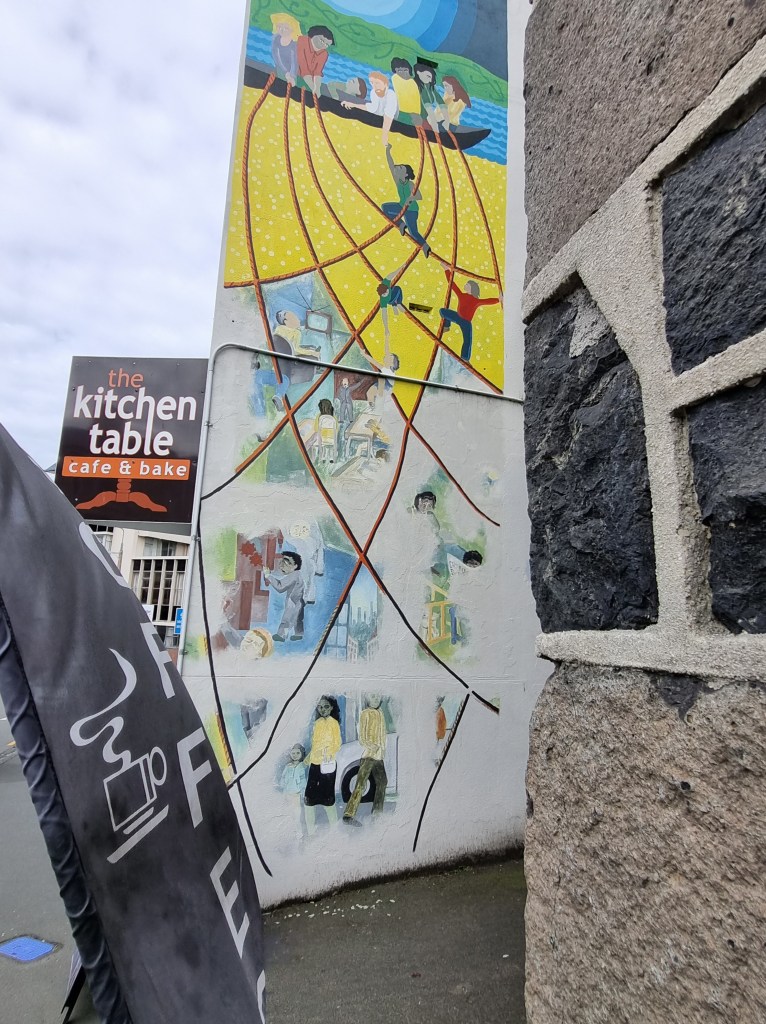
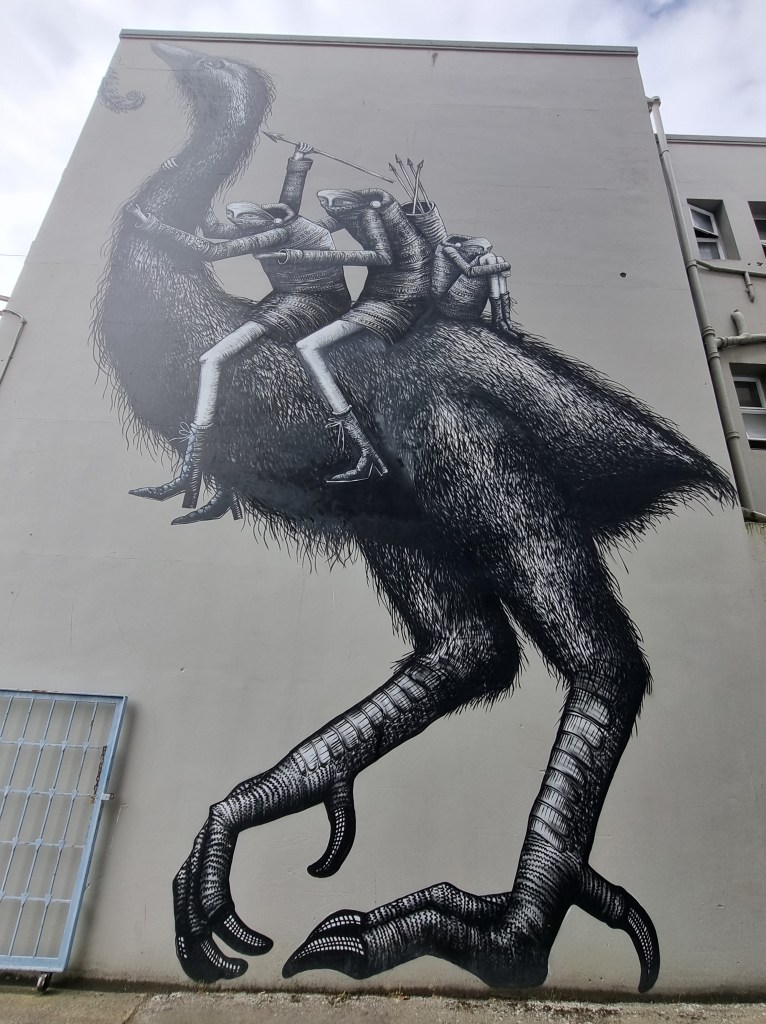
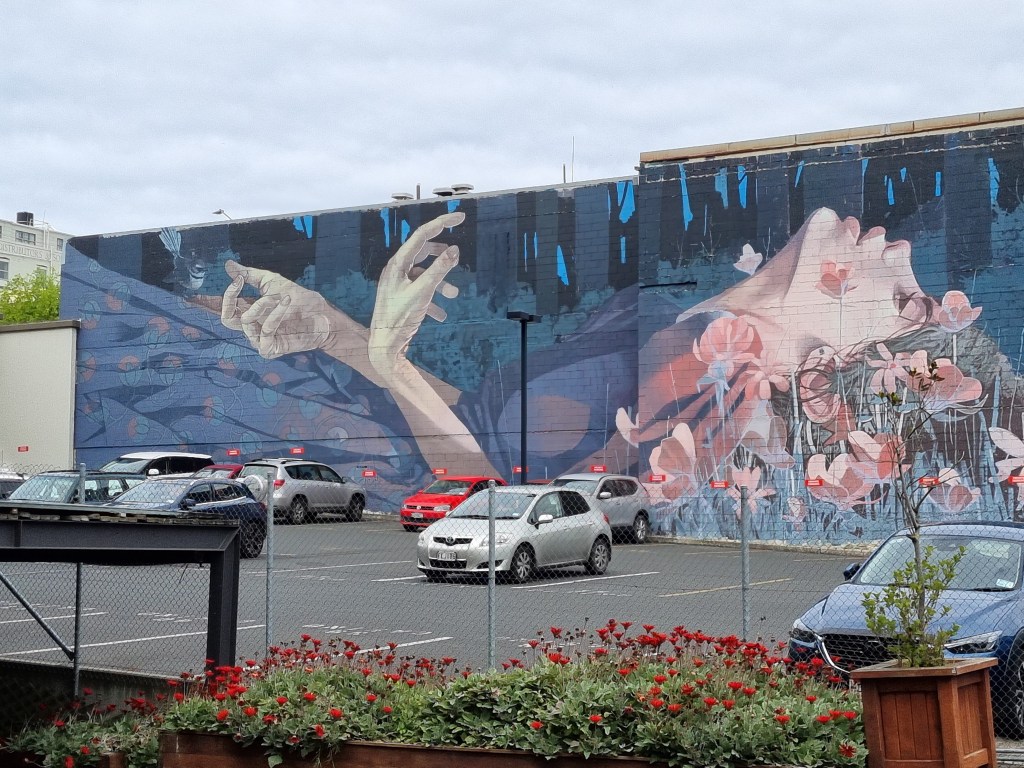
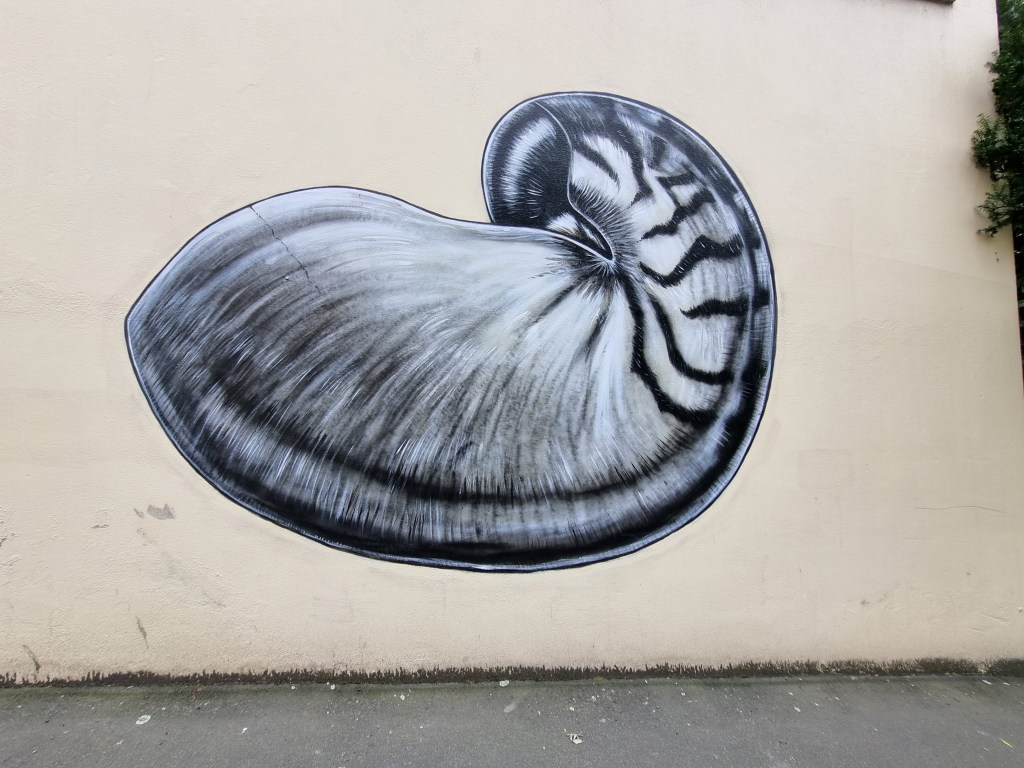
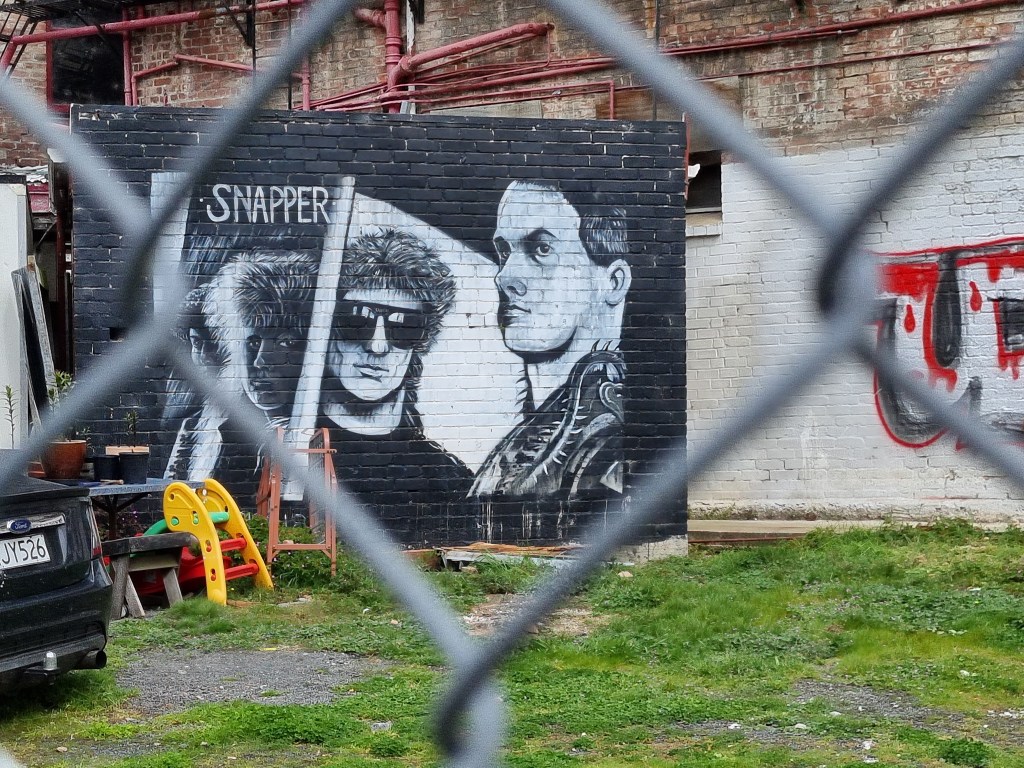
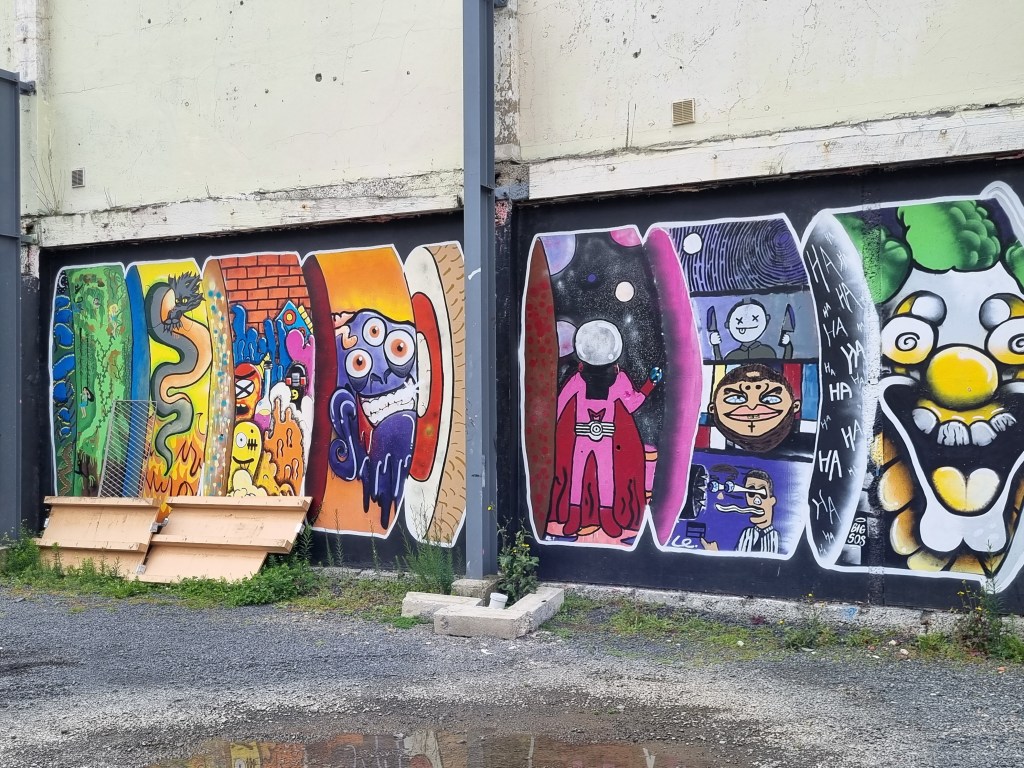
Dunedin has quietly become one of New Zealand’s street art capitals.
What began as a council-supported initiative to revitalise the central city evolved into something much bigger. In the early 2010s, international and local artists were invited to transform blank walls into large-scale murals. Instead of being tucked away, the works were bold and highly visible.
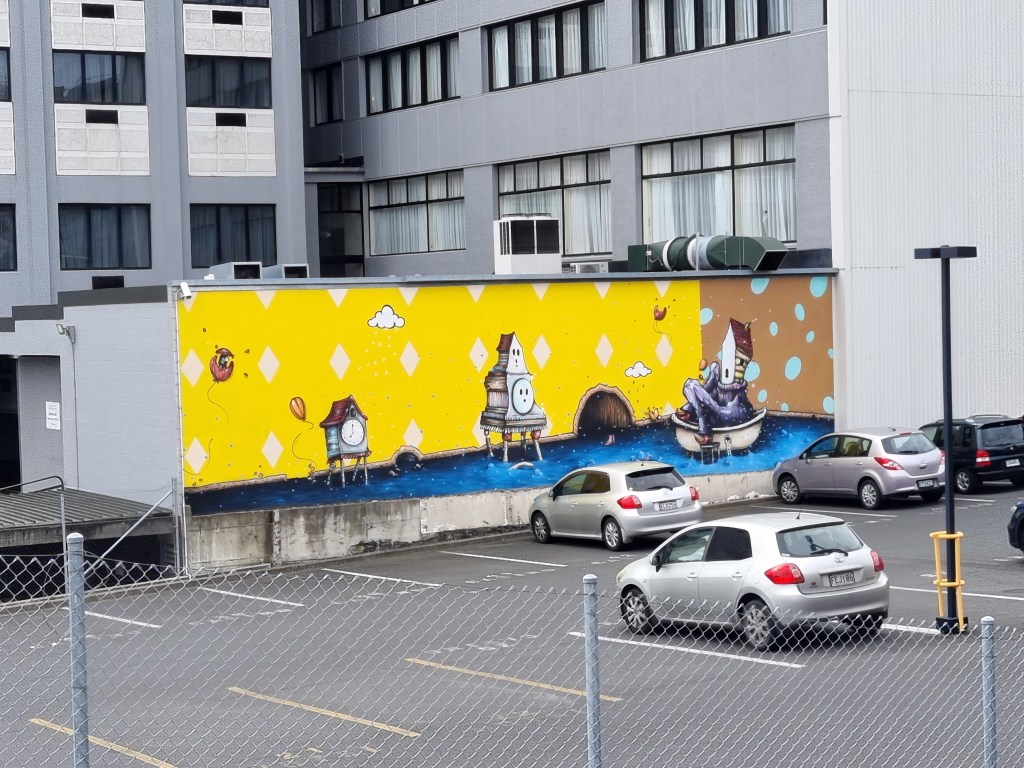
There’s an App called the Dunedin Street Art Trail where you can find the street art and downloadable map. But, it’s a lot of fun simply to walk the streets and be surprised as you turn a corner and there’s a towering face gazing down from brickwork. Here’s a sample we came across.


Larnach Castle
A trip to Dunedin wouldn’t be complete without a day at Larnach Castle. The drive from Dunedin out to the Otago Peninsula along the coast is roughly 30–40 minutes, taking you over green hills, farmland and coastal cliffs, with sweeping views of the bay.
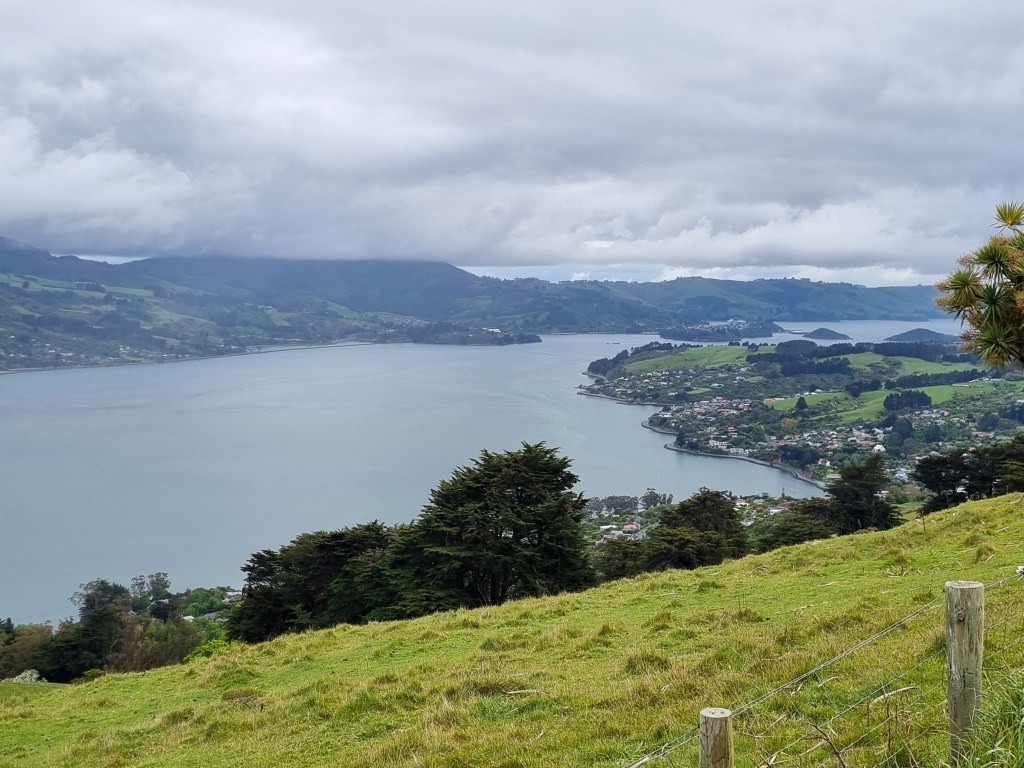
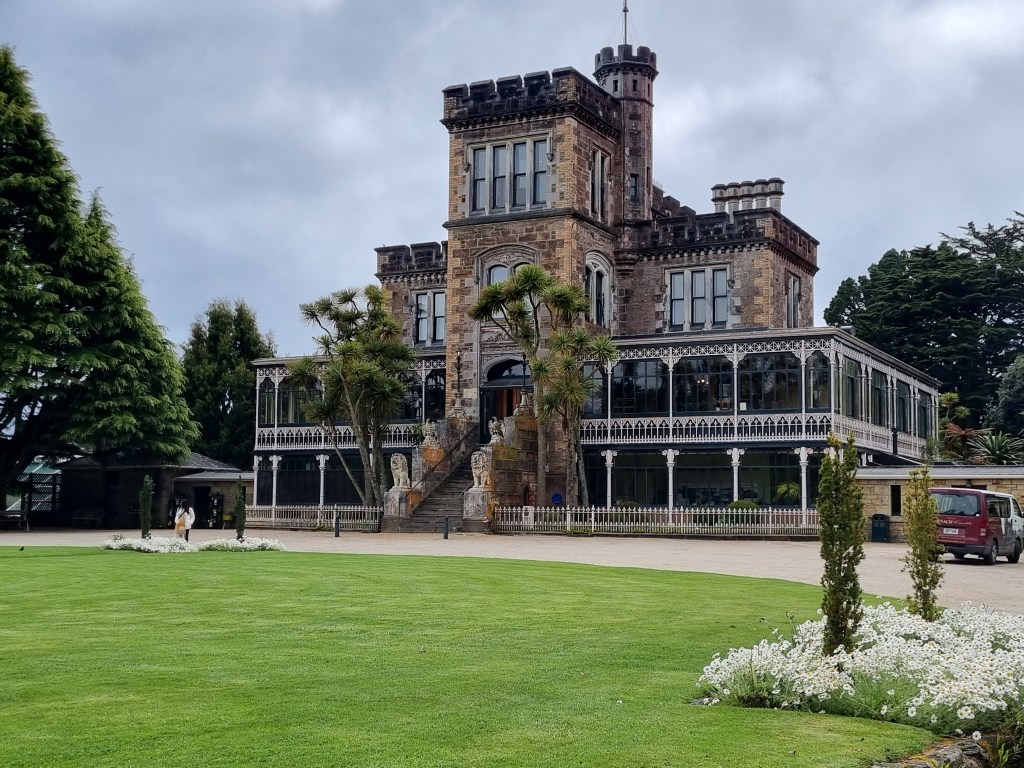
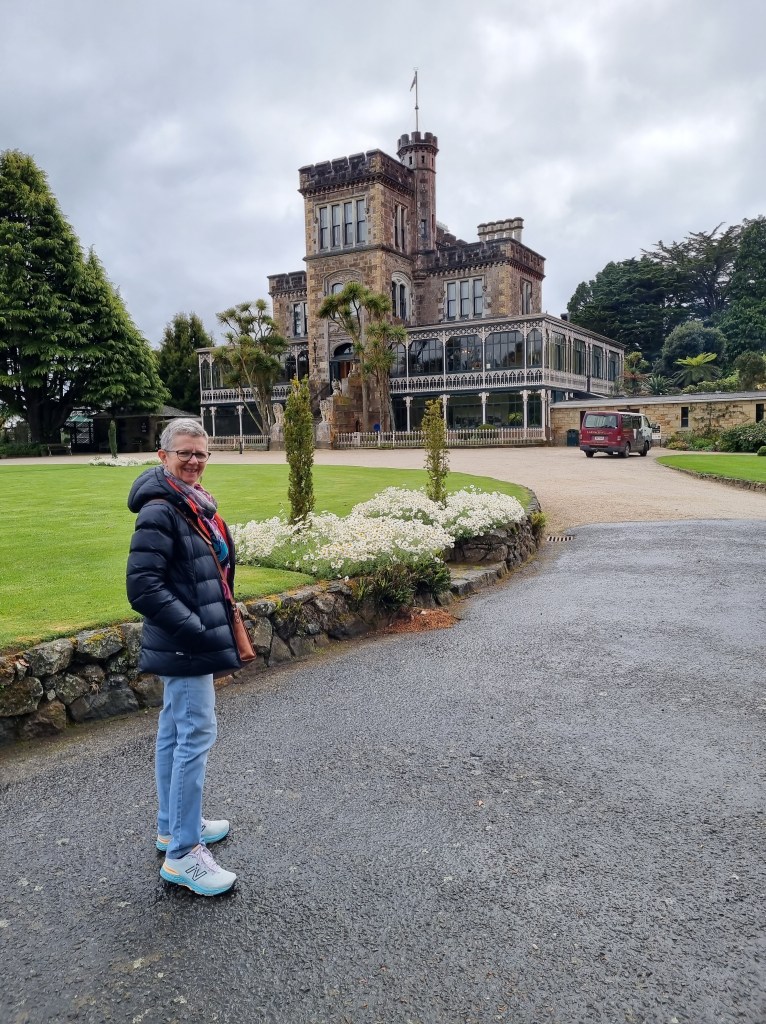
Perched high on the Otago Peninsula overlooking the harbour, Larnach Castle is New Zealand’s only castle and it carries a scandalous and dramatic story. Built in 1871 by the prominent merchant, politician and banker William Larnach, the castle was intended as a grand family home. European craftsmen were brought in for its intricate interiors, and materials were sourced globally at great expense.
But the Larnach family story was marked by tragedy and financial hardship, and after William Larnach’s death in 1898 the property passed through various owners and periods of decline. It wasn’t until the mid-20th century that the Barker family began an extensive restoration, gradually returning the castle to its former grandeur.
The gardens are a highlight, even on a rainy day. Spread across the surrounding hillside, they combine formal plantings, manicured lawns, woodland areas and sweeping viewpoints across the Otago Harbour. Recognised as a “Garden of International Significance”, they compliment the castle and offer a relaxing and gentle walk through all the different garden styles.
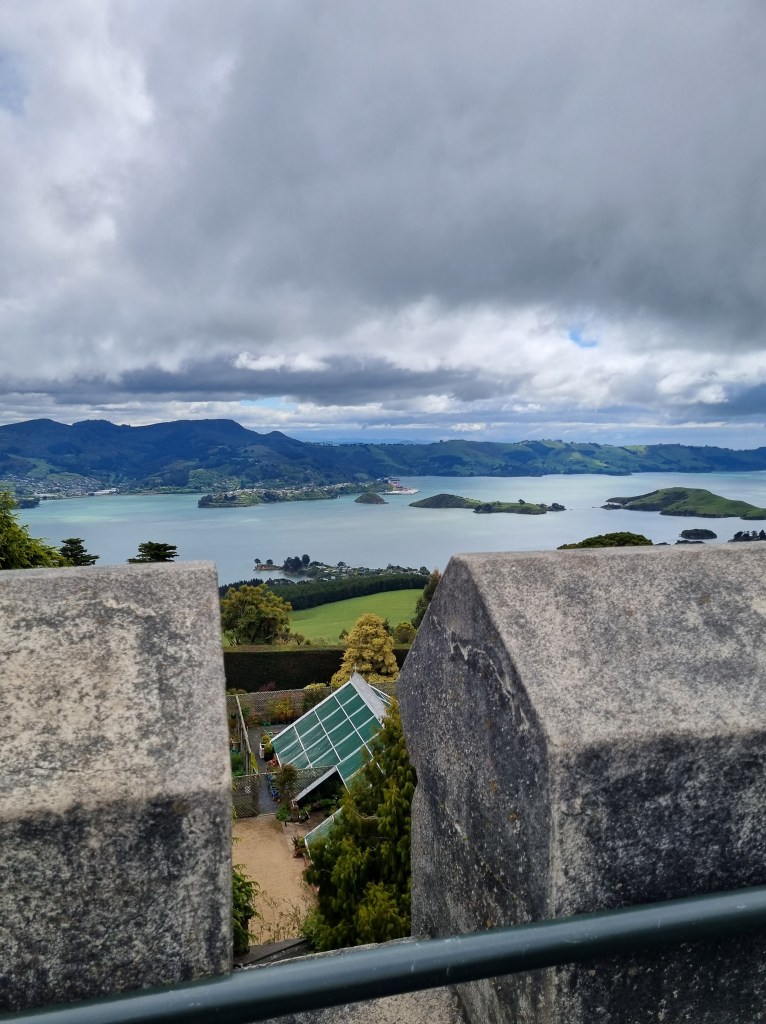
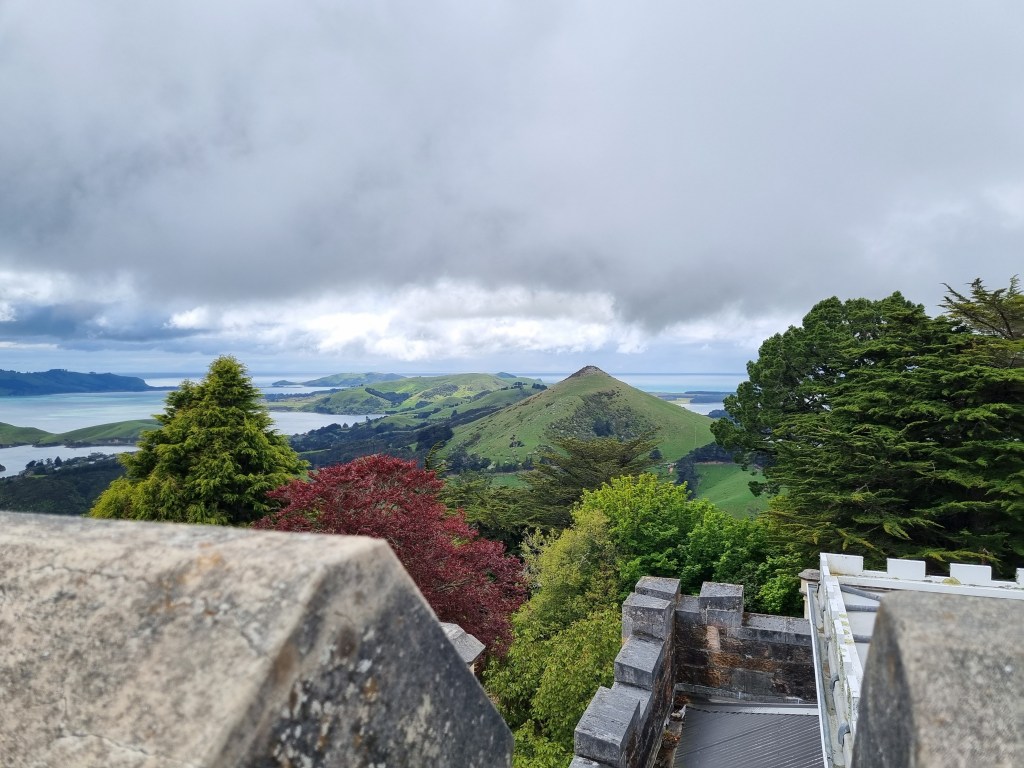
There’s also a café within the grounds. Set in the former ballroom, it’s a warm and welcoming space to pause for lunch.
Sandfly Bay Walk, Seal Point Road
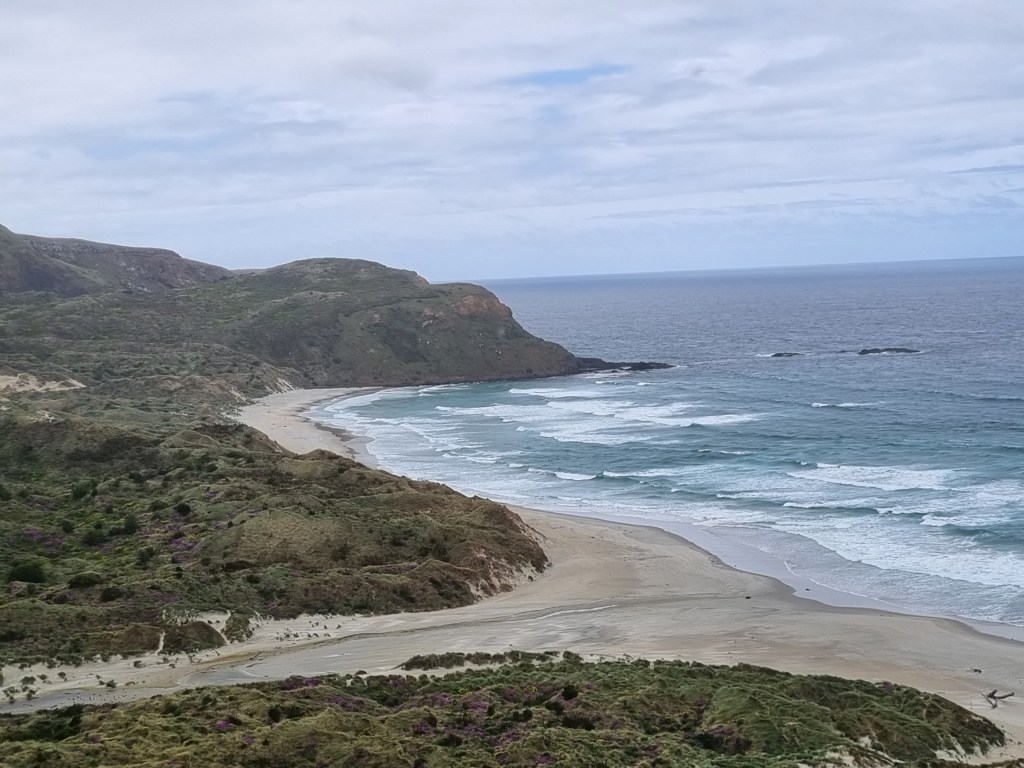
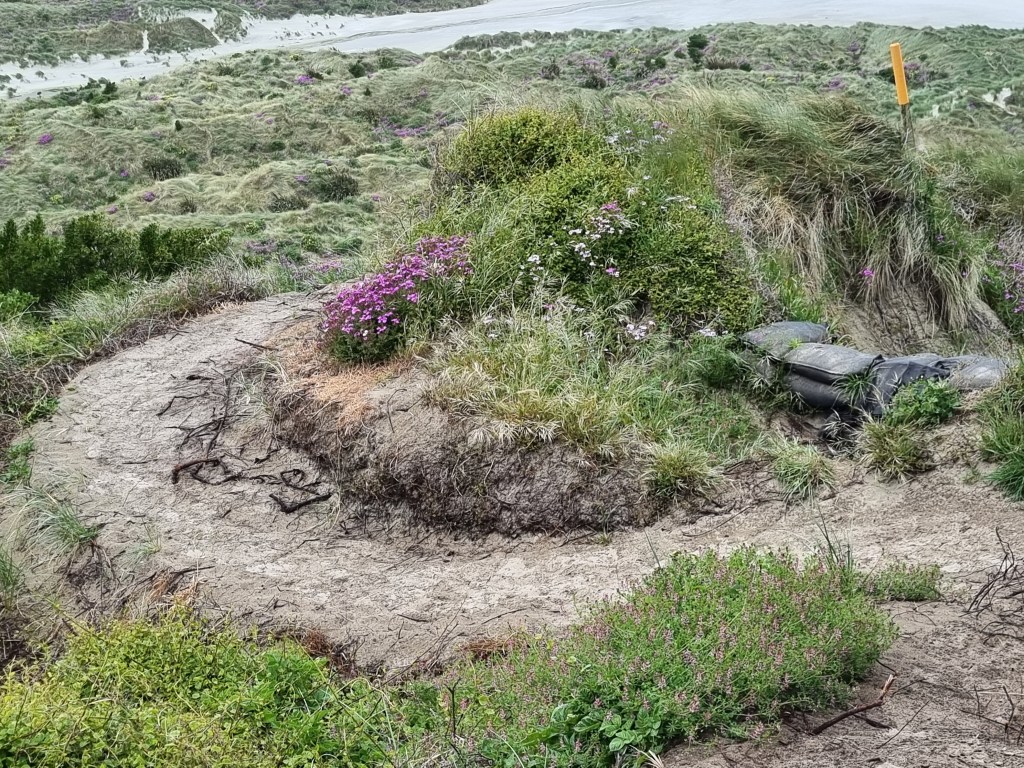
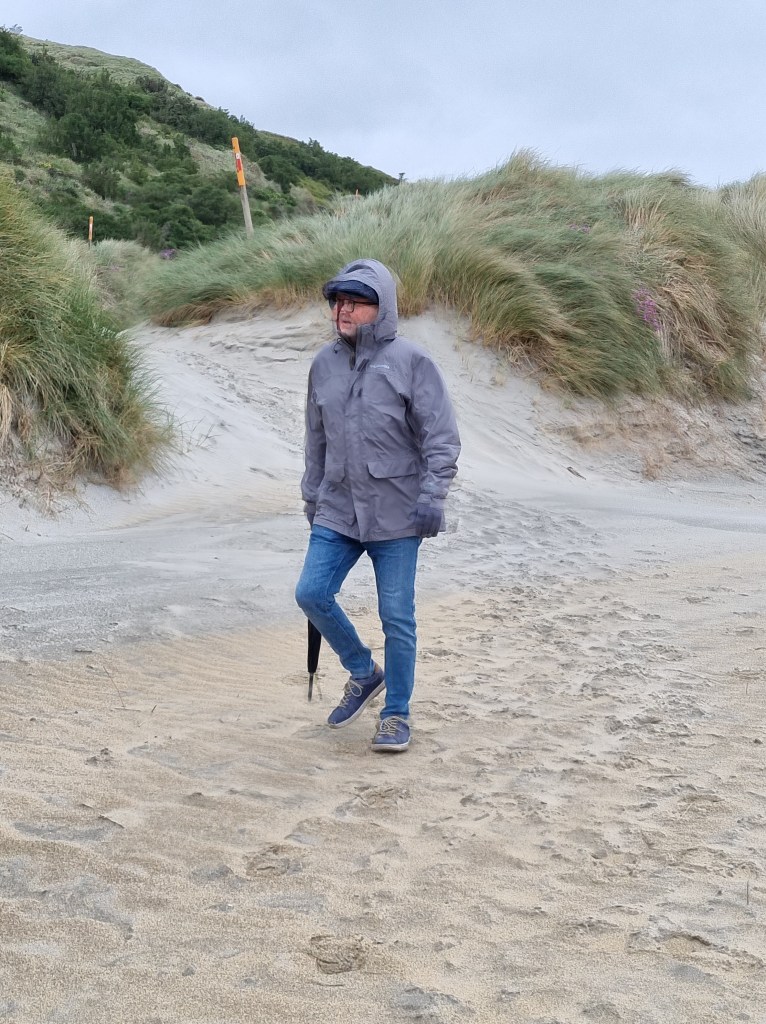
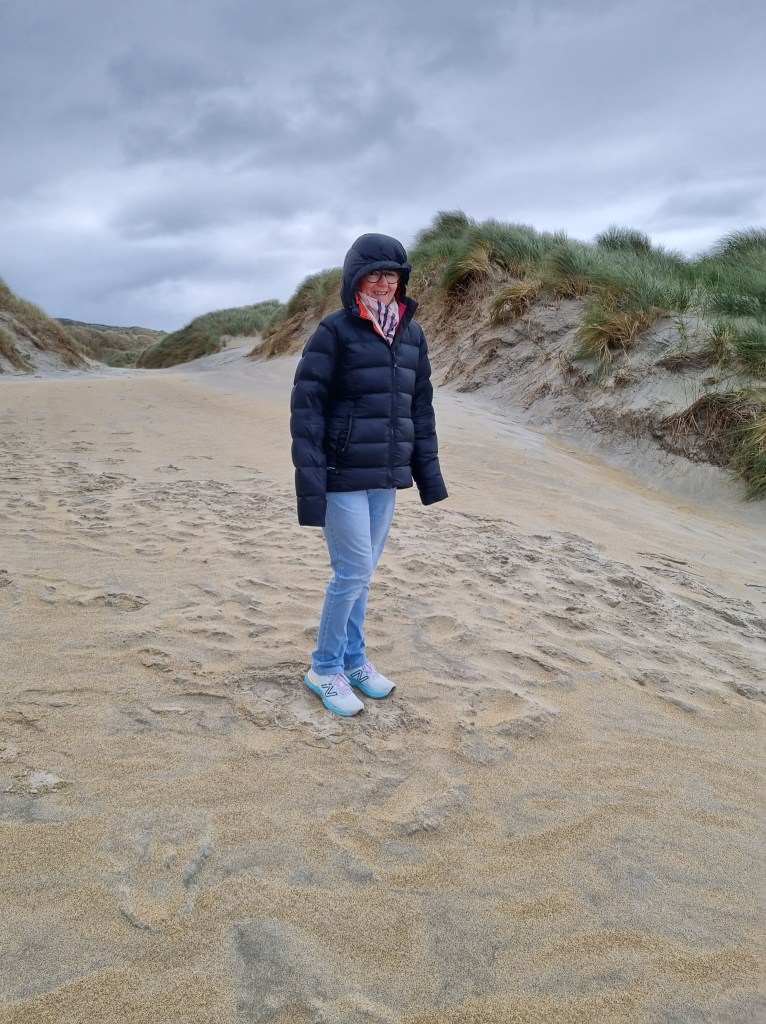
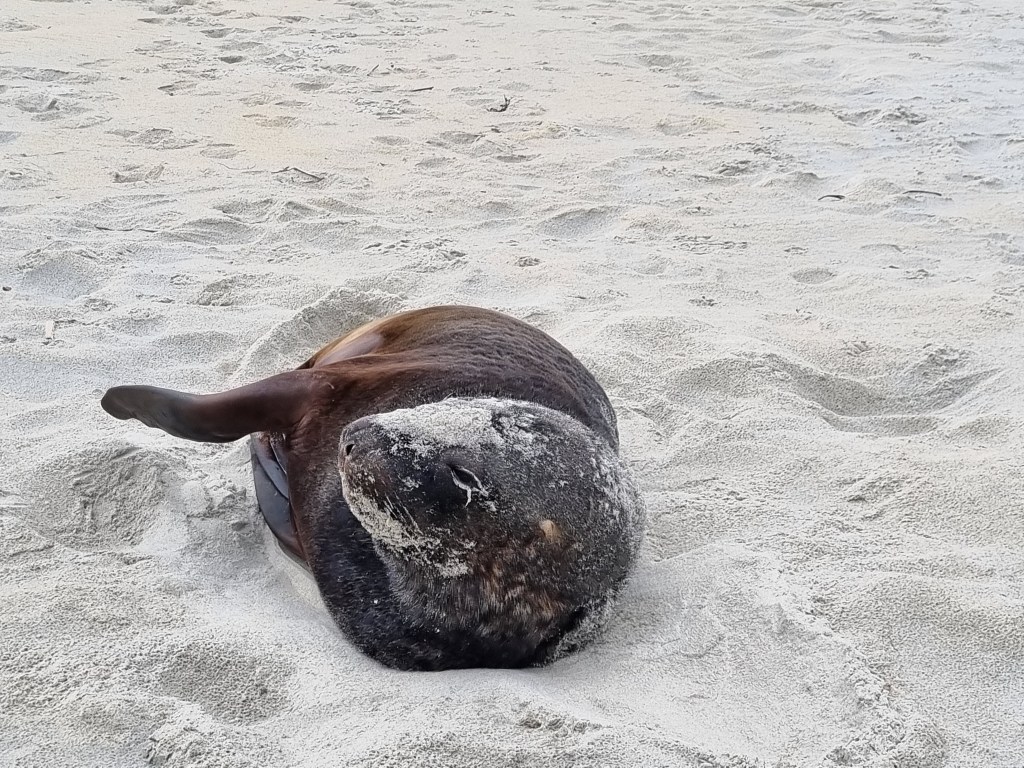
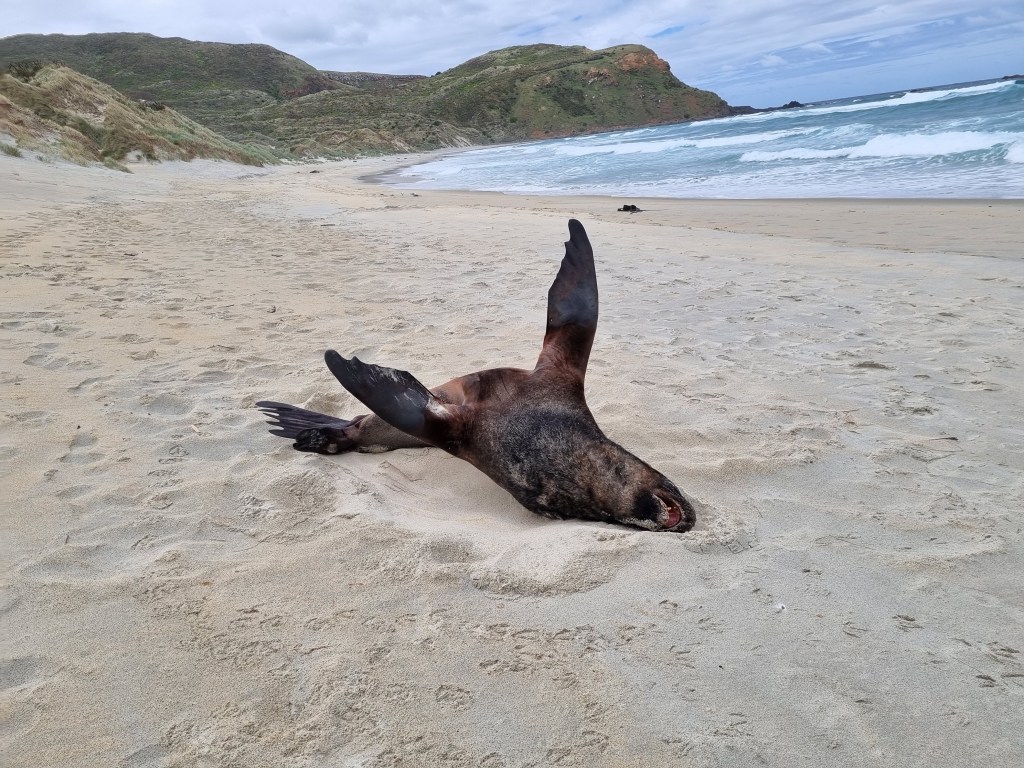
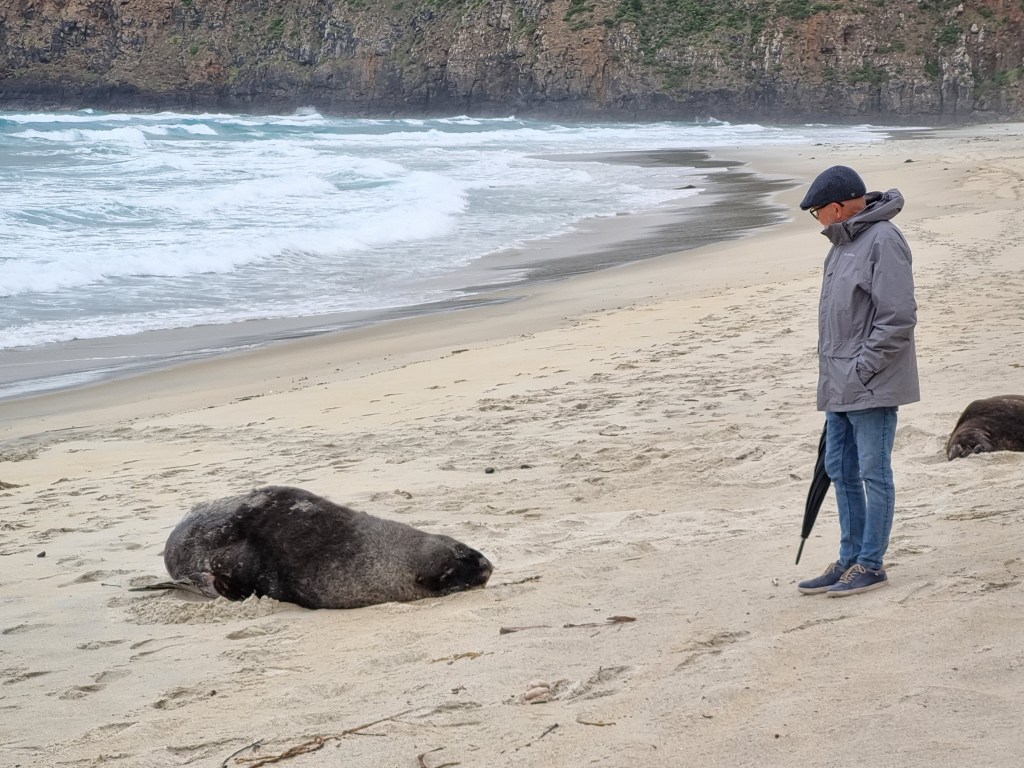
At Sandfly Bay off Seal Point Road, the steep walk down from the clifftop carpark drops you onto a wild, windswept beach where, despite the freezing air and biting coastal wind, sea lions and seals lie sprawled across the sand in complete indifference to our invasive human presence. They lay scattered about, mostly unmoving by either the weather or us.
Tunnel Beach Track, Blackhead
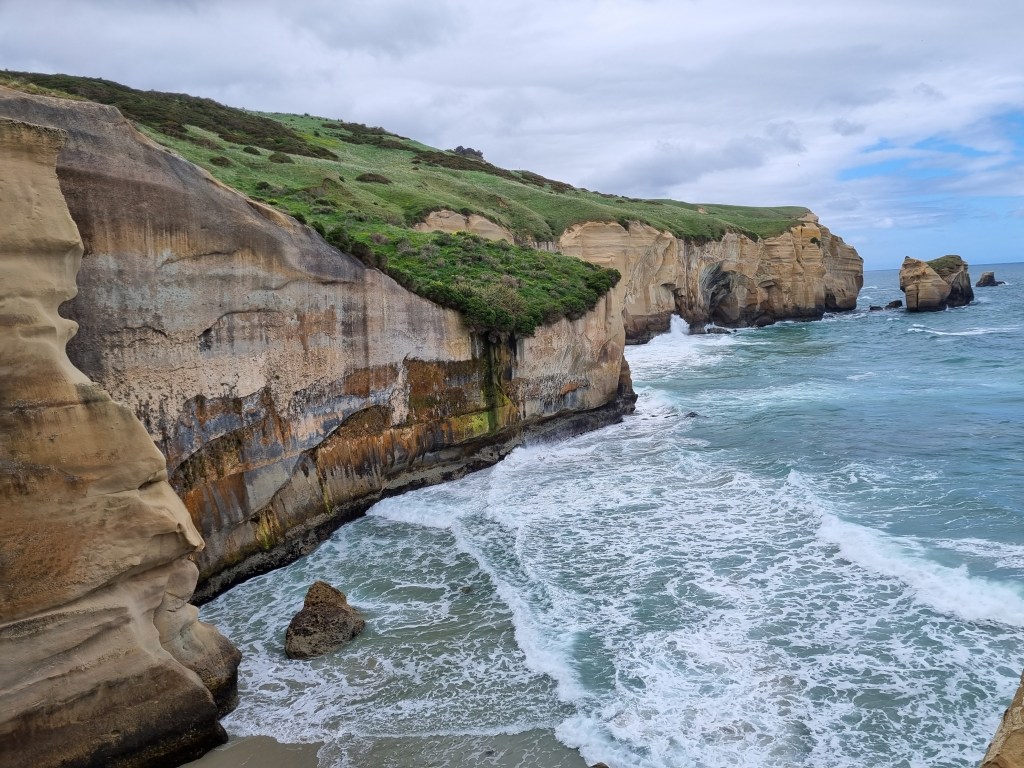
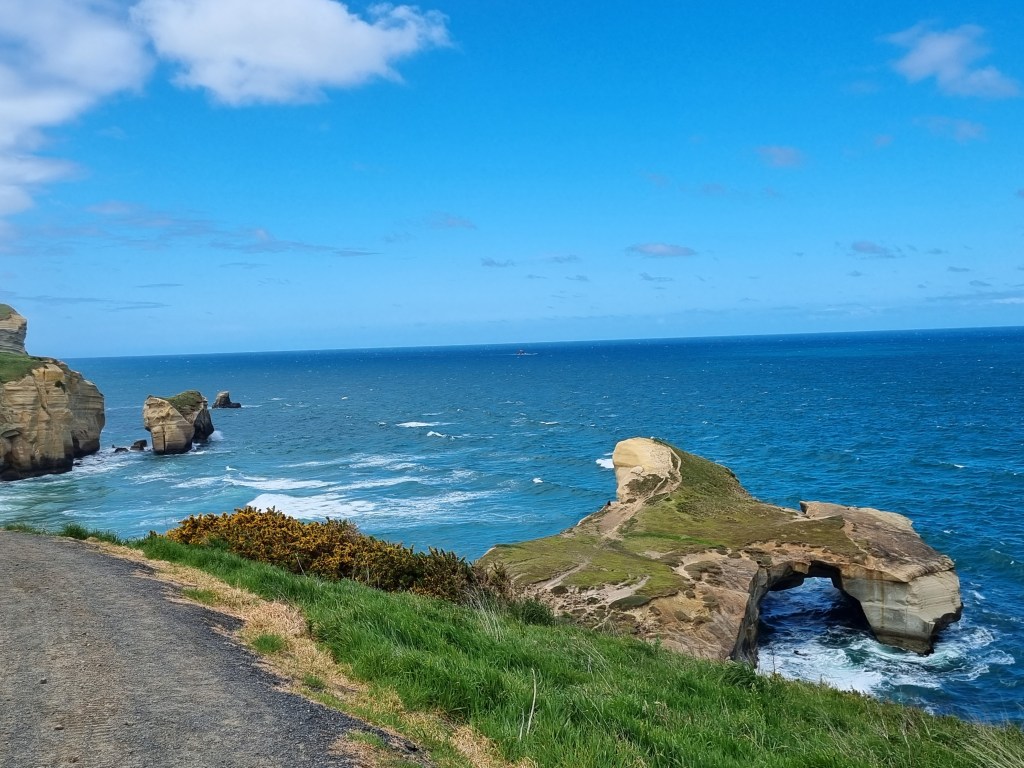
The Tunnel Beach Track is about 7–8 kilometres southwest of Dunedin, roughly a 15-minute drive from the city centre, making it an easy and very worthwhile destination. You can walk from the carpark, observing dramatic clifftops before descending through a hand-carved 19th-century tunnel to a secluded beach, where towering rock arches, sea-carved formations and the crashing Southern Ocean create one of Dunedin’s most striking coastal landscapes. It was awe inspiring and well worth the visit.
Despite the cold, we had a fabulous time in Dunedin and the surrounding sights. Leaving Dunedin’s brooding stone buildings, wild coastline and creative energy behind us, we packed up once more and headed south, ready to see what the next destination would bring.
Next stop – Invercargill.
Catherine & Jeff
 Food and Adventures Along the Way