It’s always a little sad when you’re nearing the end of a trip. Leaving Queenstown behind, we boarded our flight north for our final destination, enjoying the breathtaking views as the plane navigated the tricky ascent out of the valleys and peaks before leveling out over the Southern Lakes.
It’s a relatively short flight taking around one hour. Wellington’s harbour soon came into view – a cityscape sitting around the edge of a bay, framed by hills.
We were looking forward to a change of pace from the outdoors feel of the South Island, looking forward to the buzz and cosmopolitan feel of a city.
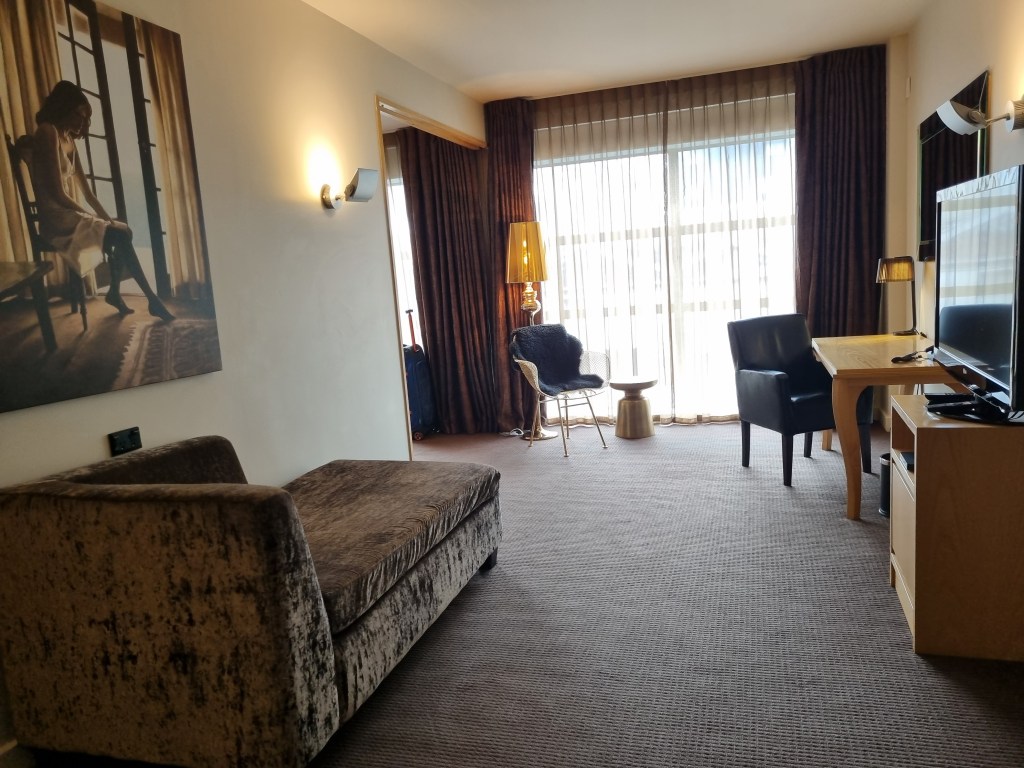
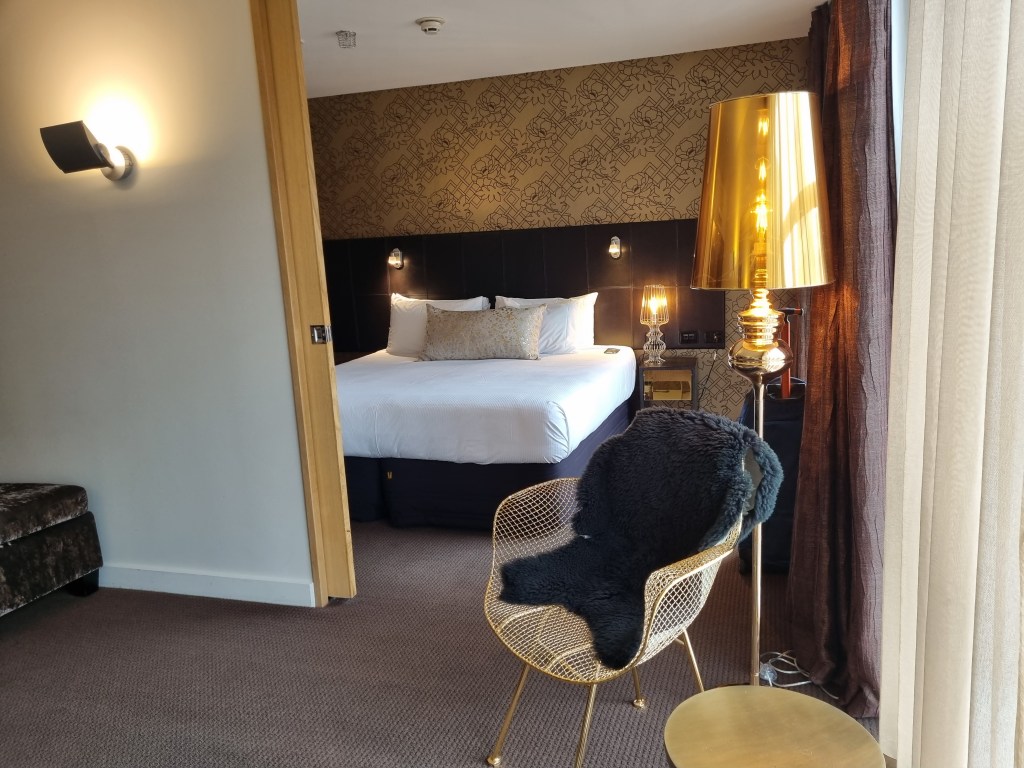
Accommodation had been booked at the Museum Apartment Hotel, a delightfully quirky hotel right in the heart of Wellington’s cultural district, just a few minutes’ walk from the Museum of New Zealand Te Papa Tongarewa and the waterfront. The fun, art‑inspired décor and eclectic collection of pieces throughout the lobby and corridors made it feel more like a gallery than a hotel, and our suite gave us plenty of space, and a kitchen for relaxed self-catered breakfasts and the occasional lunch at home. With plenty of cafés, restaurants and galleries right outside our door, it was the perfect base for exploring the city on foot.
One of the pleasures of slow travel is simply wandering a city, where unexpected little scenes of everyday local life quietly reveal themselves, bringing to life the true vibe, the essence of that location. We love that.
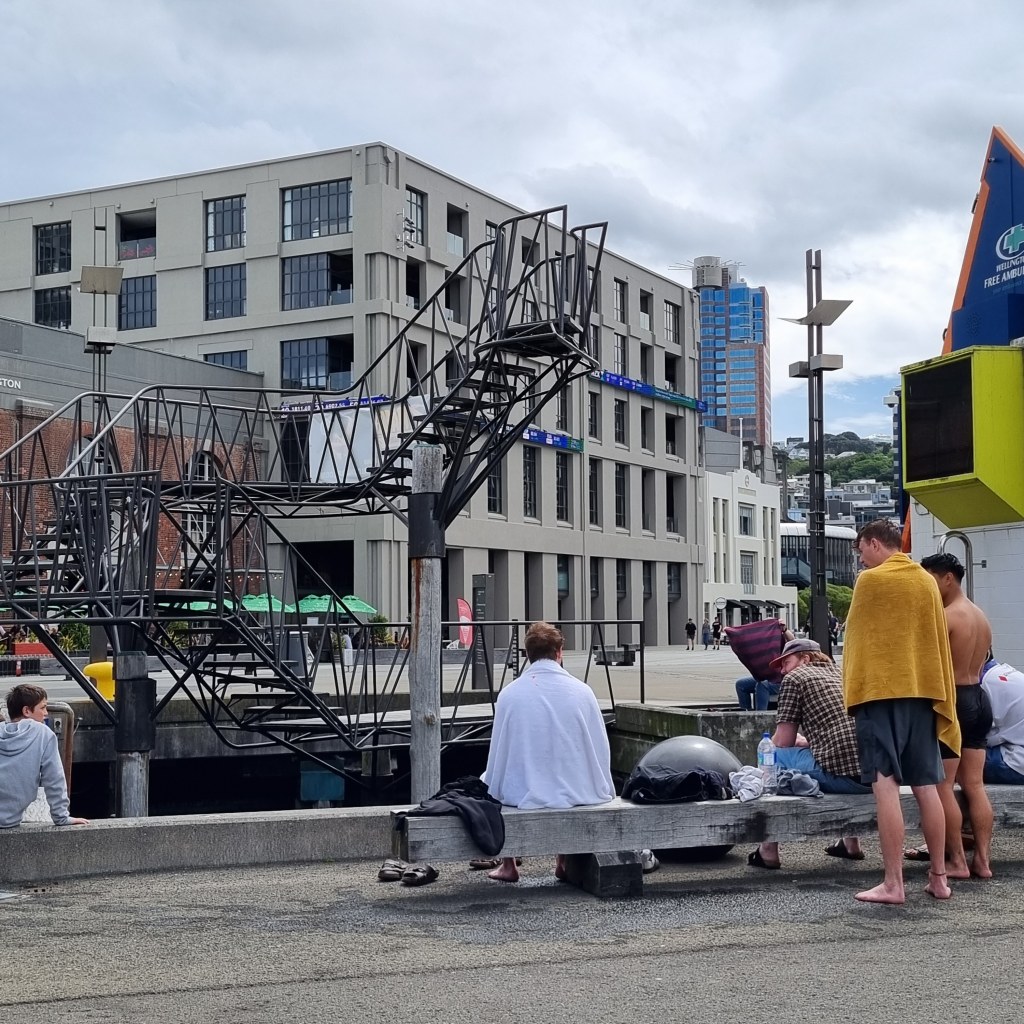
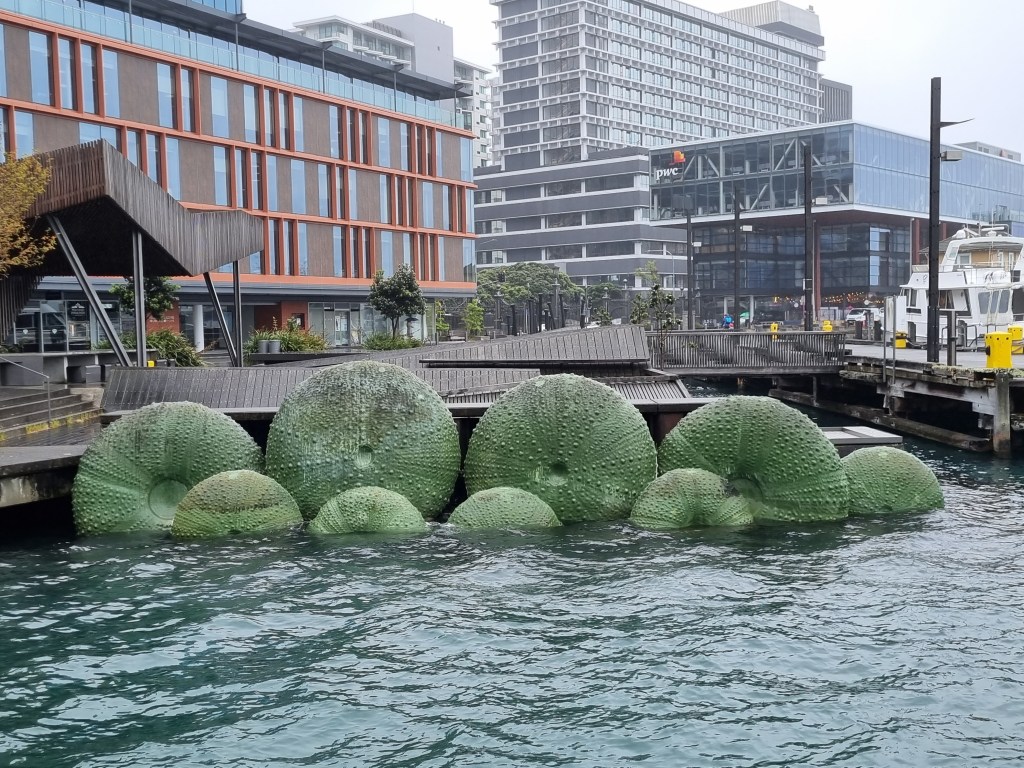
Down on the waterfront near Te Papa Museum stands the Taranaki Wharf jump platform, a 7.5-metre spiral tower built in 2013 because locals loved jumping from wharves and structures along the waterfront. Rather than banning the activity, the city created a safer spot for people to leap into the harbour. Even on chilly days, you’ll see groups of young Wellingtonians gather to take turns jumping in, practicing the classic Kiwi “manu” splash. It looked cold!
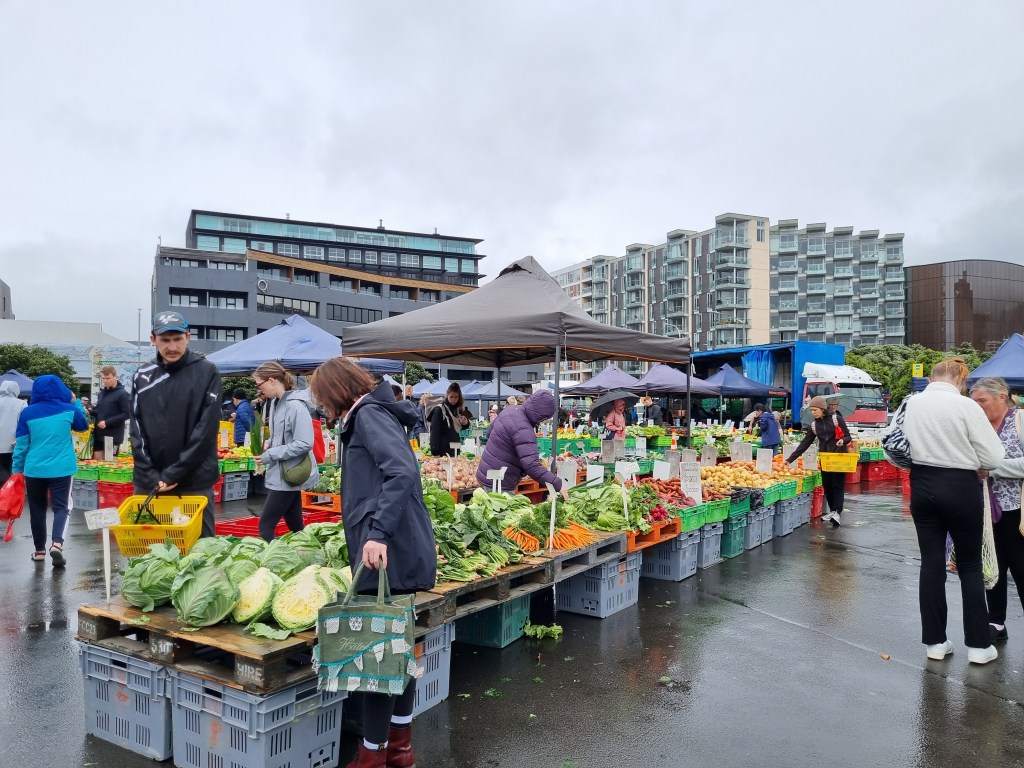
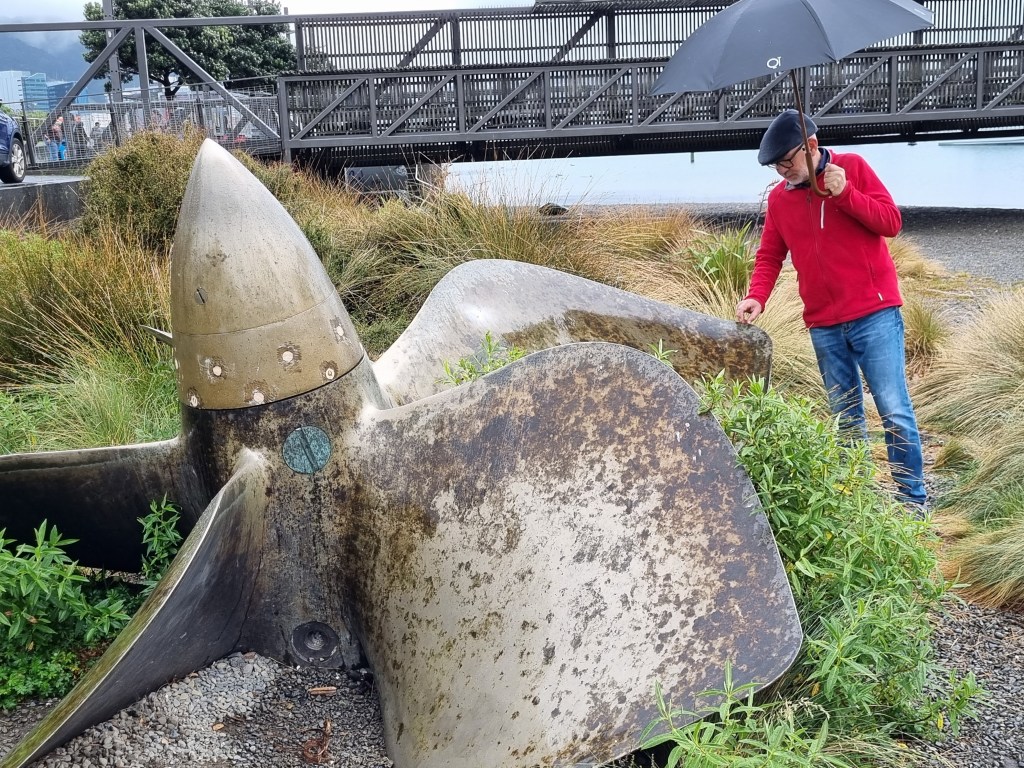
Even on a rainy day, Wellington is still charming and interesting. We wandered into a local fresh food market, then continued along the waterfront where Jeff spotted a massive ship’s propeller, one of several maritime relics dotted along the harbour salvaged from decommissioned vessels and installed as public art. The harbour has always been central to this city’s identity.
Te Papa Museum
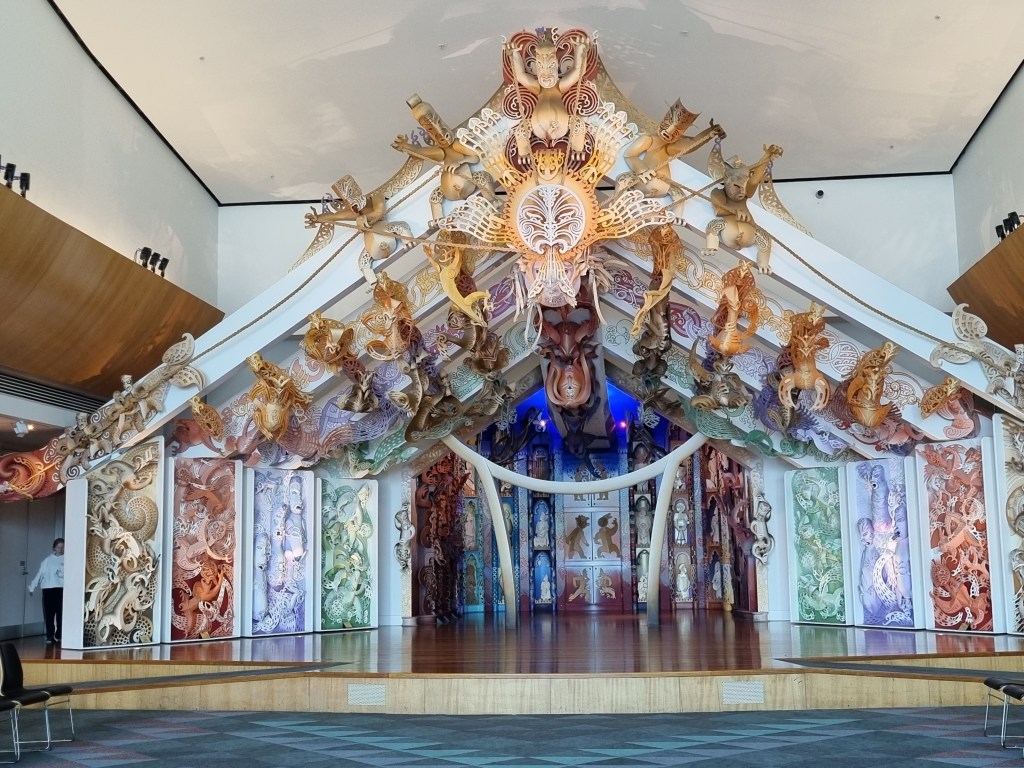
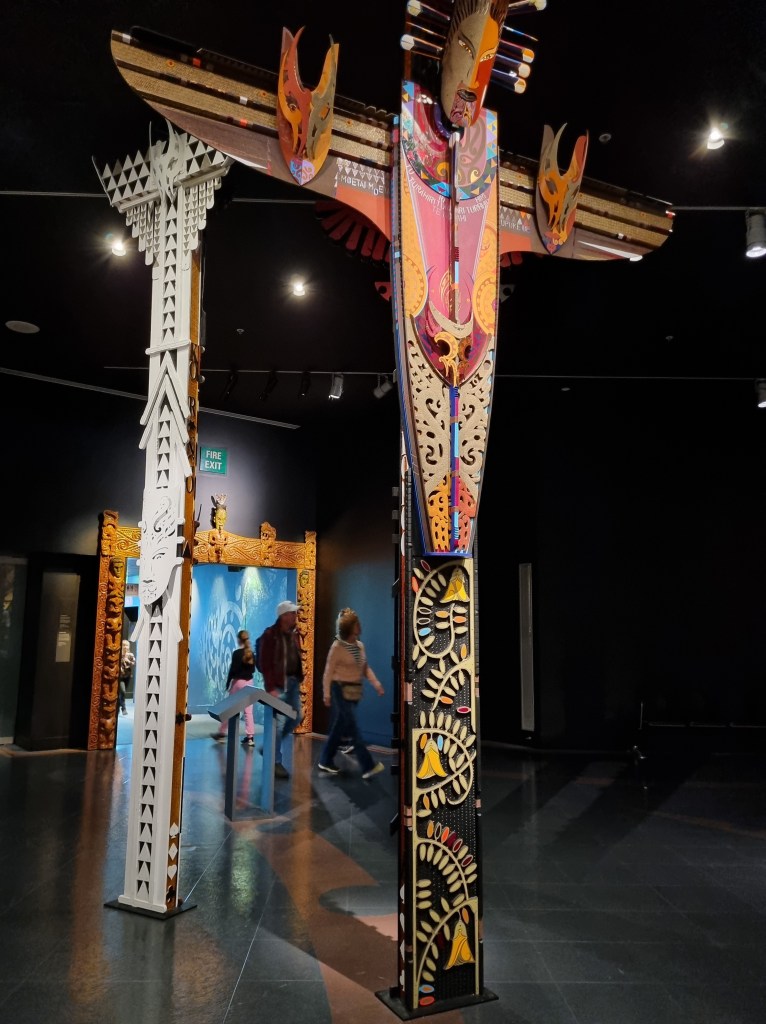
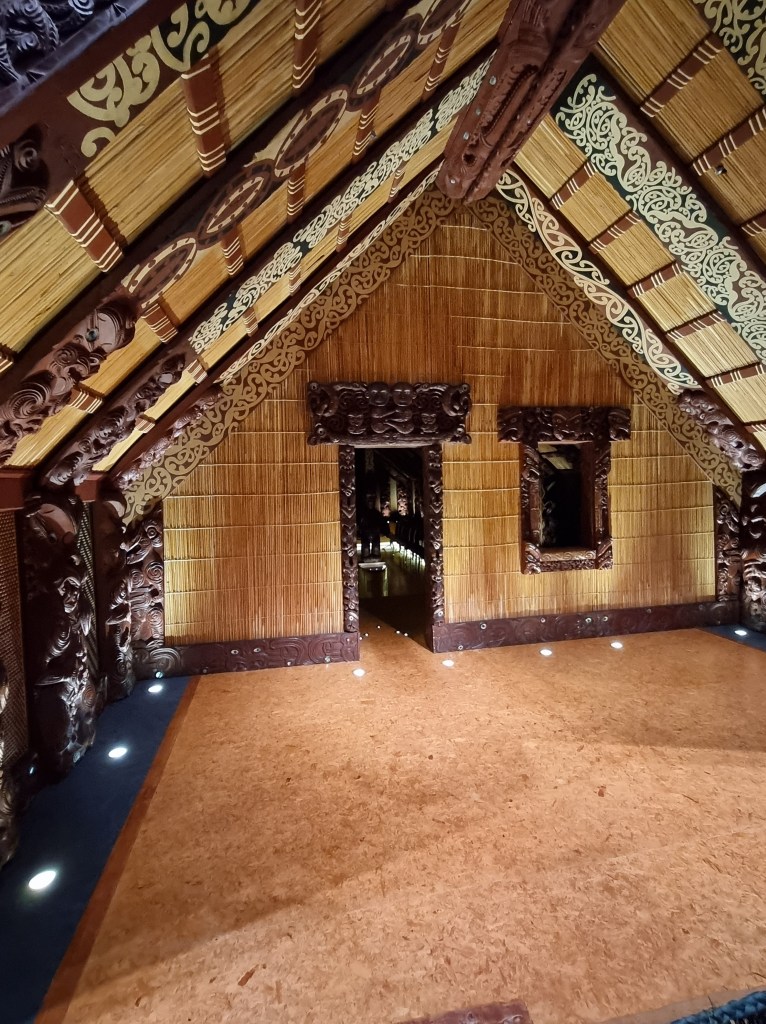
A visit to Museum of New Zealand Te Papa Tongarewa is non-negotiable for a Wellington visit. Opened in 1998, Te Papa was created to bring New Zealand’s stories, culture and natural history together under one roof. It’s been done in a way that feels respectful and immersive rather than traditional and formal. Set right on the waterfront, the museum brings together the history of traditional Māori and early European settlers in a blended perspective while still honouring the two cultures in their own right.
With powerful exhibitions that range from cultural treasures to the lifestyles and cultures that shaped New Zealand’s history, it’s a place you can easily lose a few hours (or more) wandering through. There’s plenty of interactive displays, storytelling and a sense of connection to New Zealand’s past and present. Photos are banned for some exhibits out of respect.
One of our favourite outings was catching the Wellington Cable Car up to Kelburn, a short but scenic climb above the city. At the top, we lingered over a coffee at the Cable Top Eatery, taking in the sweeping harbour view before setting off to wander down through the Wellington Botanic Gardens.
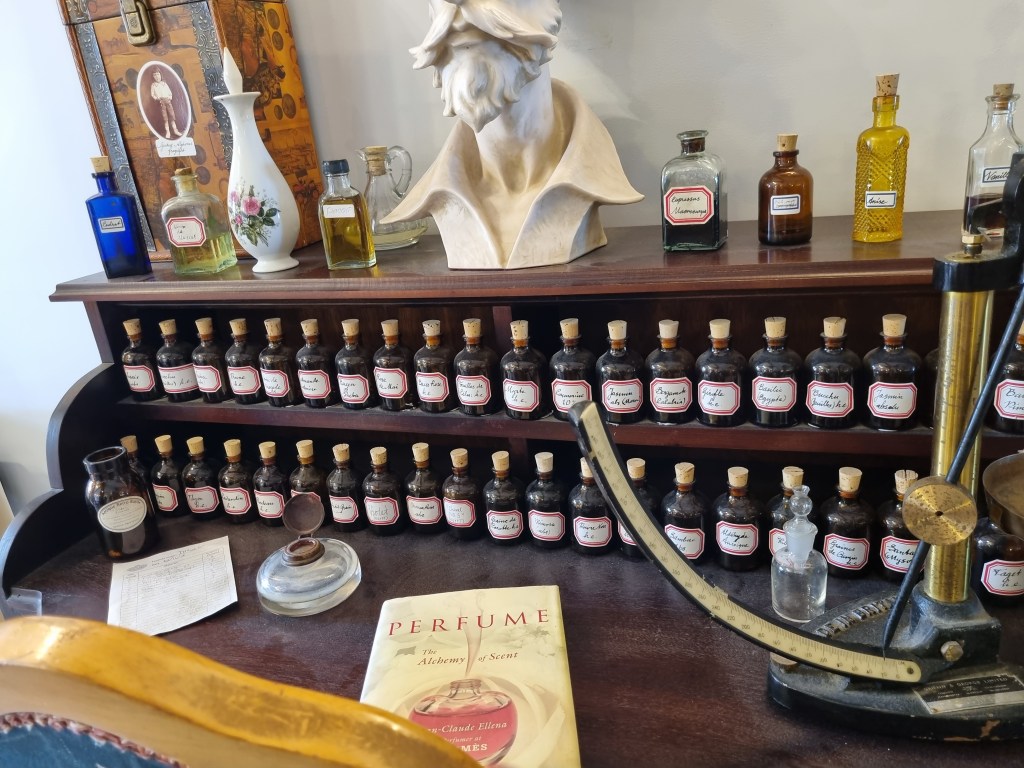
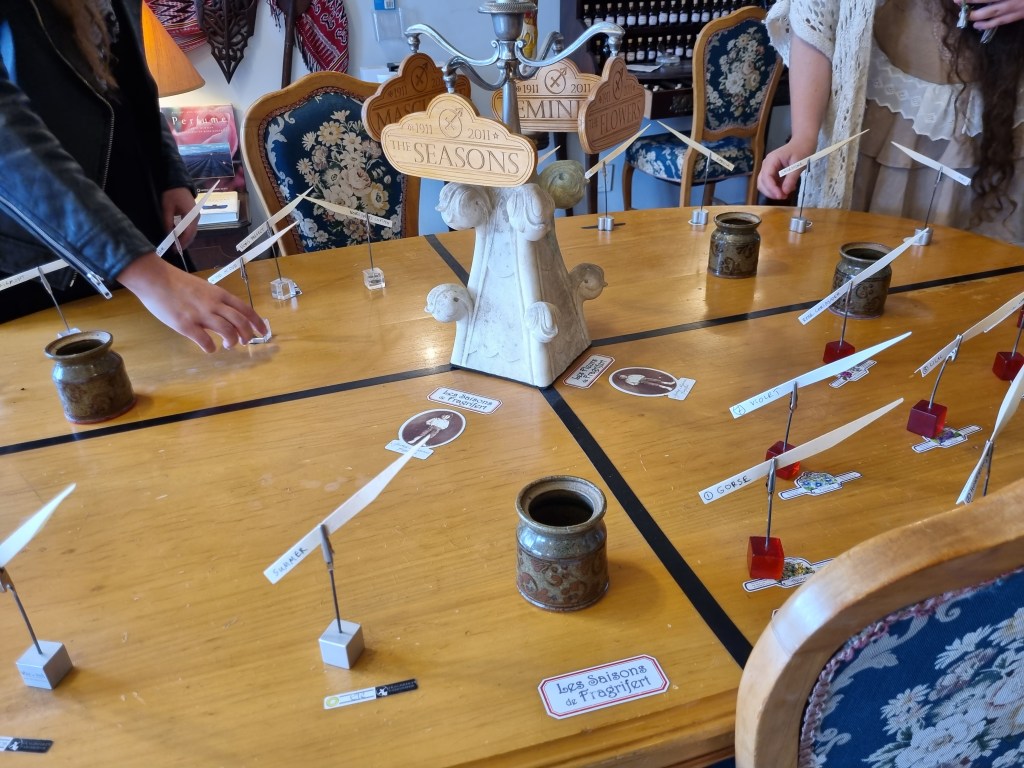
At the top of the Cable Car we stumbled upon Fragrifert Victorian Perfumery. This artisan perfumery shop smelt fabulous, with with rich, complex scents to sample, stories behind each blend, and a wonderfully tactile atmosphere where you could blend and sample. For someone with an interest in aromatics, it was a delightful discovery.
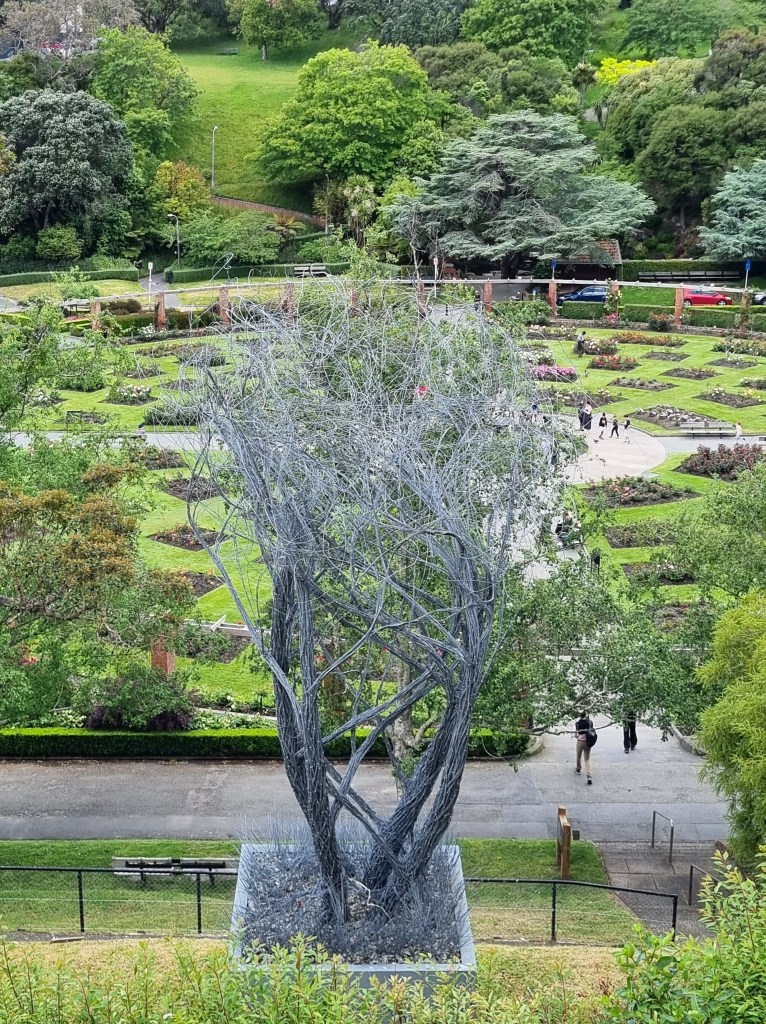
Early spring was beginning to show itself off with colour and new shoots thoughout the gardens. The walk downhill is meandering and relaxing, taking as long as you want with plenty of scenic stops along the way, or around 35 minutes from top to bottom, ending at Parliament House and back in the city.
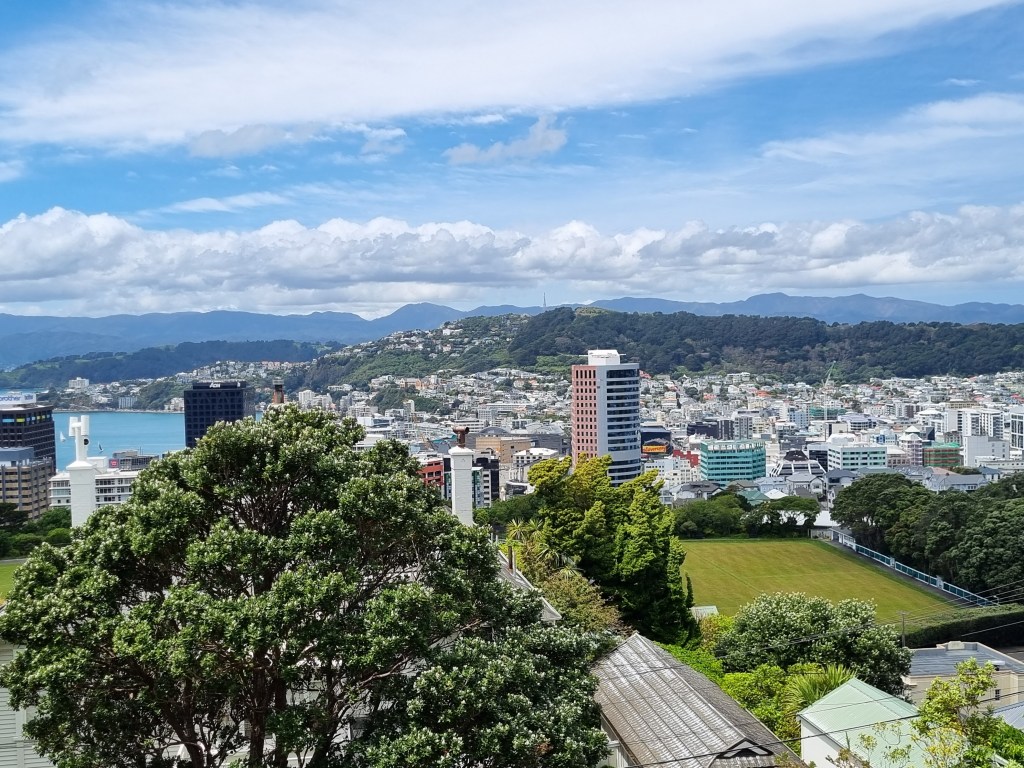
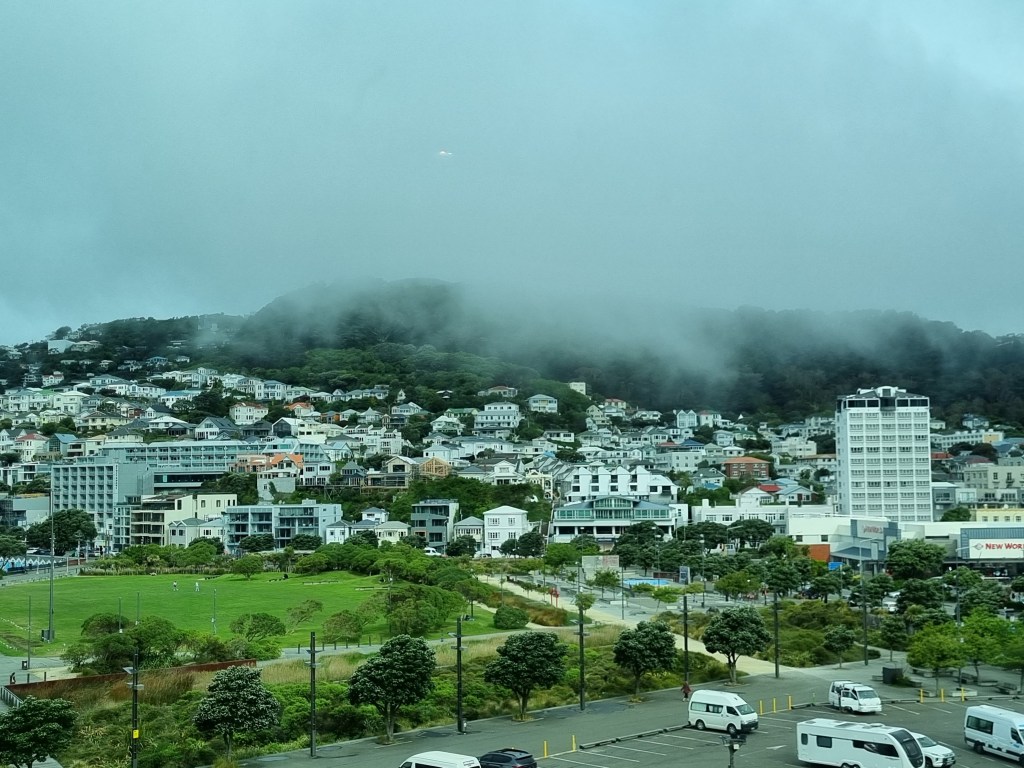
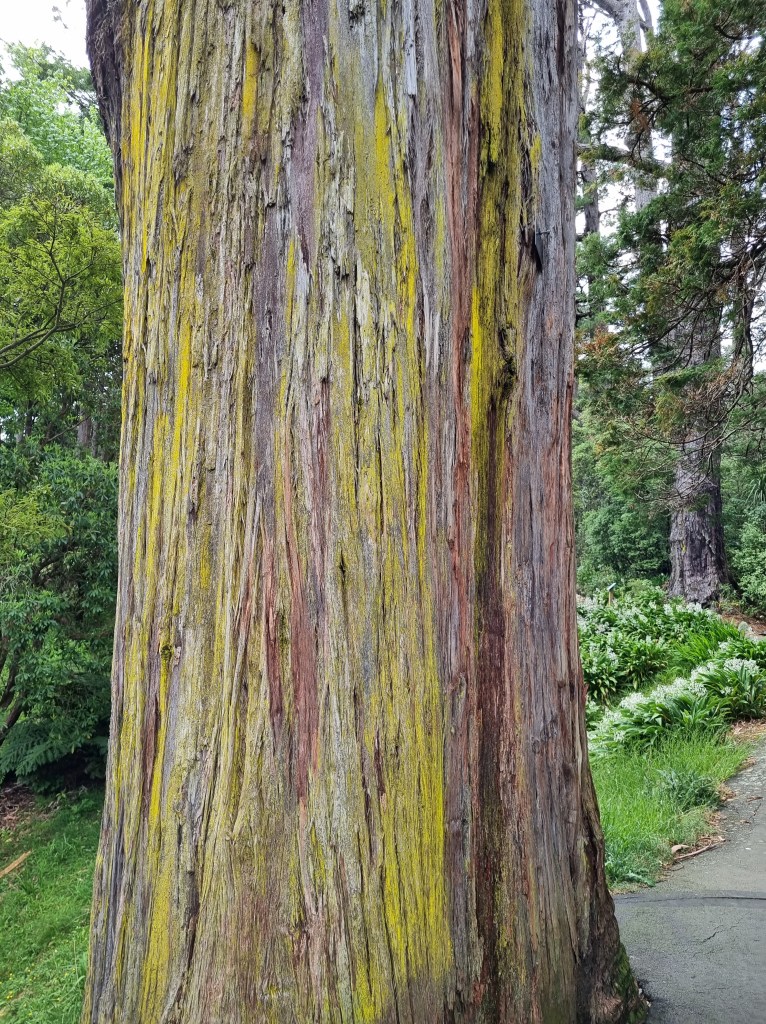
A magnificent, towering tree stopped us in our tracks – the colouring was spectacular, its sheer scale a reminder of how long the gardens have been there. Landscaped lawns provided spaces for locals and tourists to make the most of a break in the weather and looking back towards the city in a different direction, we could see the weather changing again. We enjoyed a relaxed lunch at the busy cafe in the gardens, before continuing our walk down into the city. An easy and memorable way to experience Wellington at a slower pace.
Matiu/Somes Island
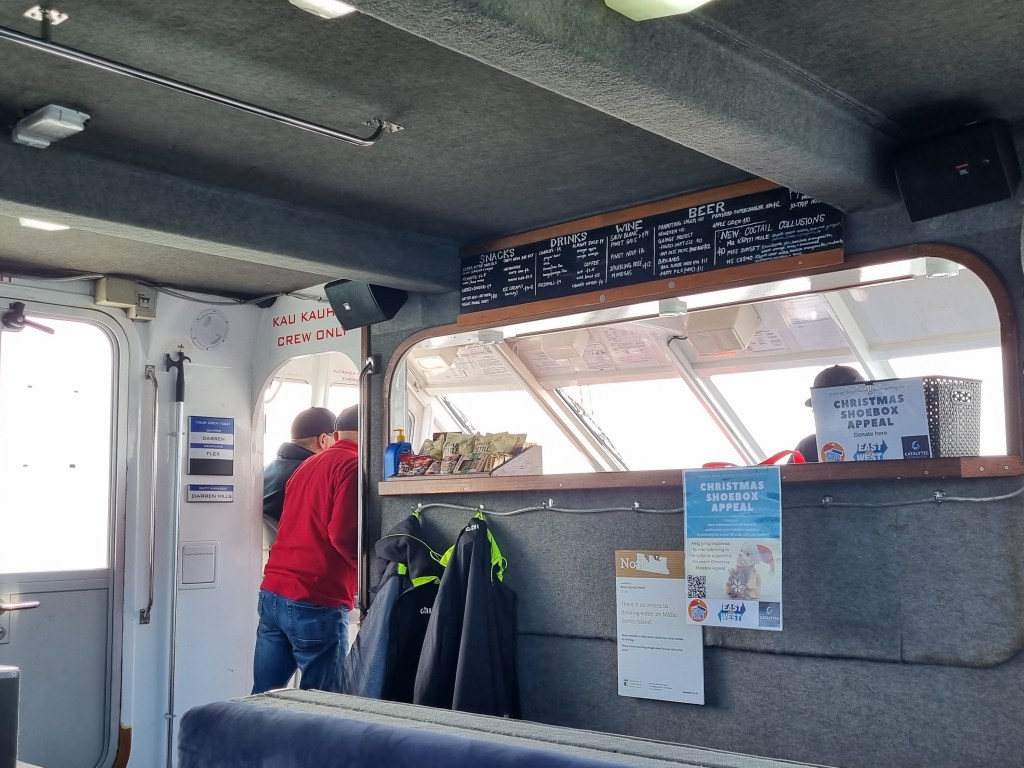
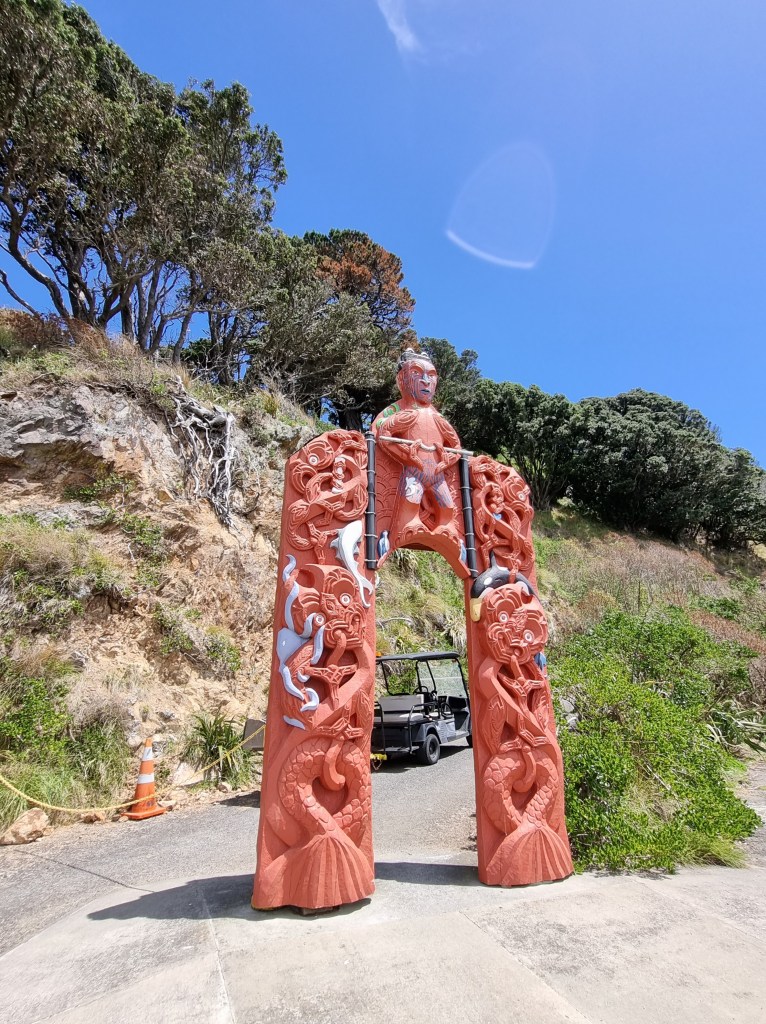
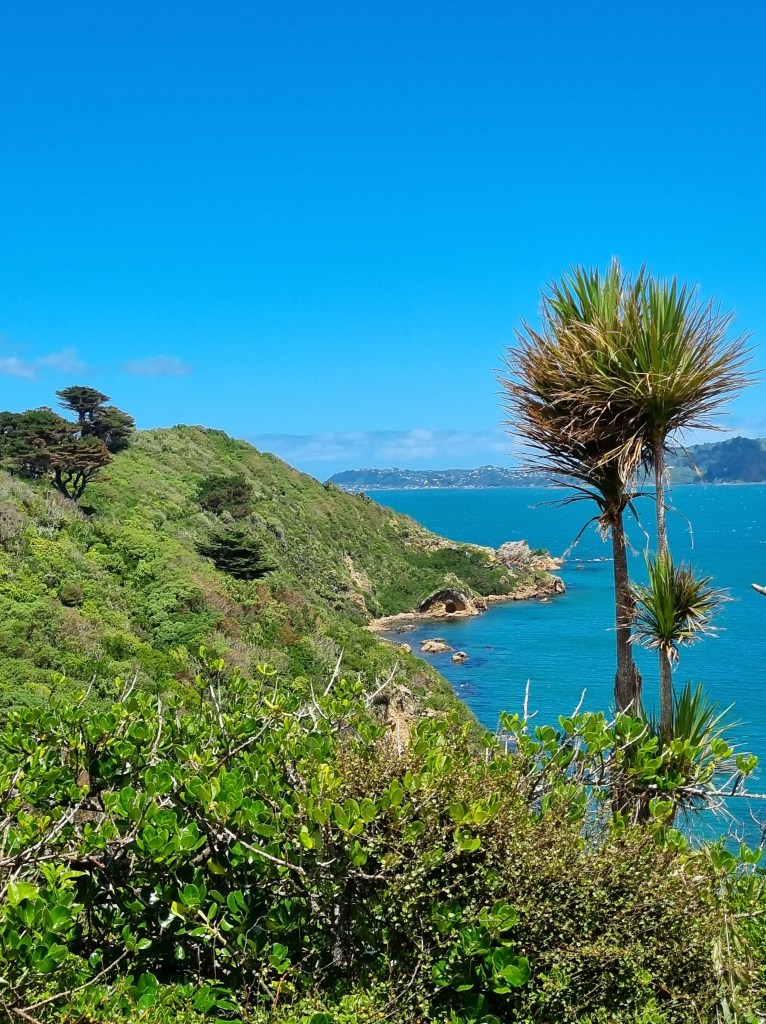
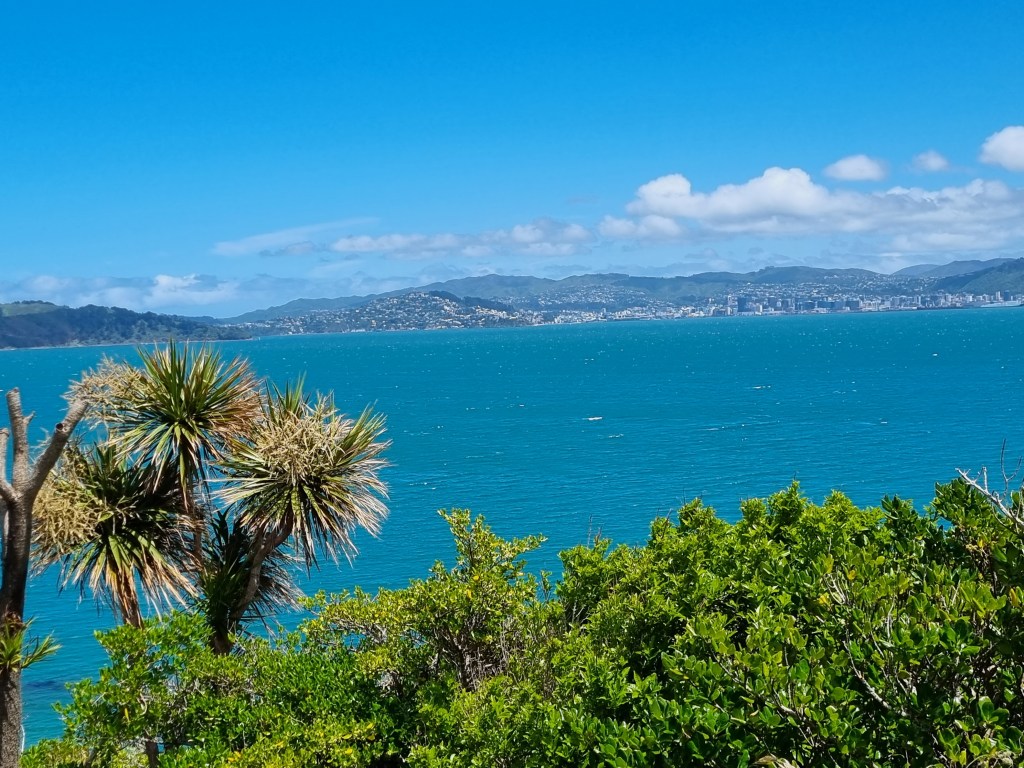
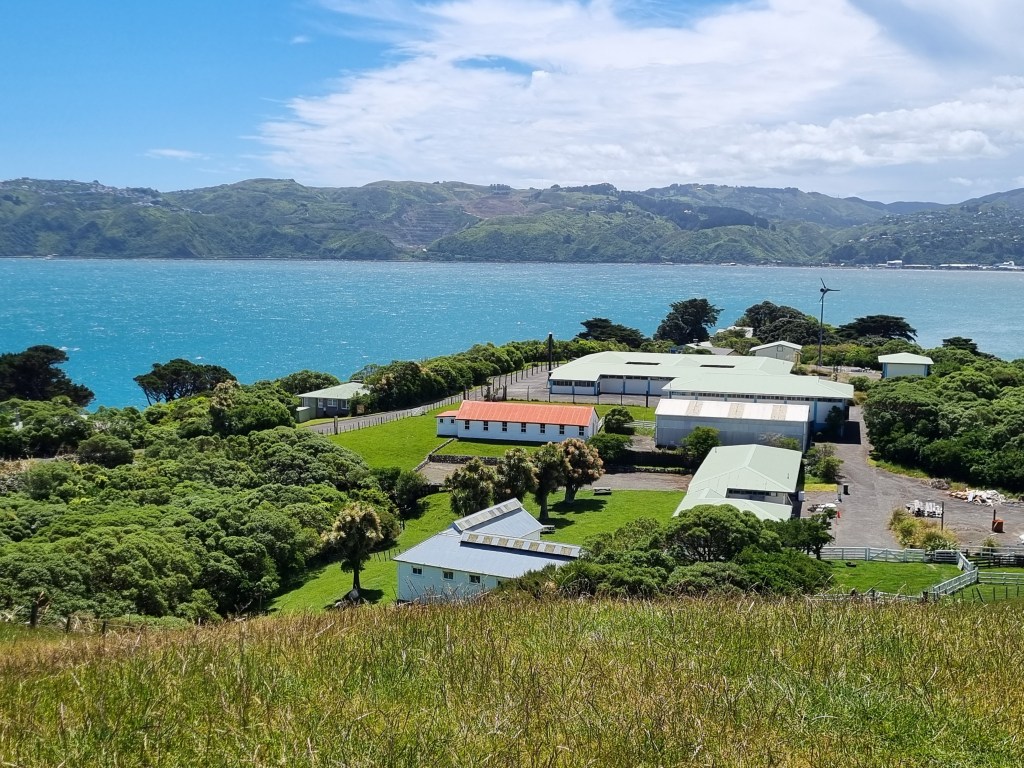
On a clear, sunny day we caught the ferry across Wellington Harbour to Matiu/Somes Island via a stop at the wharf at Days Bay to let the locals off. Matiu/Somes island was significant to Māori long before European settlement for its strategic position, used as a lookout and for defence. Post-European settlement, it became a quarantine station for incoming ships (people, animals and goods), and later as an internment camp during both World Wars.
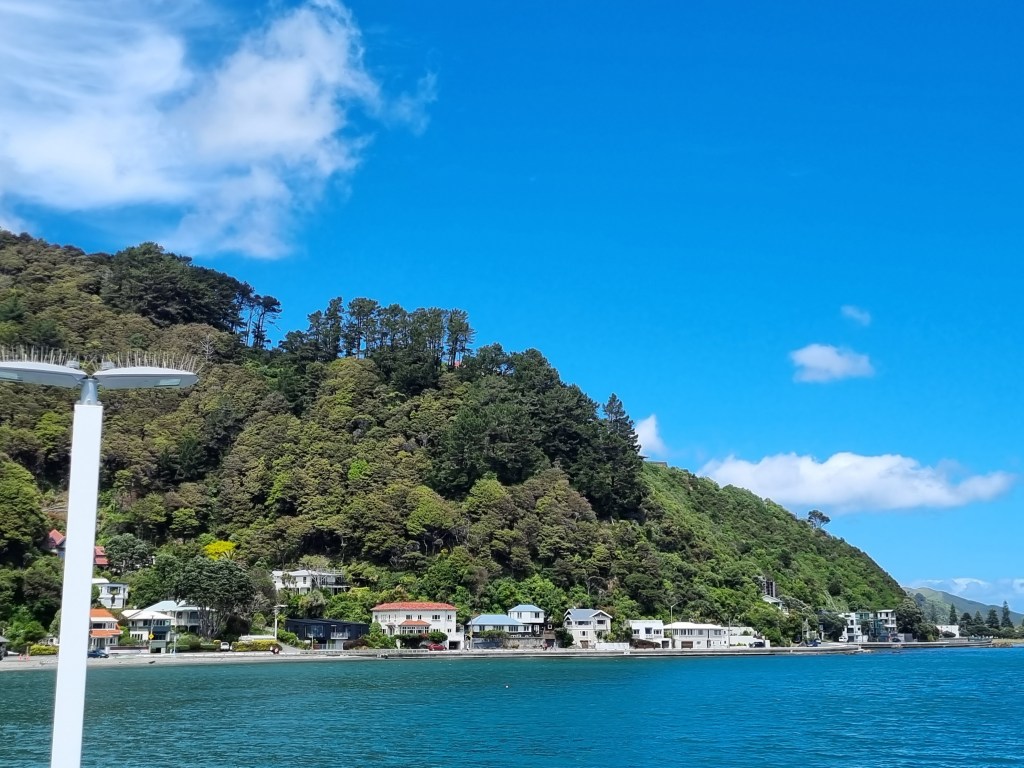
Today, the island is a scientific and conservation reserve, gradually being restored to its natural state with native plantings and protected wildlife. Walking trails loop around the island, weaving through regenerating bush, open grassland, and coastal edges, with wide views back toward Wellington. It’s peaceful and windswept with a sense of isolation that feels worlds away from the city you can see across the harbour.
Now for the food
Just across the road from our hotel was Field & Green, a restaurant we’d been looking forward to after reading reviews. Dinner more than lived up to our expectations with thoughtfully put together dishes, beautifully prepared and full of flavour. Sadly, we learned that the restaurant was closing the following week, which felt like a real loss. It was a memorable meal, and we were glad we managed to experience it just in time.
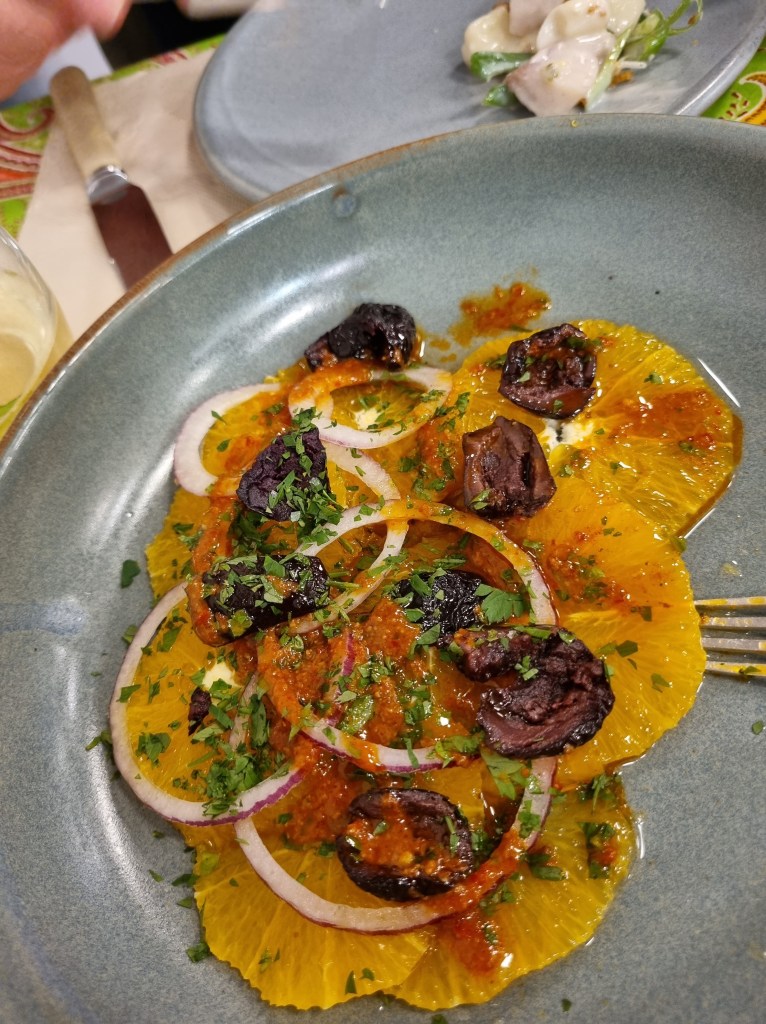
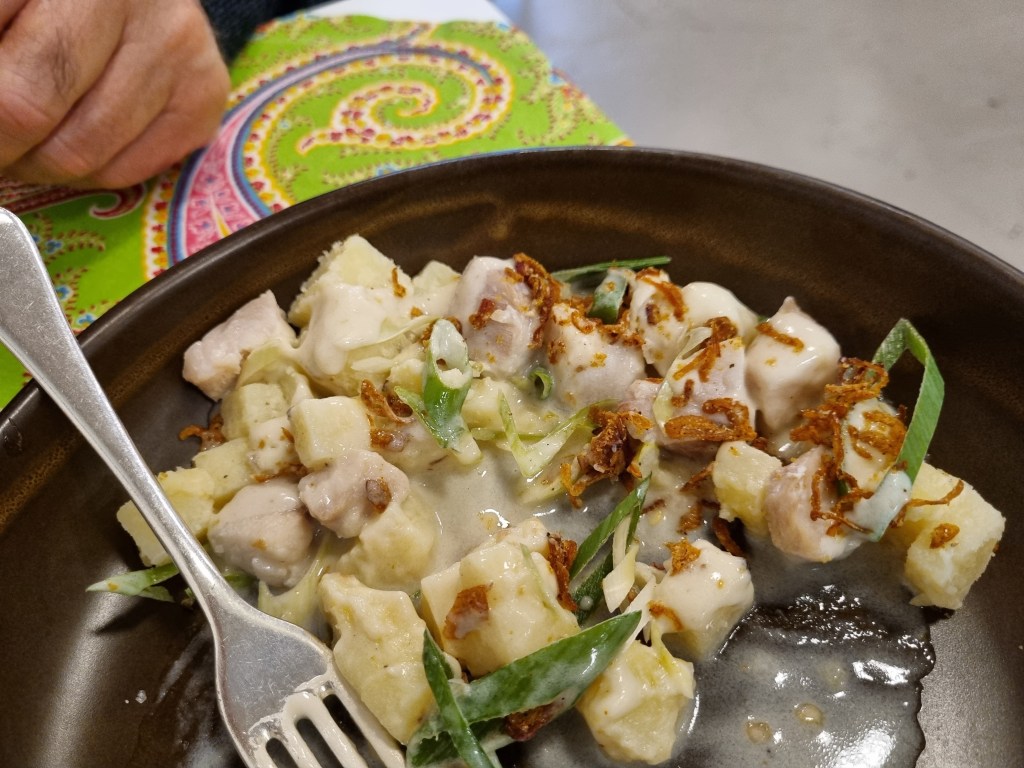
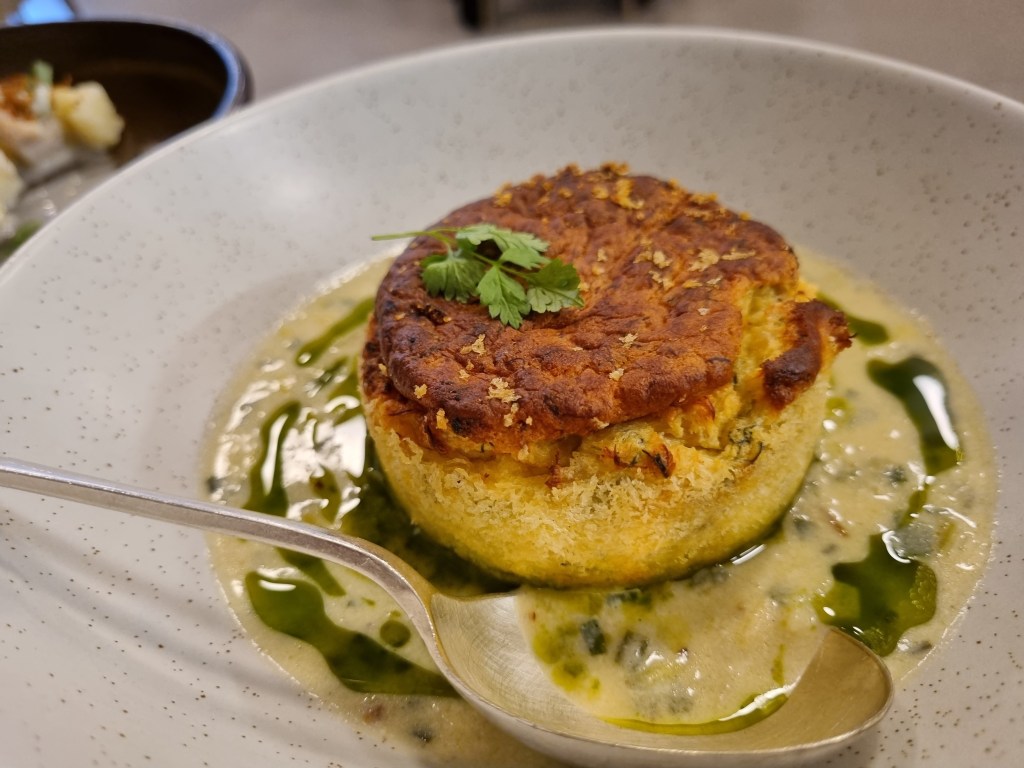
We met up with some of our NZ family for lunch at Dockside, right on the waterfront. Set in a beautifully restored historic wharf building, it was the perfect place to linger over a long lunch on a rainy day with great food, harbour views and an easy, relaxed atmosphere. You can never go past any sort of “crumble” for a dessert, can you!
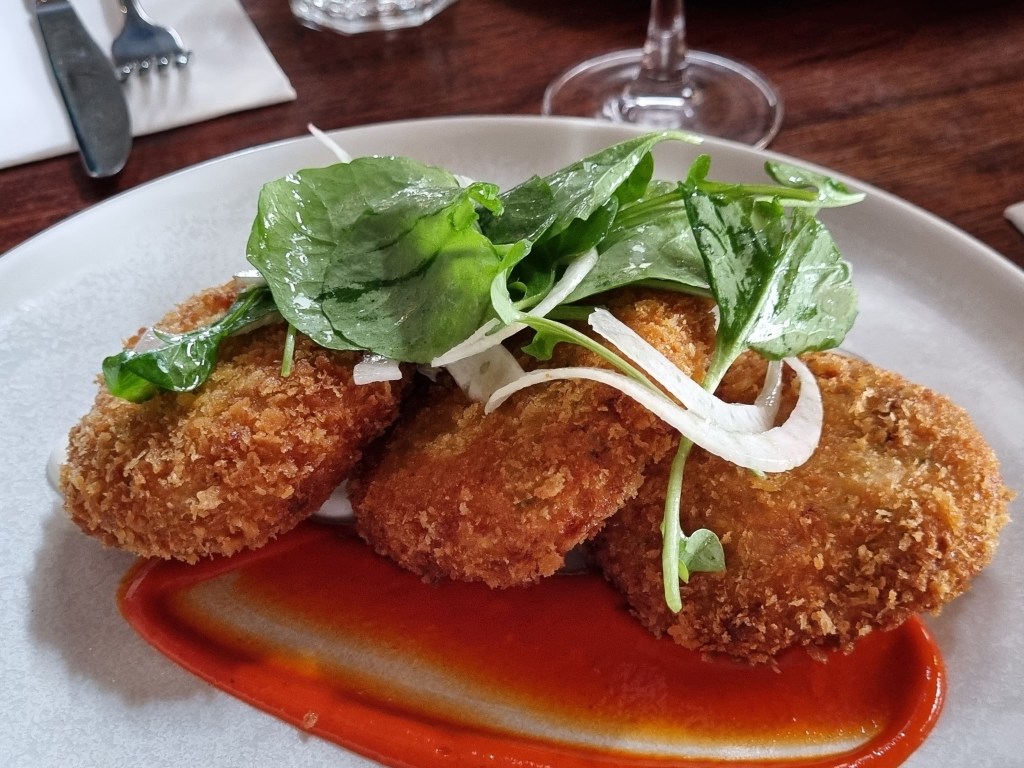
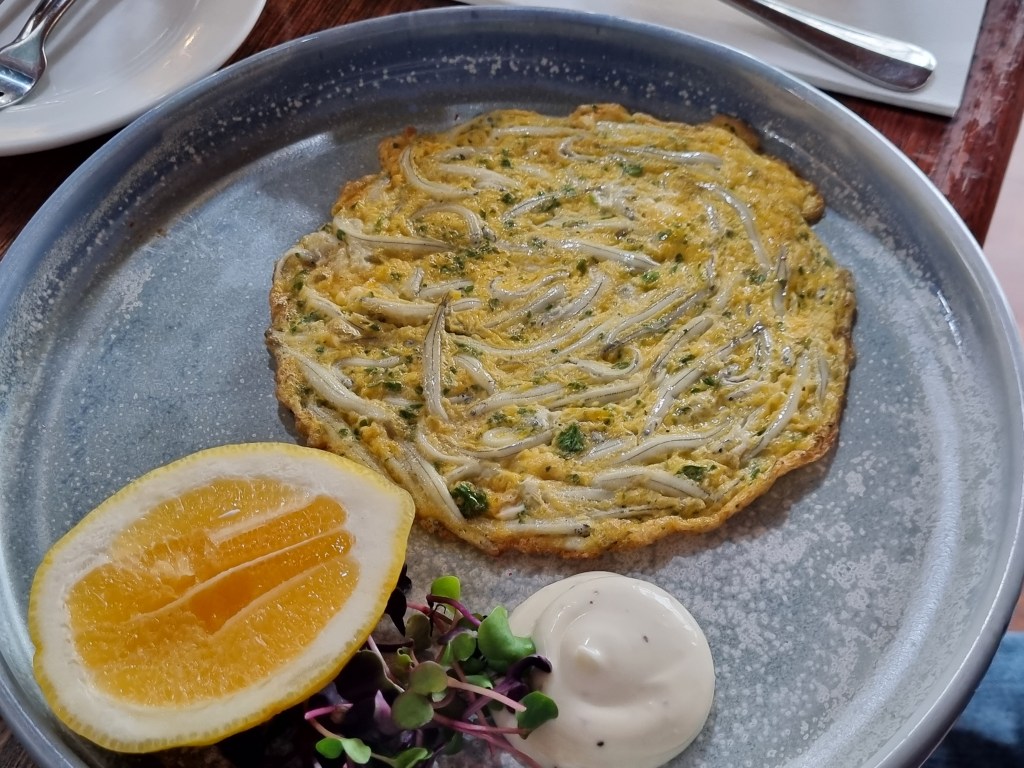
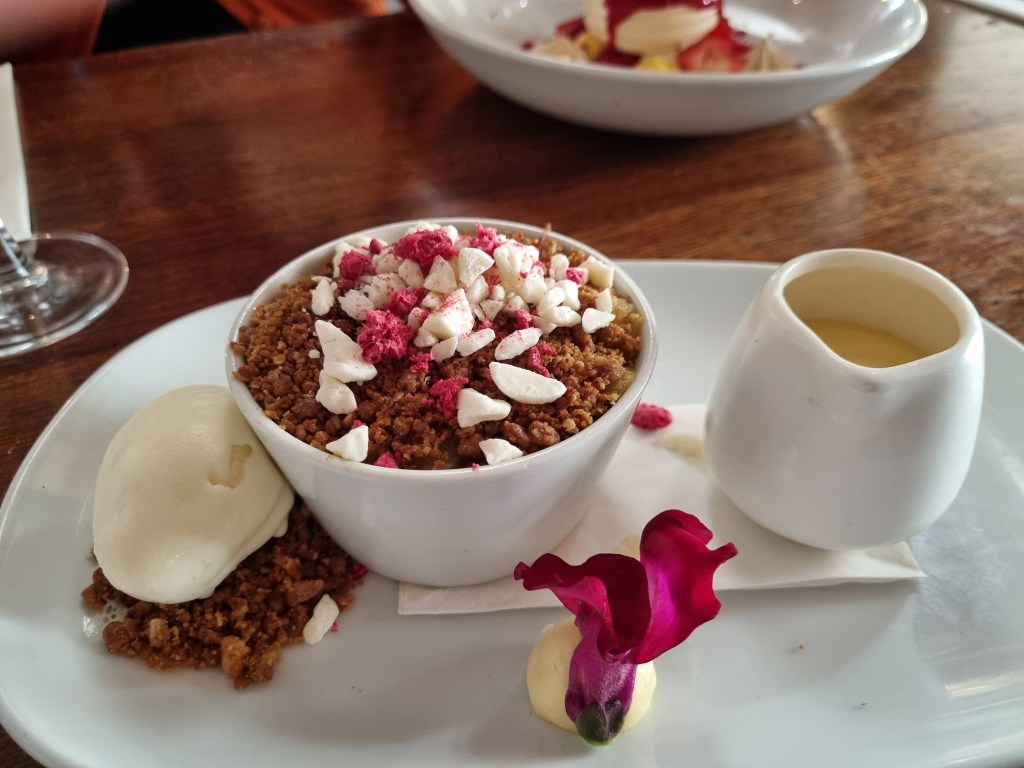
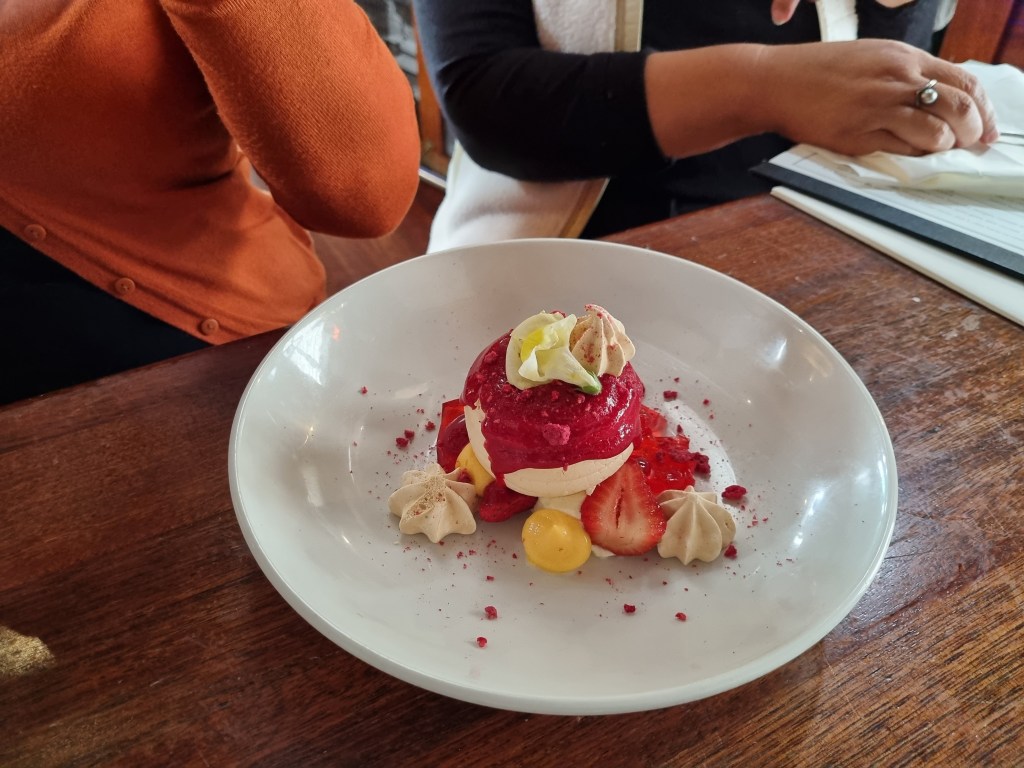
On our final day in Wellington, we settled in for a long, relaxed lunch while waiting for our flight at Foxglove Bar & Kitchen, right on the waterfront. It felt like the perfect place to end this trip – good food, harbour views, and a moment to take it all in.
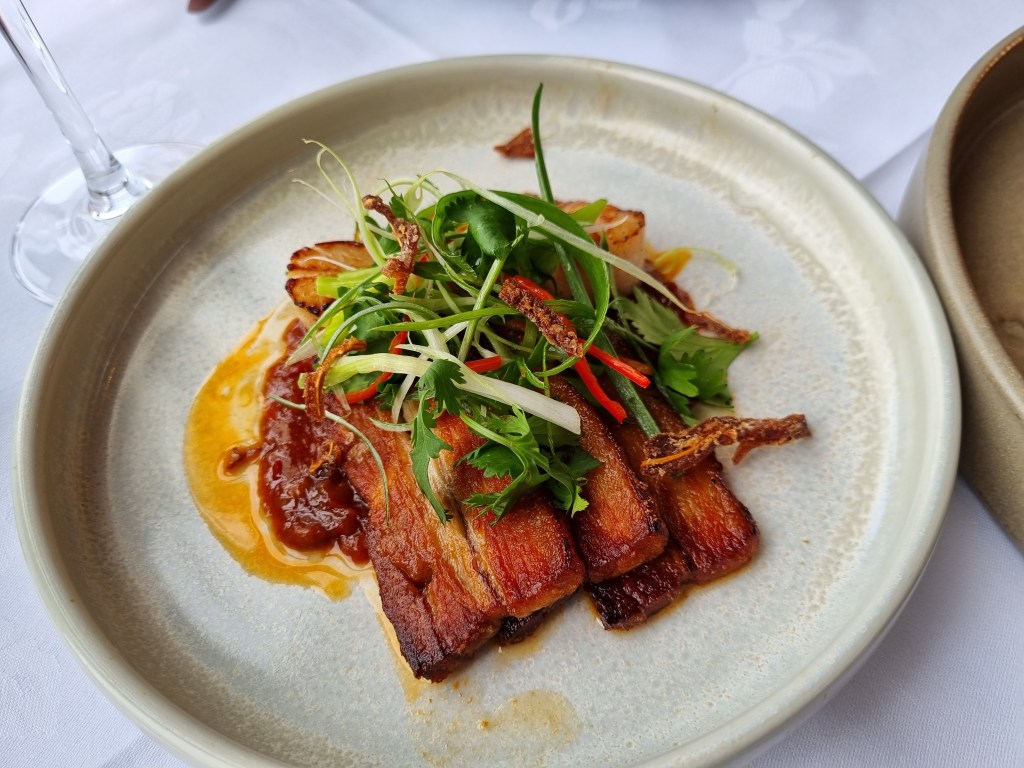
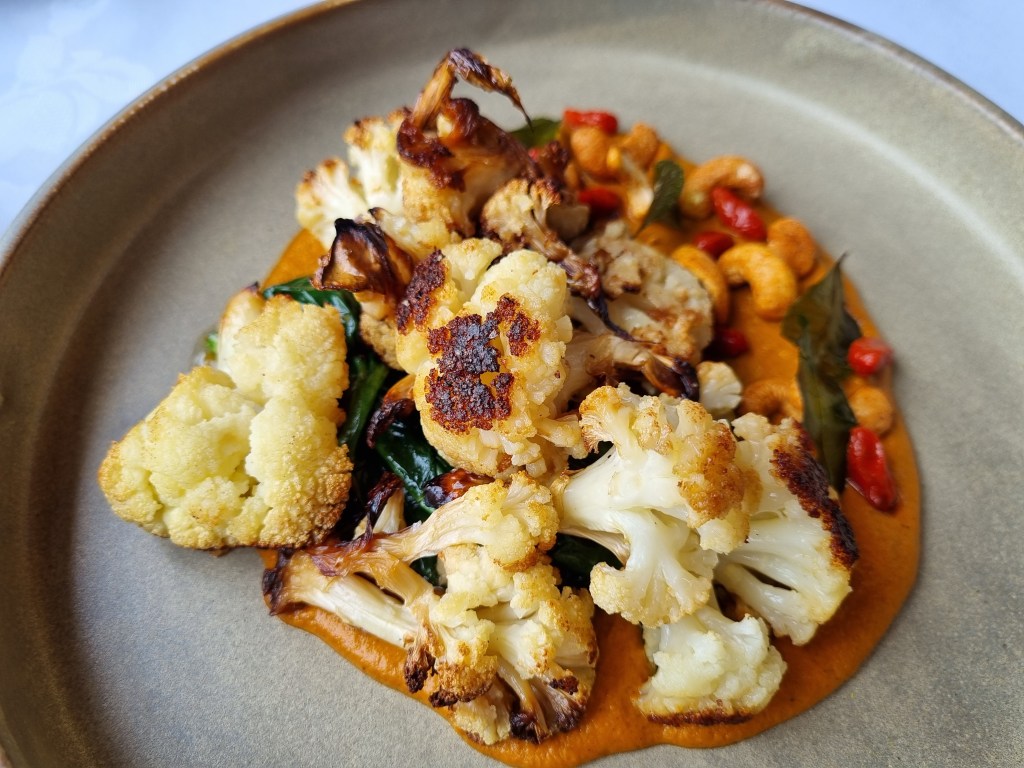
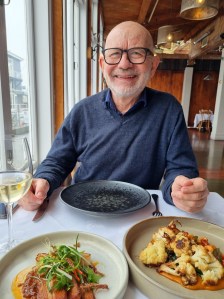
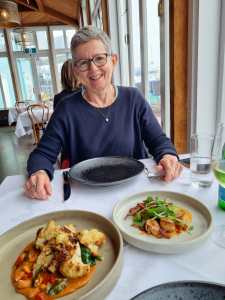
There was a mix of emotions: a touch of sadness at leaving, balanced by that familiar sense of excited anticipation that comes with heading home.
New Zealand had delivered in all the ways that matter – the landscapes, the food, the people, and those unexpected little moments along the way.
Not a bad way to end this trip. New Zealand – we’ll be back.
Catherine & Jeff
 Food and Adventures Along the Way