Our first glimpse of the fascinating city of Phnom Penh was from the plane, arriving just on dusk. It’s the end of the rainy season and our view depicts a modern city-scape along the river banks of the Mekong. Looking further, the water logged landscape reaches far out into the rural areas.
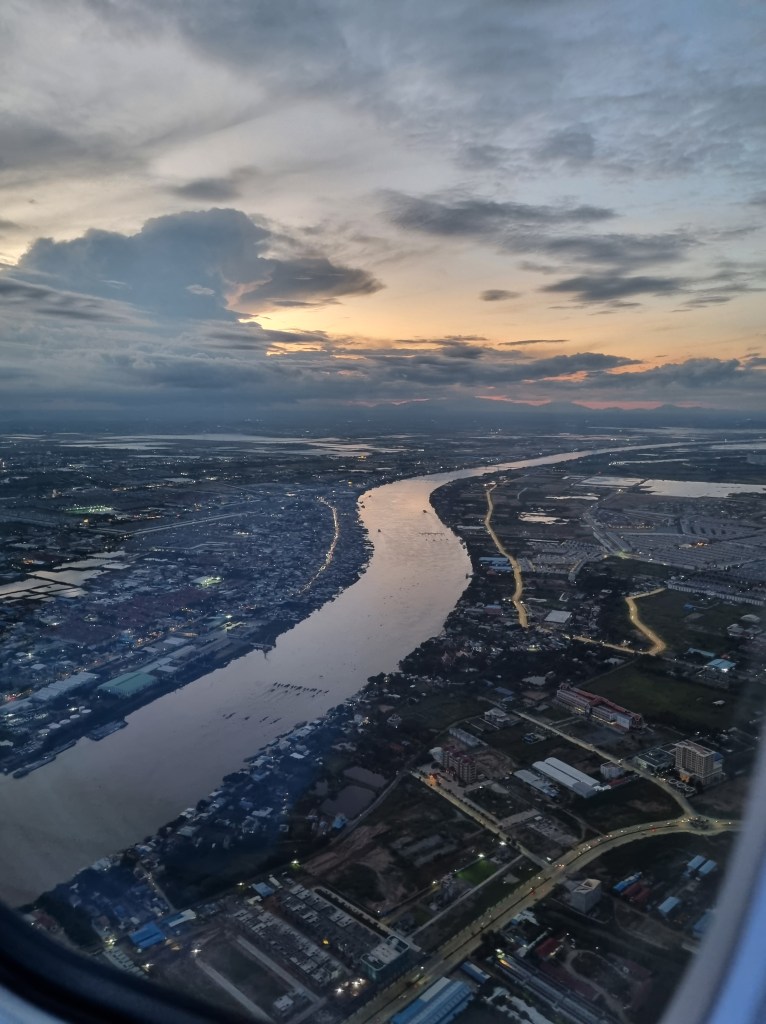
Phnom Penh, Cambodia’s capital, is a city brimming with stories, from extreme horror and sadness to resilience and a warm spark. This is evident in the people that live there. Along with its colourful and turbulent history, Phnom Penh is a foodie’s paradise.
A French Influence That Lingers
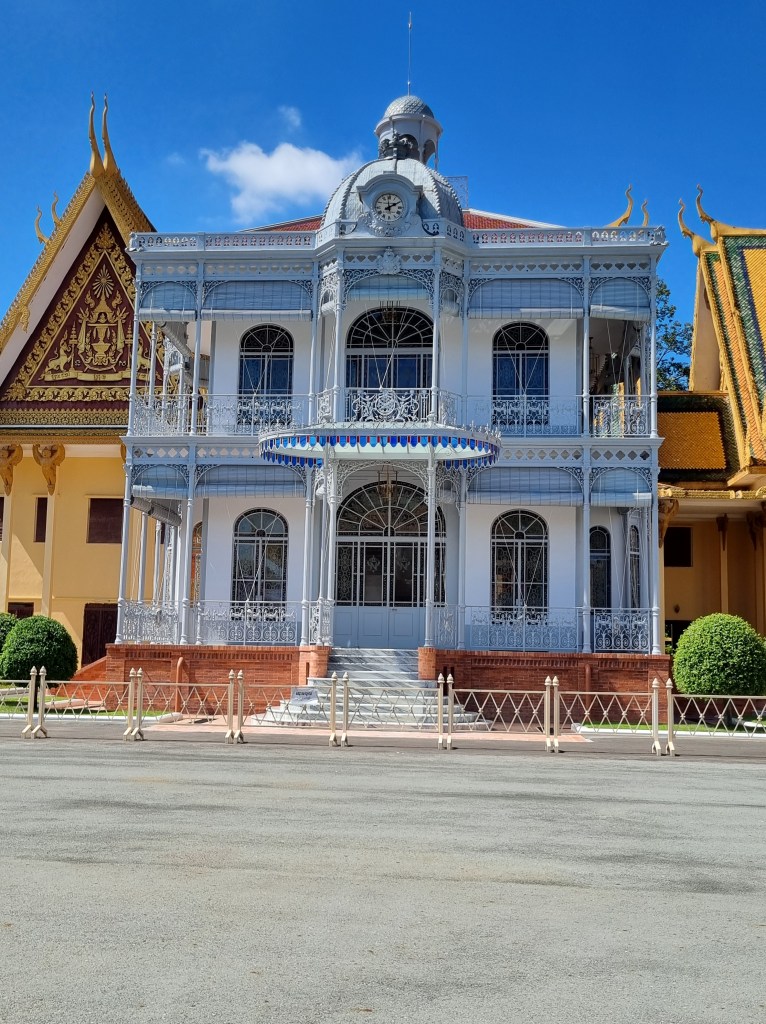
The streets of Phnom Penh also carry a faint French feel, left over from Cambodia’s time as part of French Indochina. France occupied Cambodia from 1863 to 1953. Colonial buildings and green canopied avenues are reminders of when Phnom Penh was thought of as the “Pearl of Asia.” This blending of French elegance with the local Khmer buildings, adds an unusual European twist to the feel of the city.
A permanent reminder of the French occupation influence is strongly depicted by this stand-alone building surrounded by the golden steepled buildings within the Royal Palace Gardens. It was shipped over from France, piece by piece, and reassembled. The colour certainly makes a standout statement amidst the gold, maroon and terracotta colours of the traditional architecture.
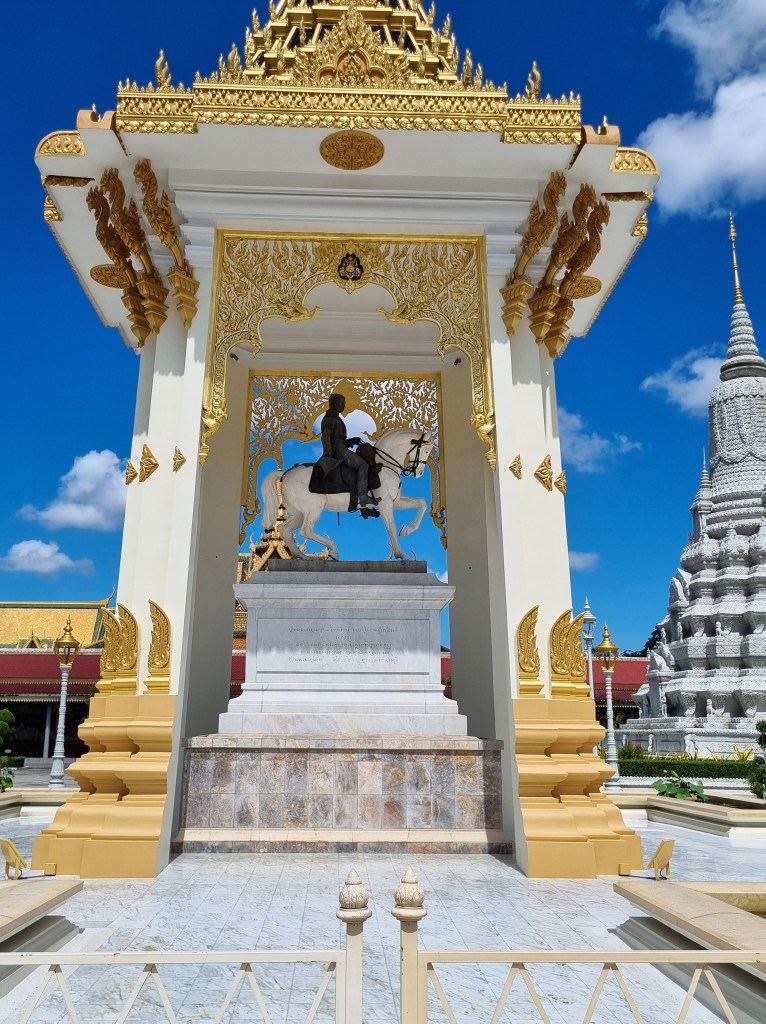
A very French-like statue of the Cambodian King on horseback.
Though Cambodia gained independence in 1953, the French influence lives on, not just in the architecture, but in the lasting penchant for fresh baguettes, pastries and coffee, which are intermingled alongside Khmer cuisine.
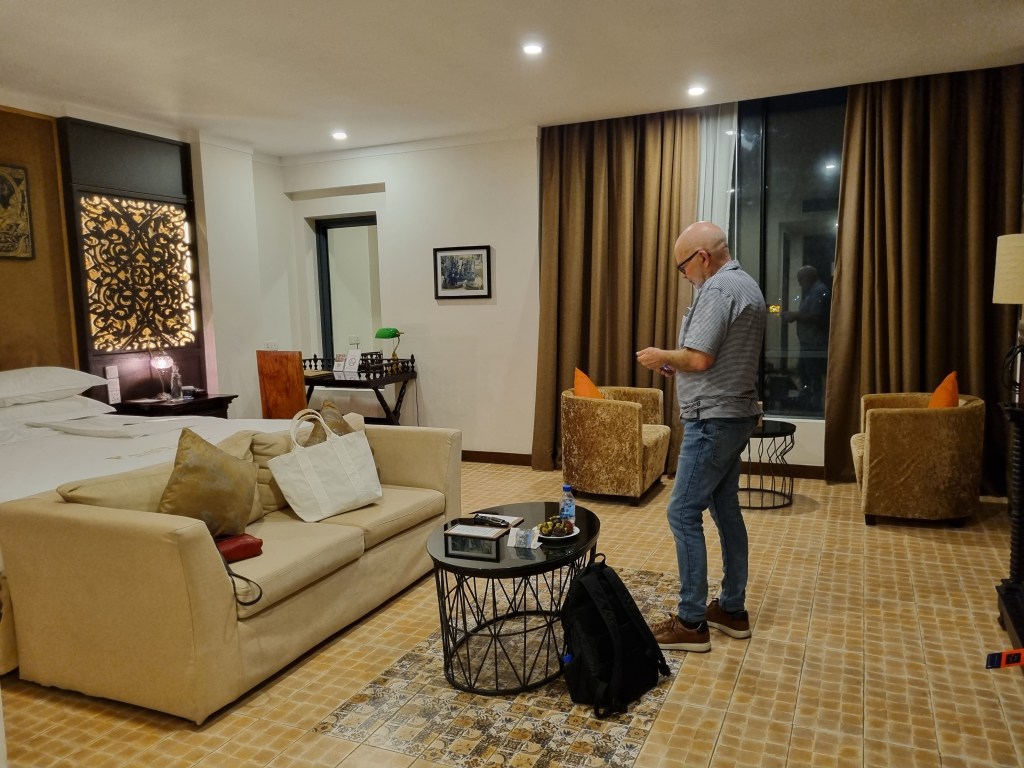
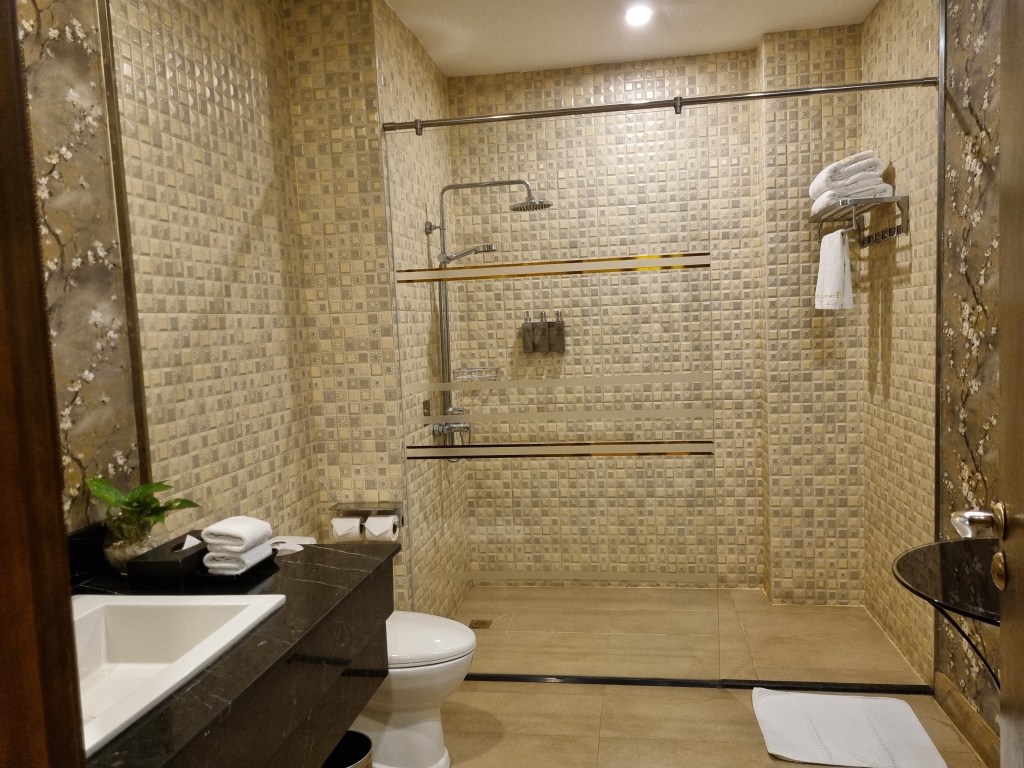
Our accommodation at the Palace Gate Hotel & Resort, was chosen because of its potential colonial feel (we weren’t disappointed), plus the location – right outside the Royal Palace and in the heart of the city, easy walking distance to the Mekong River and other sights. The pool offered a much needed respite each afternoon.

The Royal Palace
A visit to the Royal Palace is highly recommended.
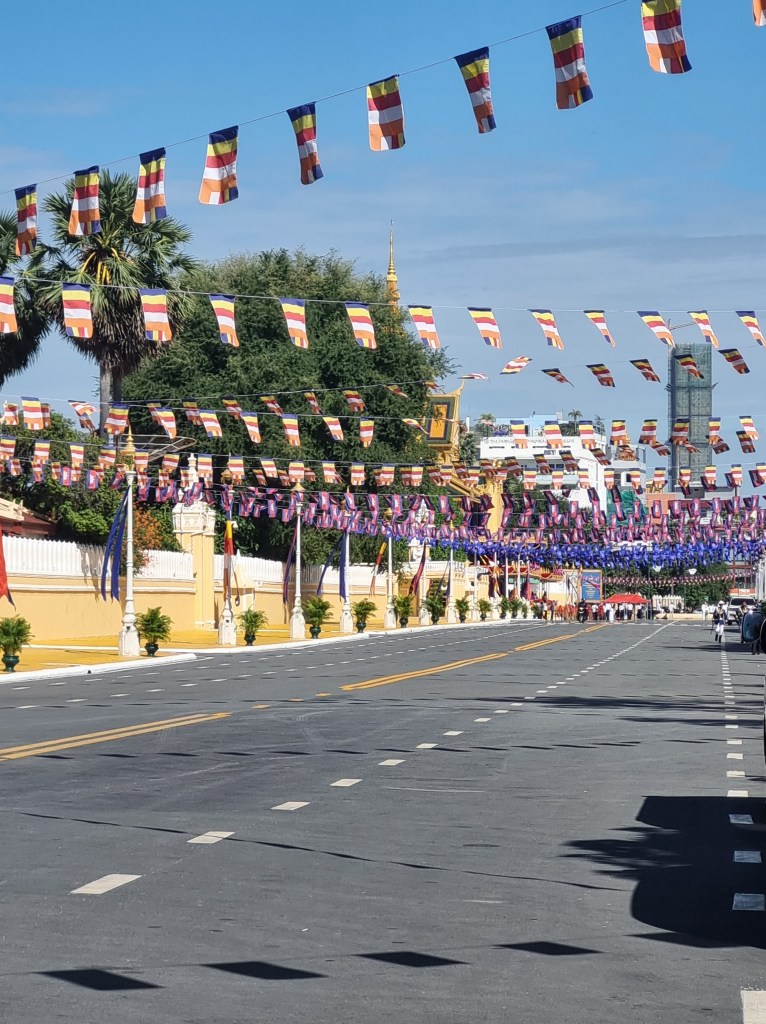
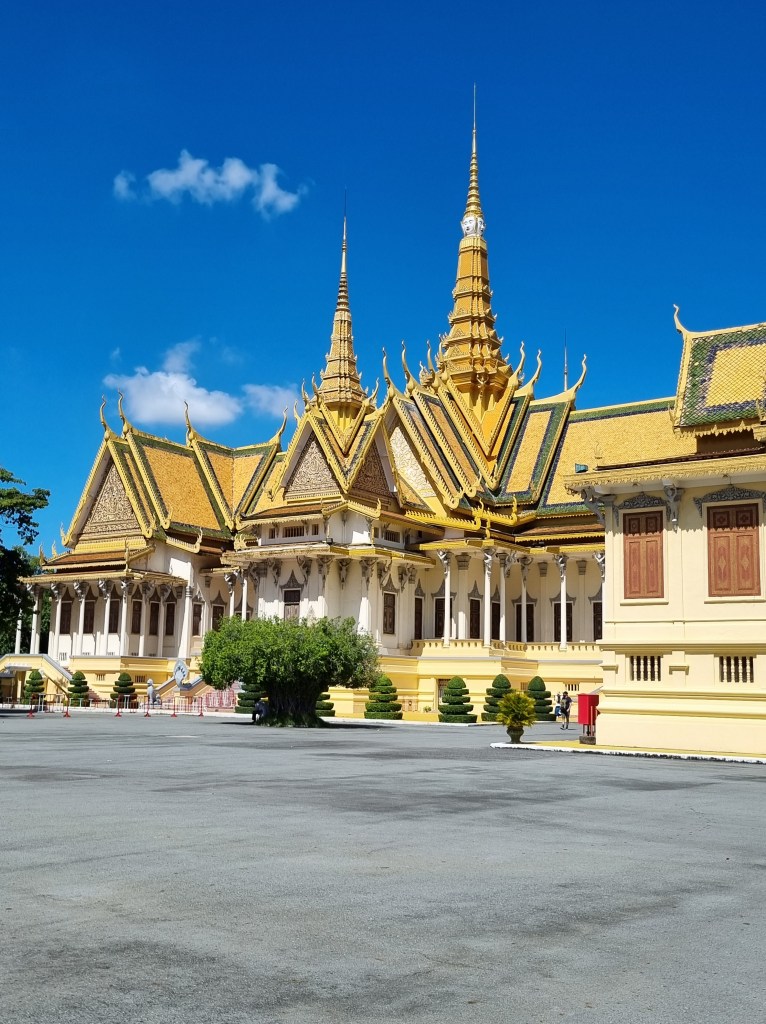
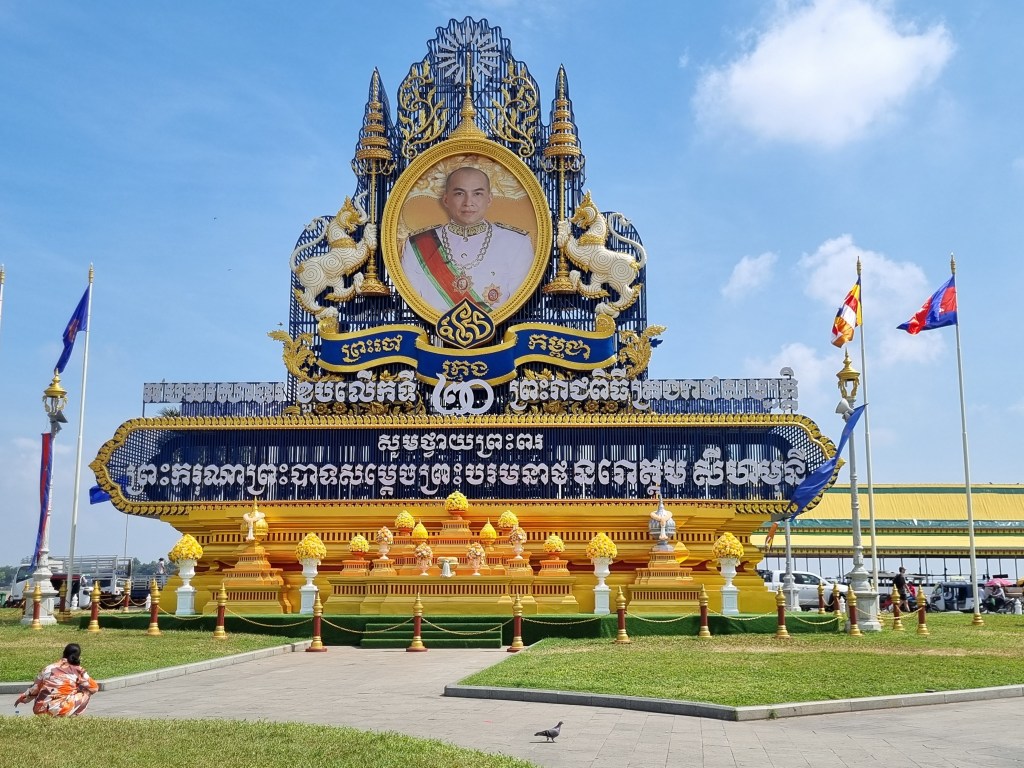
This grand, golden compound surrounded by ornate walls serves as a true Khmer cultural anchor to the people’s history. Our arrival coincided with the 20th Anniversary of the King’s Coronation, the celebration lasting four days with official ceremonies and fireworks each night.

Our hotel’s rooftop bar offered a stunning view of the Royal Palace.
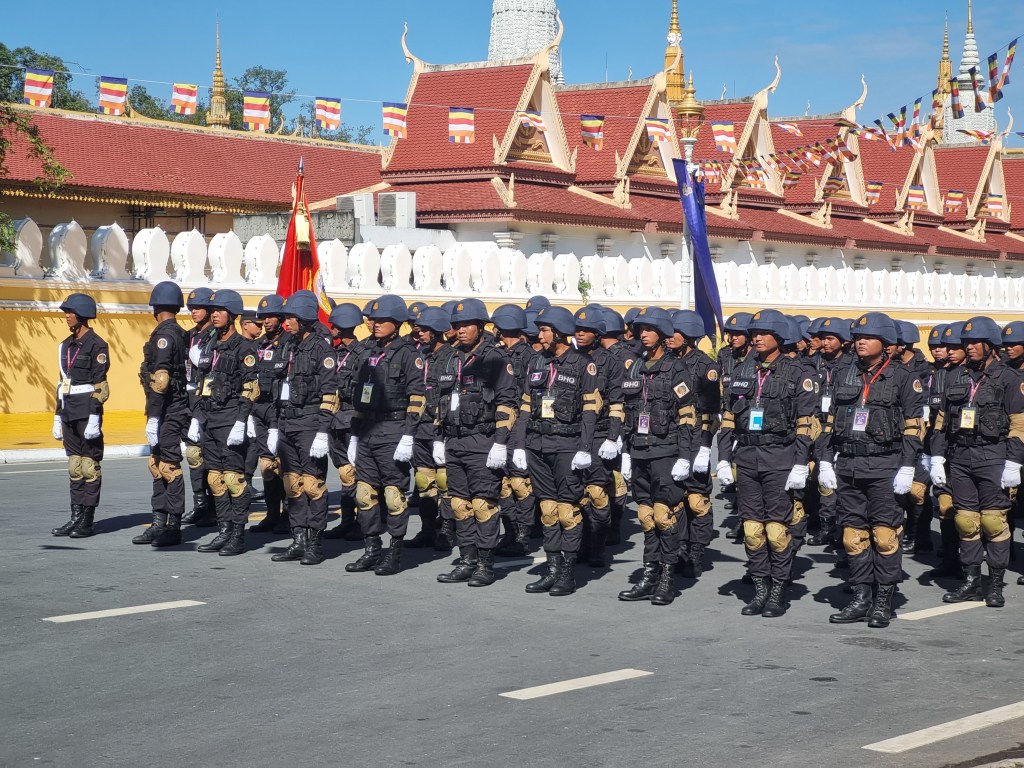
Knee pads and elbow guards – an essential accessory to every military uniform.
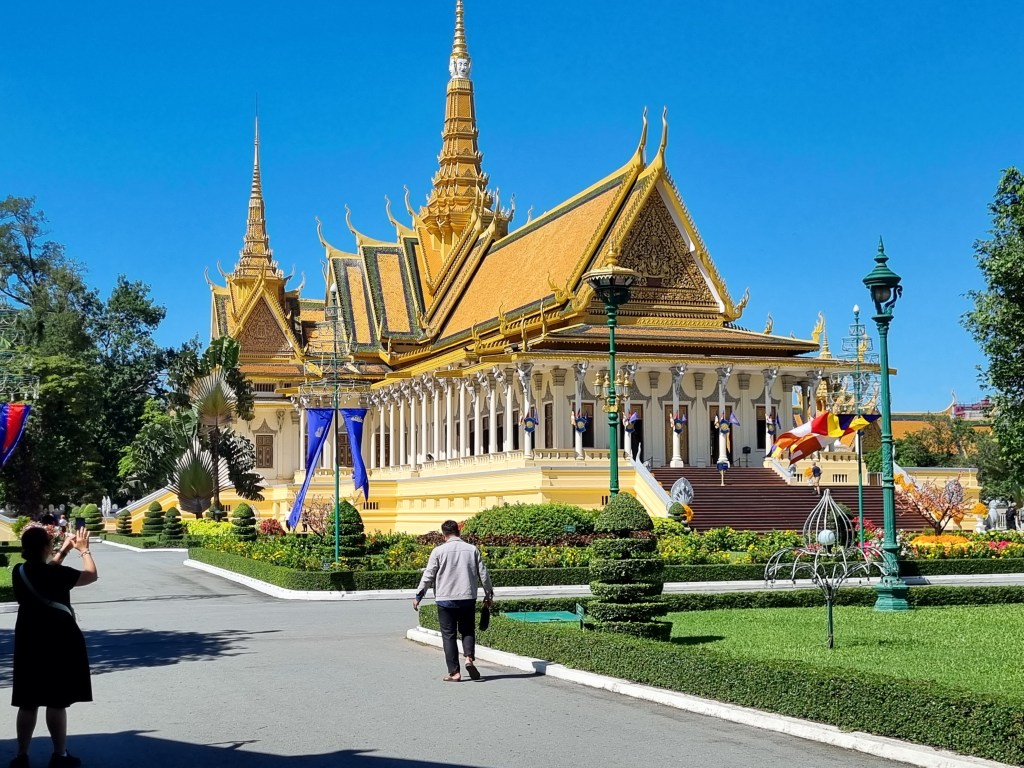
The moment you step onto the grounds of the Royal Palace, you’re hit by the quiet dignity. The landscaping provides a tranquility and sets off the opulence in the architecture. But, we were surprised that the colourful expanse of flowers on show in the flower beds and big earthenwar vases were fake.
The Throne Hall
Entry to this building is prohibited, its use limited to formal receptions and ceremonies. As you peek through the doors, all you can see is gold. The grand gold King’s throne takes pride of place in the centre, and is surrounded by other golden thrones and busts of royals.
The famous Silver Pagoda is certainly a sight to see. With a floor tiled with over 5,000 silver tiles, some now tarnished but others shiny and polished from stockinged feet (shoes off please!) it has been curated as a small museum with over 1,650 artifacts, mostly of Buddha, on display, made of various metals such as gold, silver, and bronze and adorned with precious stones. In the centre, is an emerald Buddha sitting atop a tall tower. Very eye catching!
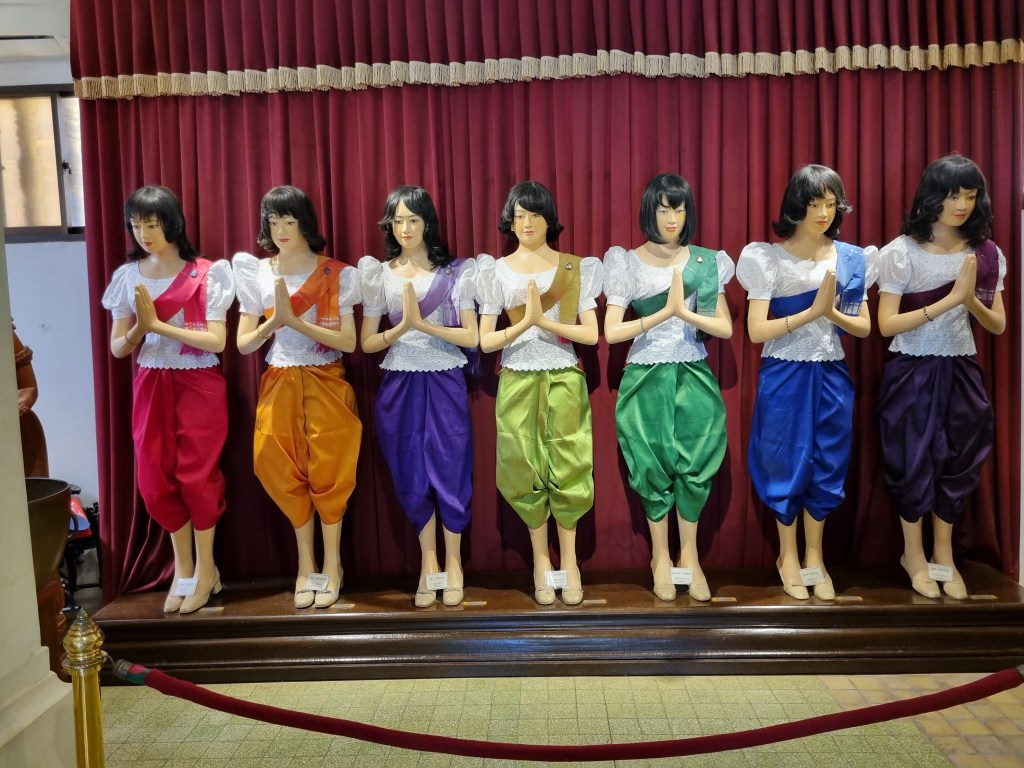
The temple contains exhibits of royal staff costumes. This one below is a collection of seven colourful Khmer costumes for the women, each one representing the traditional attire for different days of the week starting with Sunday on the left.
And, for the men….

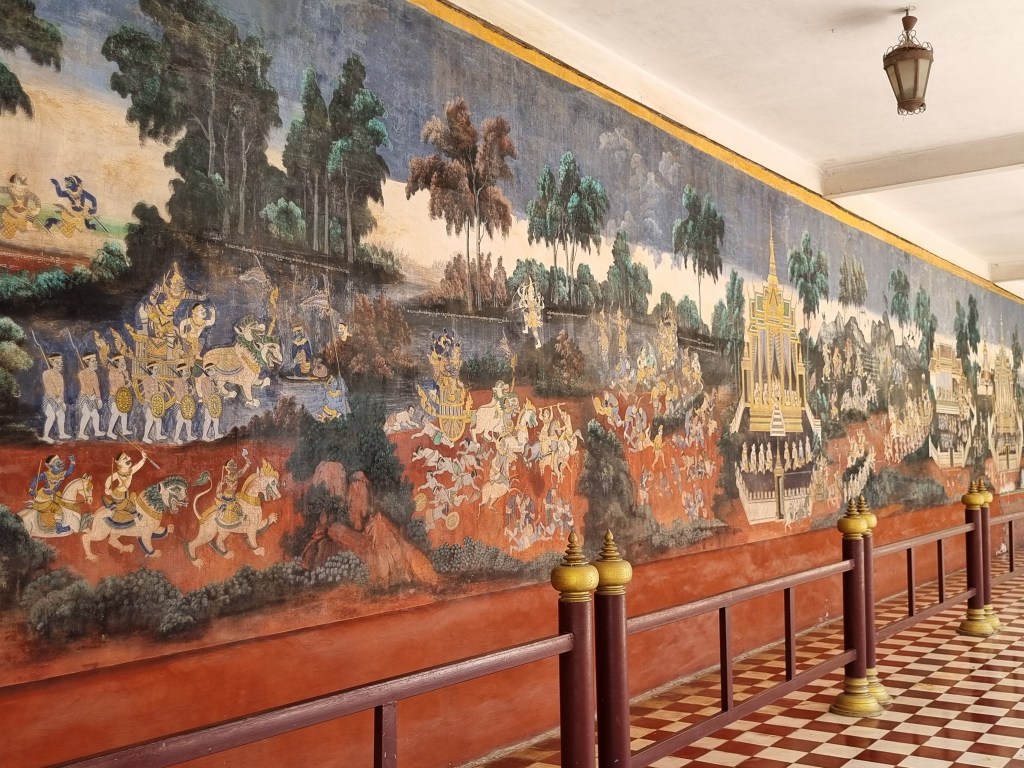
In the courtyard at the Silver Pagoda is this stunning mural. It’s 642 meters long and 3 meters high, painted between 1903 and 1904 by 40 Cambodian artists. During the Khmer Rouge era, much of the mural was damaged. Sections have now been restored, but some sections are being kept in its damaged state as a reminder of the dark days of the Khmer Rouge.
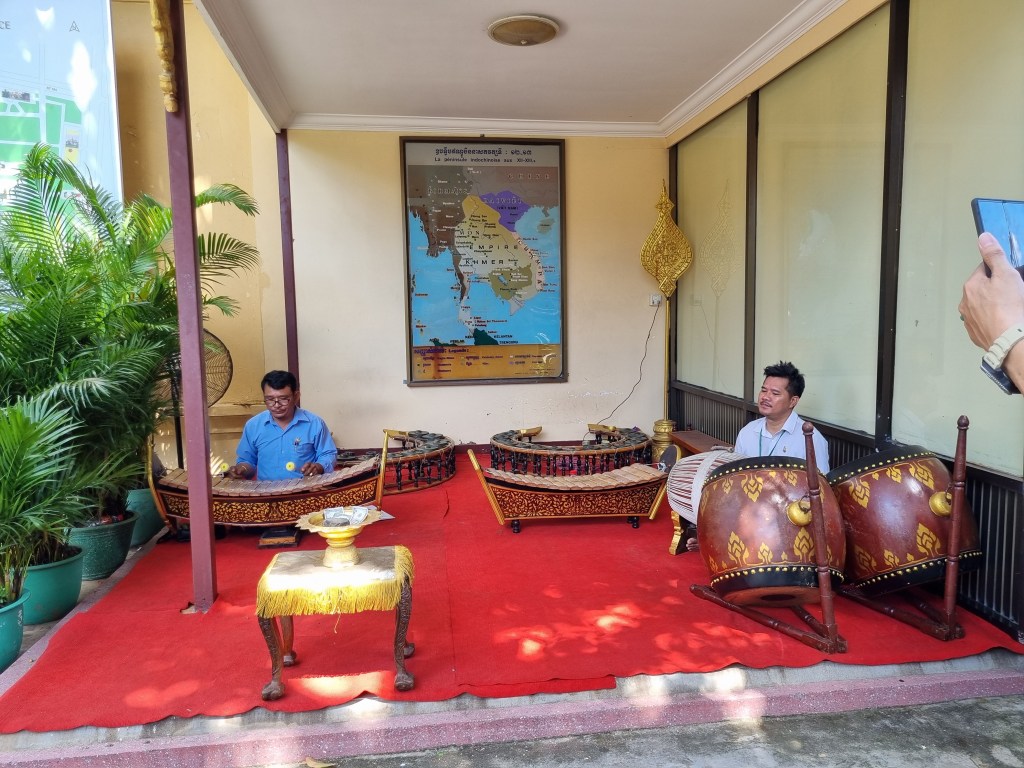
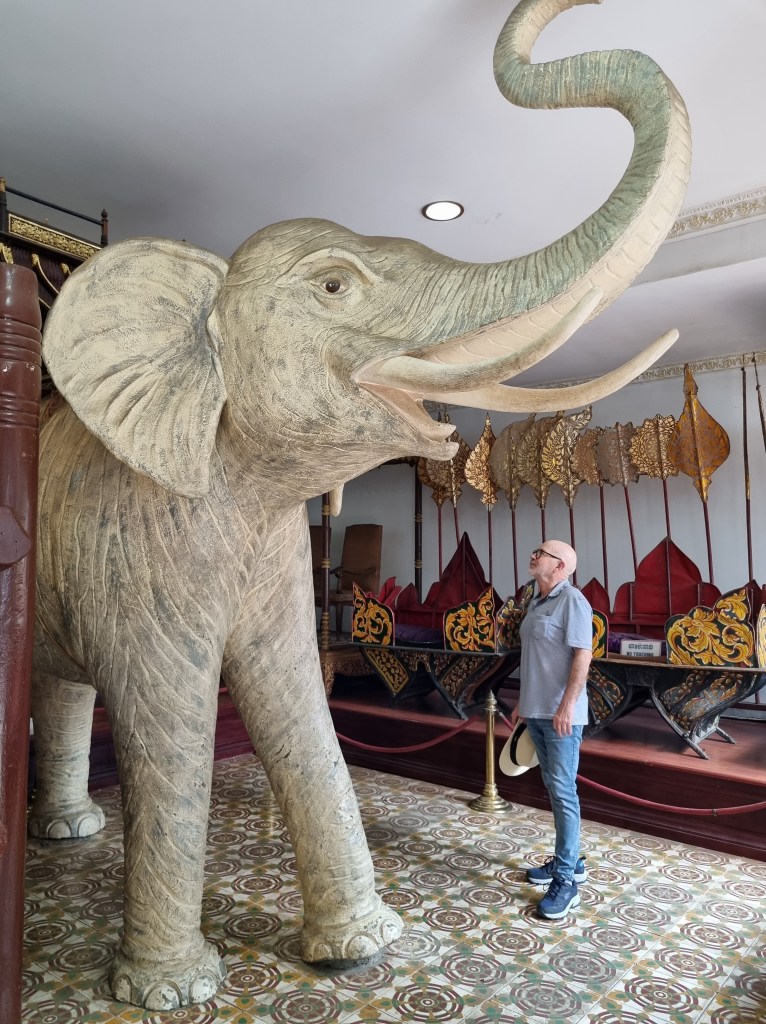
Visitors through the palace grounds are entertained by traditional music, and, although there are no longer elephants used to transport the Royals, their legacy remains.
The Cambodial people love their King, Norodom Sihamoni. He became King on 14 October 2004, a week after the abdication of his father. As a confirmed bachelor, the end of his reign will bring about an interesting changing of the guard.
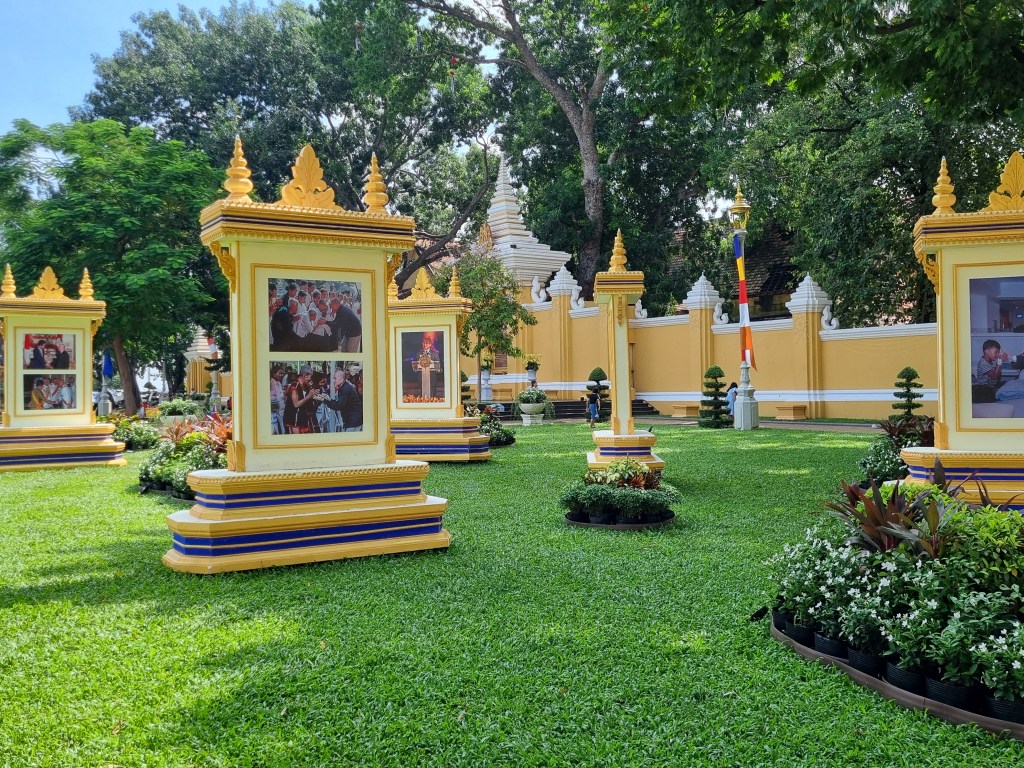
There’s a park outside the Palace gates set up as a photo gallery depicting his life as King, built with the gold and grandeur you’d expect.
Riverside Strolling along the Mekong
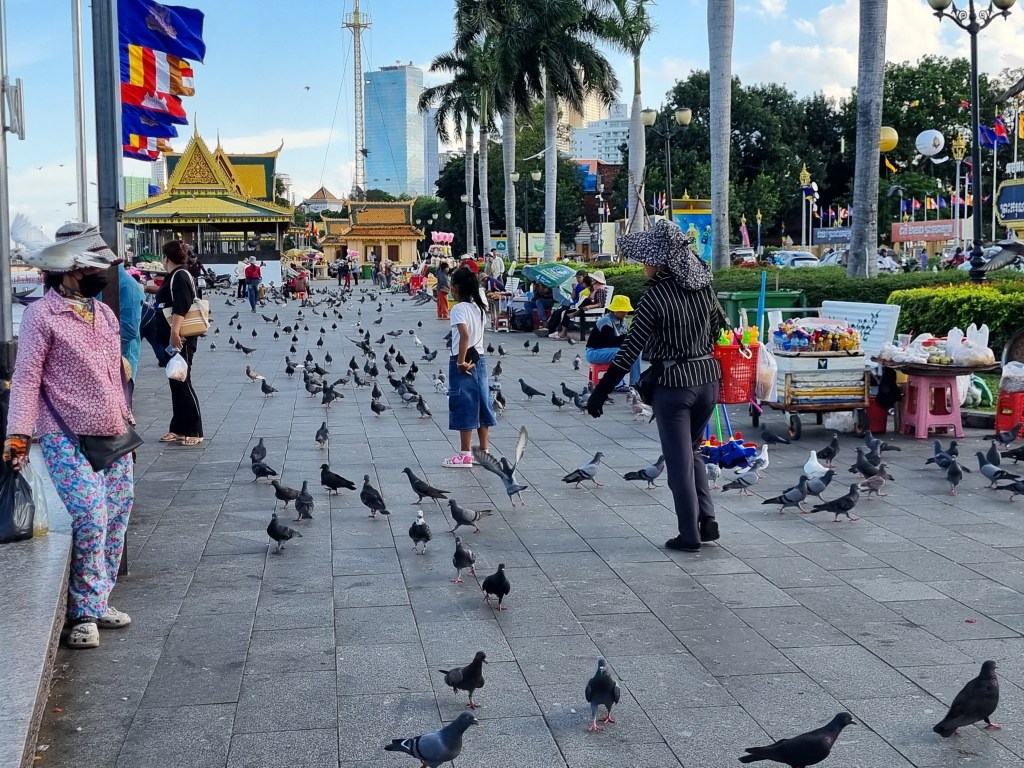
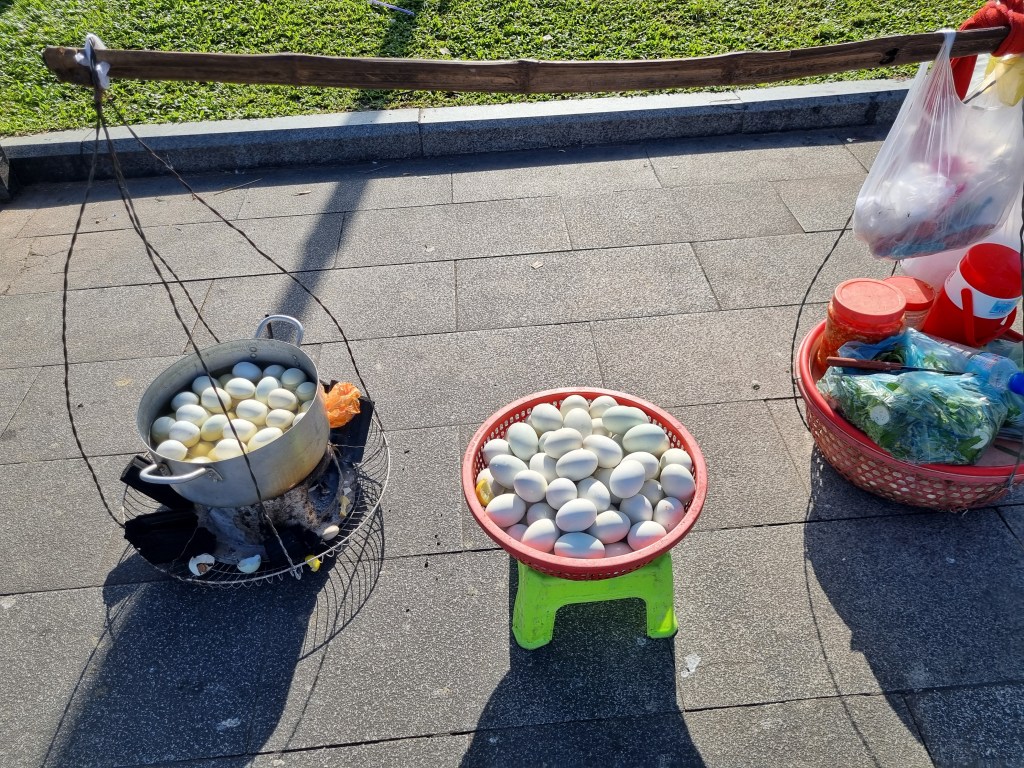
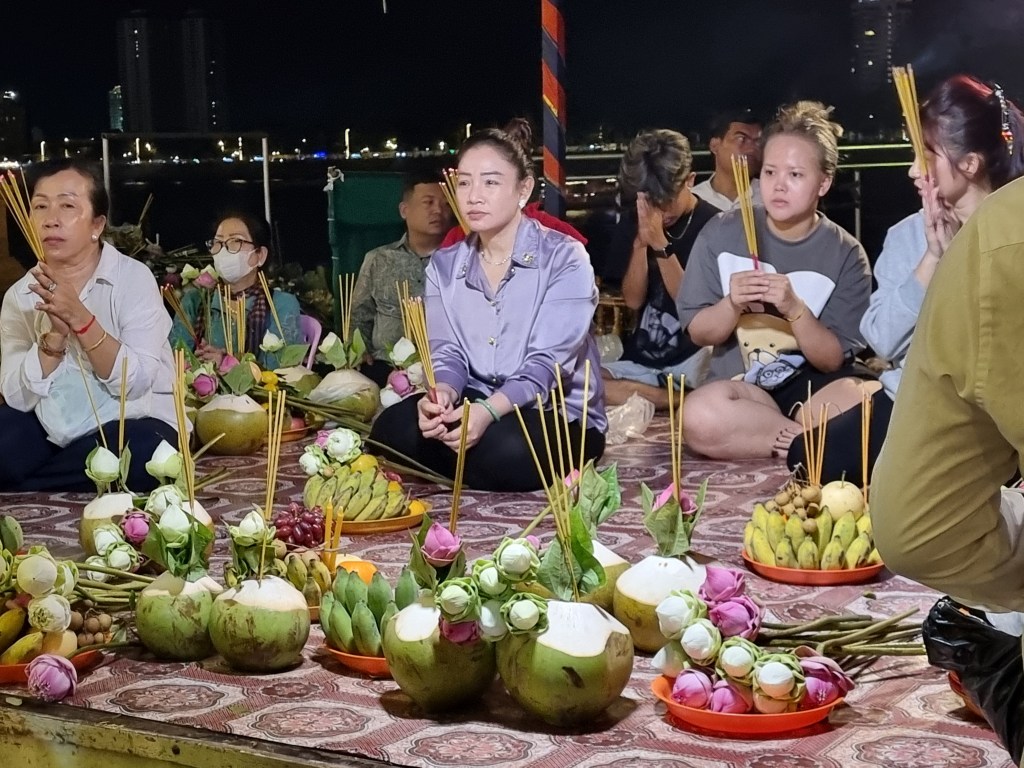
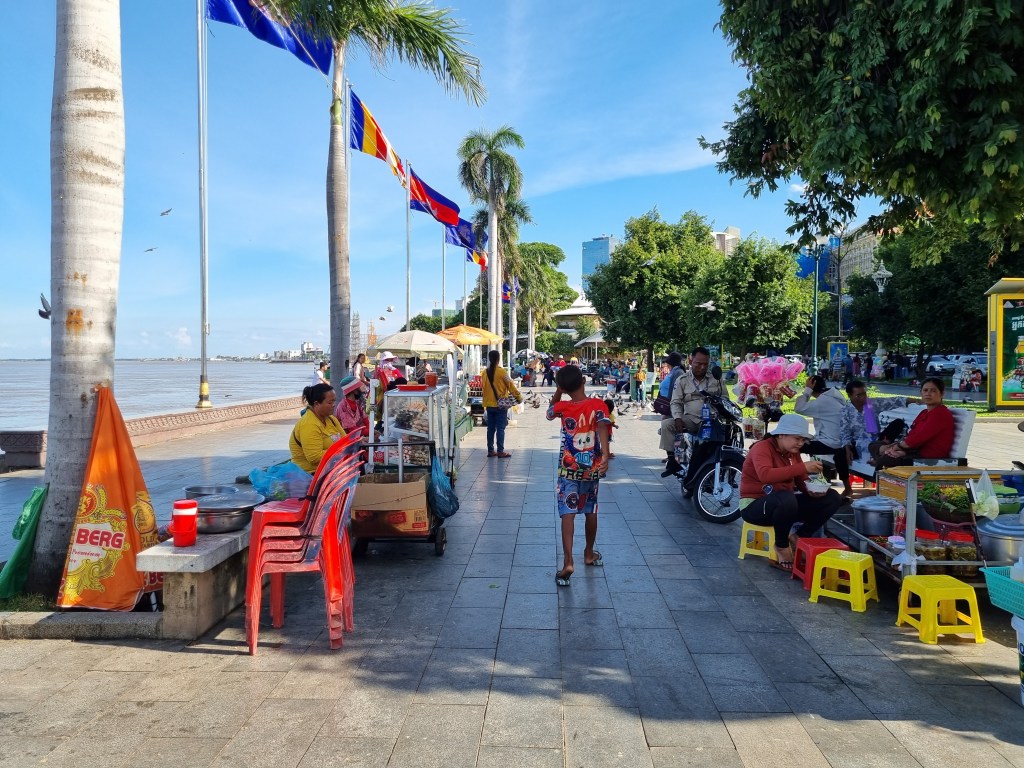
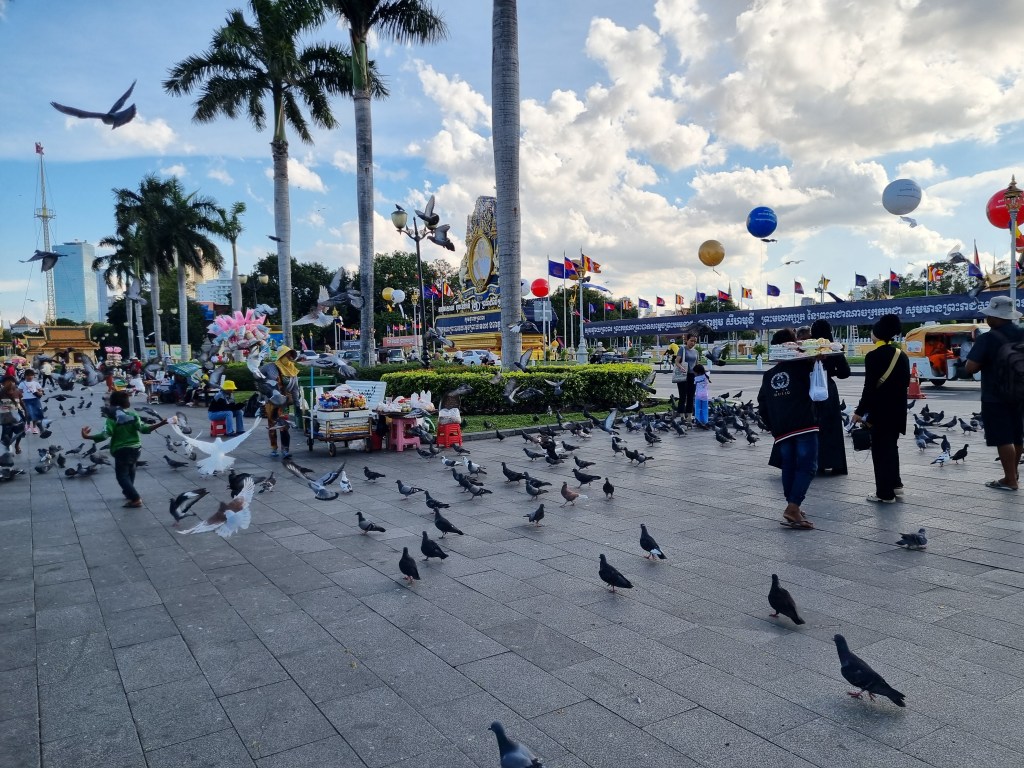
A short walk from the Palace Gate Hotel is Sisowath Quay, a long promenade that hugs the riverbank. Sisowath Quay comes alive in the late afternoon/evenings as a busy gathering place for locals, tourists and the city’s thousands of pigeons. The street hawkers line the walkway, peddling everything from cheap souvenirs to street food of all descriptions. Boiled eggs were plentiful. We came across a tiny temple where hundreds of locals were lined up to stream through its small room to burn incense and pray.
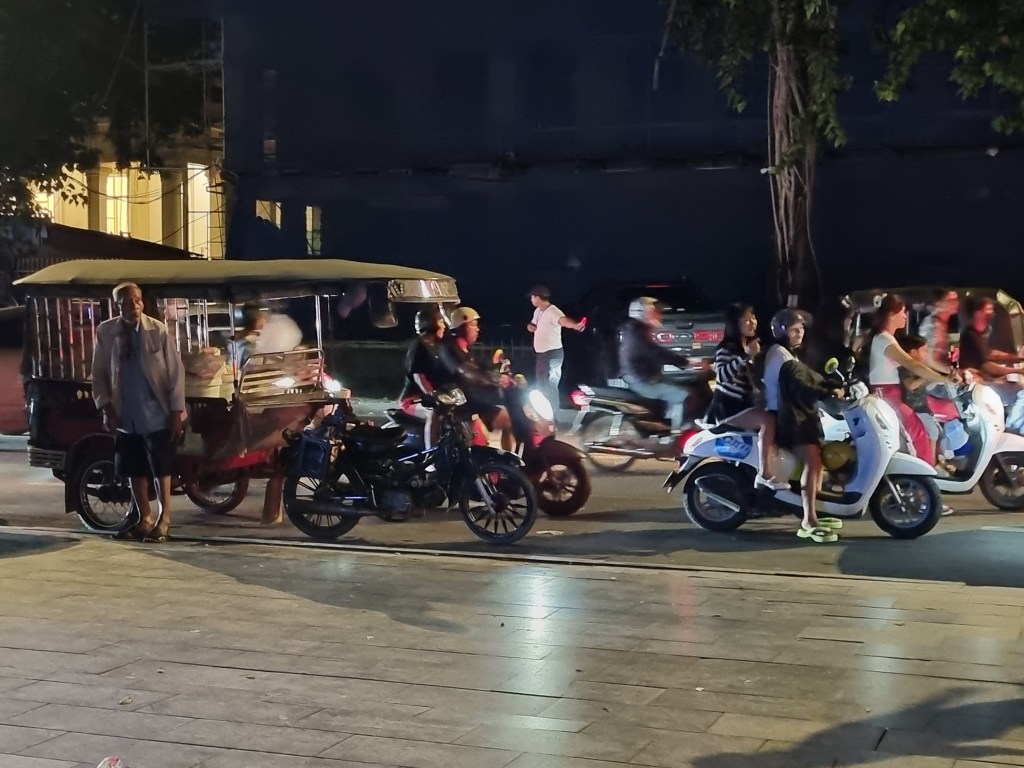
Sisowath Quay is a reminder of Phnom Penh’s organised chaotic rhythm that encompasses religion, food and calmness. This is also reflected in the traffic – no blaring horns, just a massive sea of moving vehicles of all sizes that seamlessly move in and out without order or road rules.
The Other Side of Phnom Penh
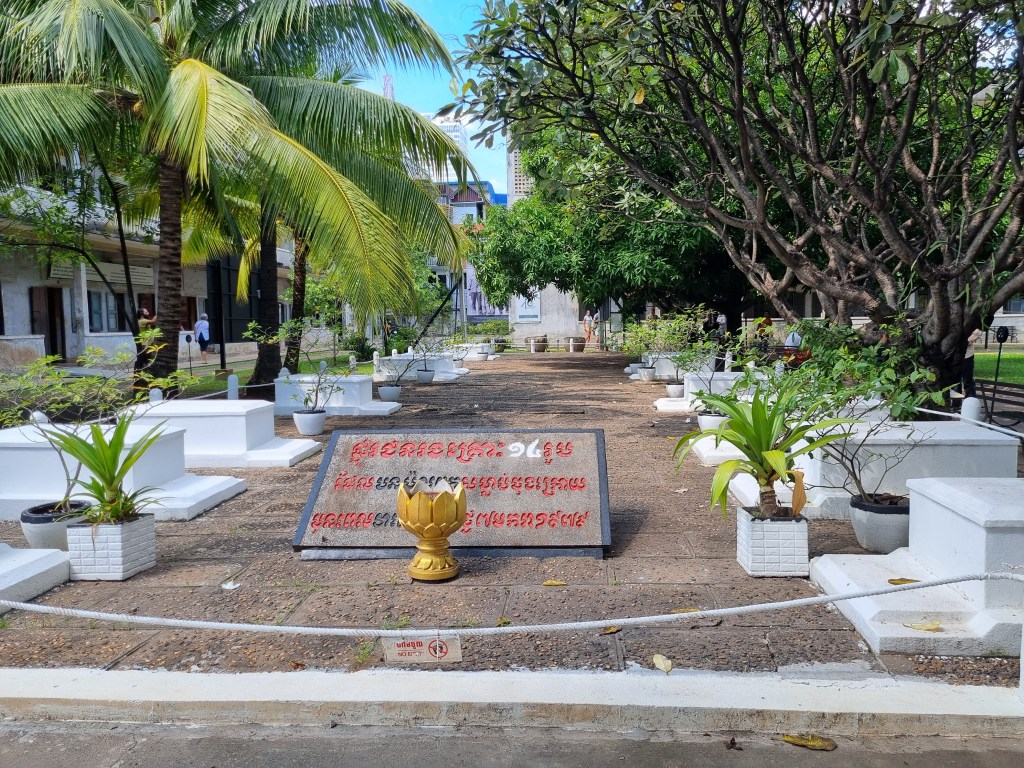
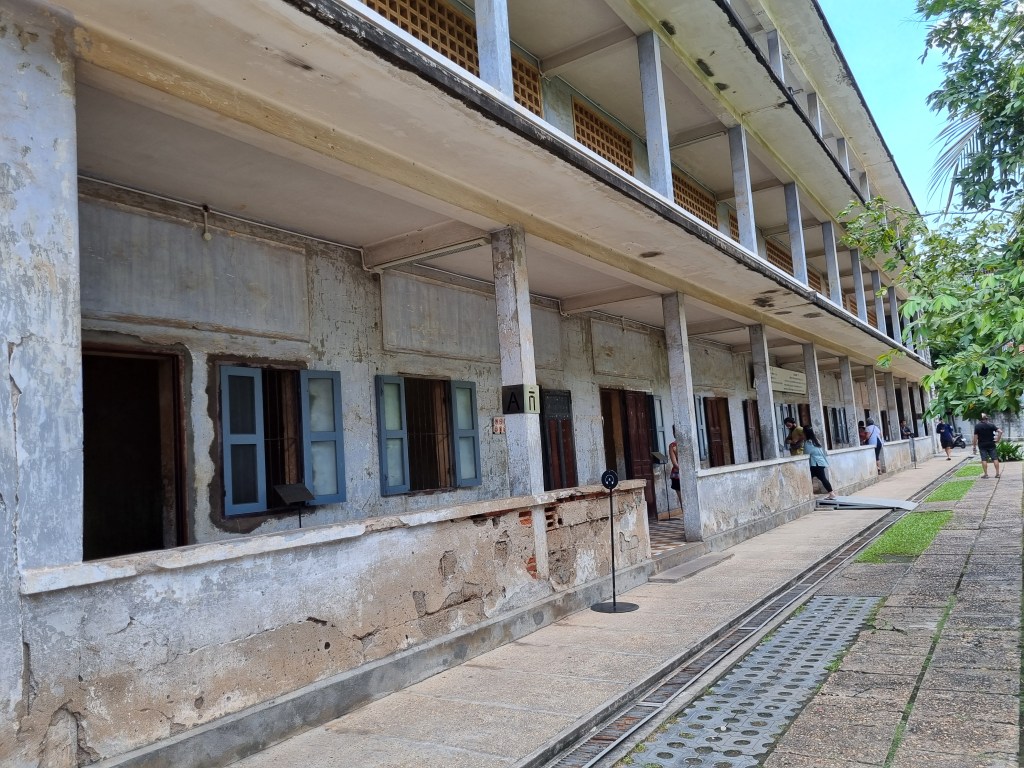
Just outside the city, the Choeung Ek Genocidal Center, also known as the Killing Fields, bears witness to the tragedies of the Khmer Rouge era. We chose not to visit the Killing Fields, choosing instead to visit the S21, or the Tuol Sleng Genocide Museum. Once a high school, it was turned into a prison by the Khmer Rouge where many people were tortured and killed. Now set up as a memorial/museum, you can see the faces of those who suffered here with walls and walls of photographs, a moving reminder of Cambodia’s resolve to remember, to heal, and to rebuild.
National Museum of Cambodia
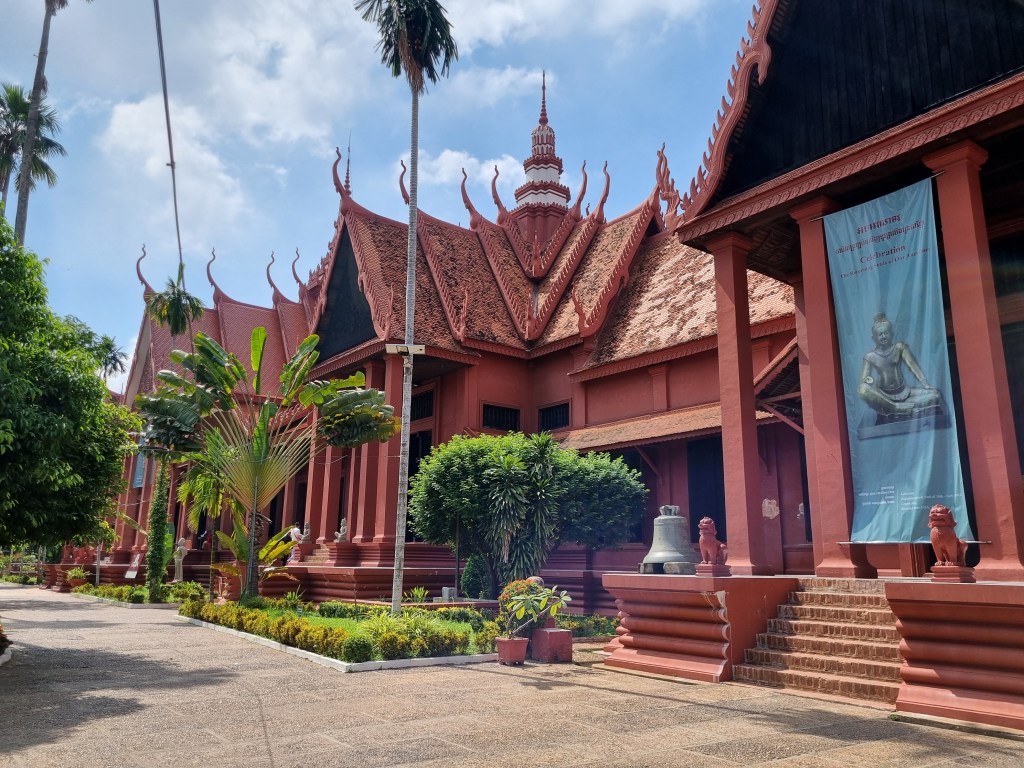
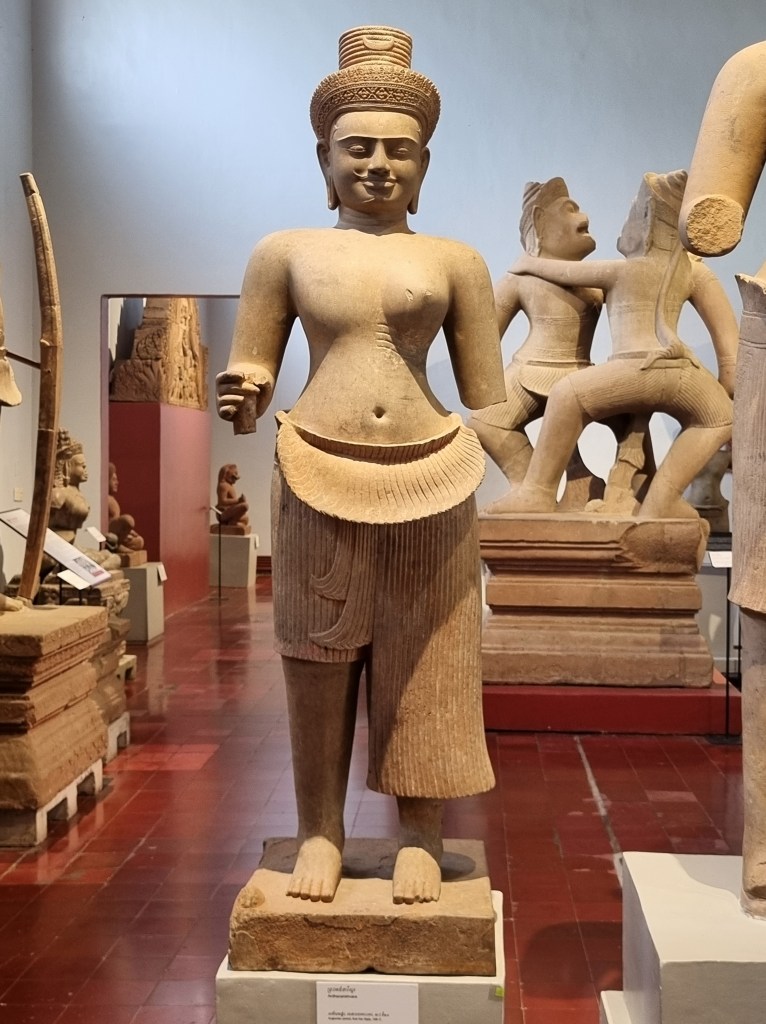
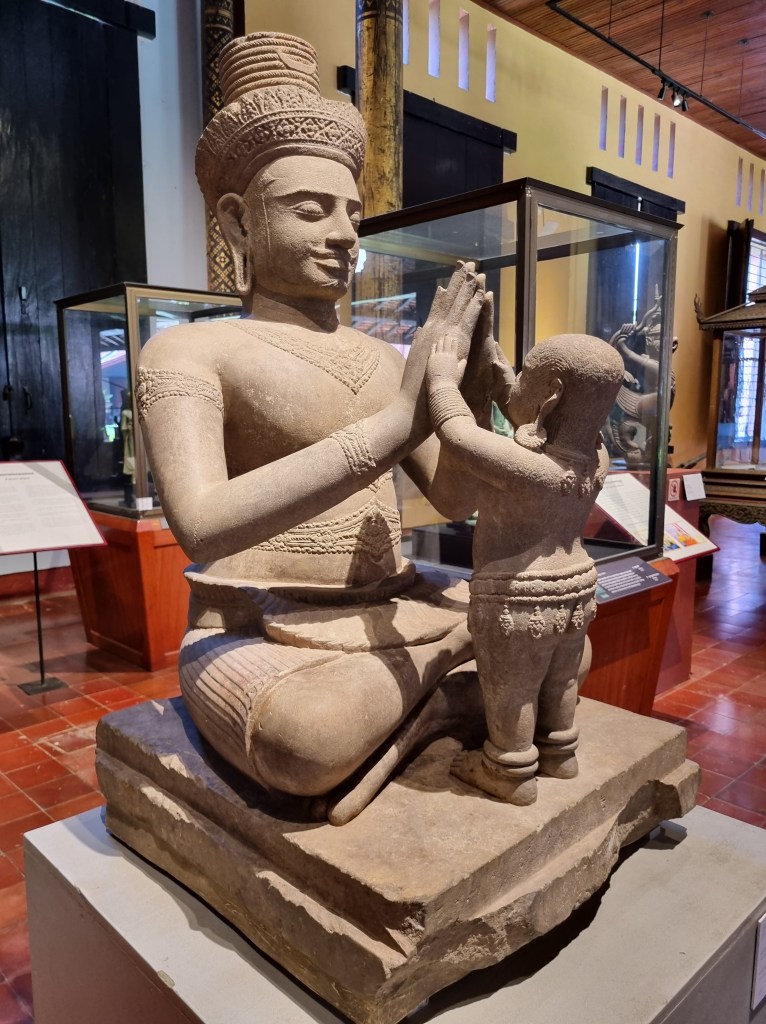
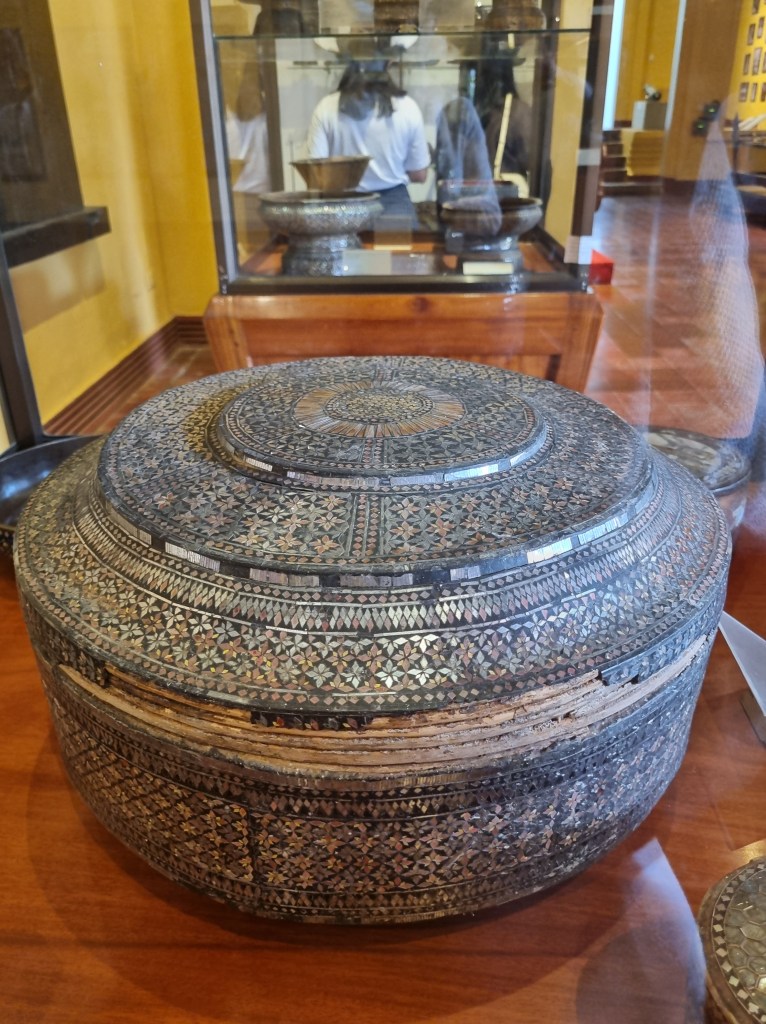
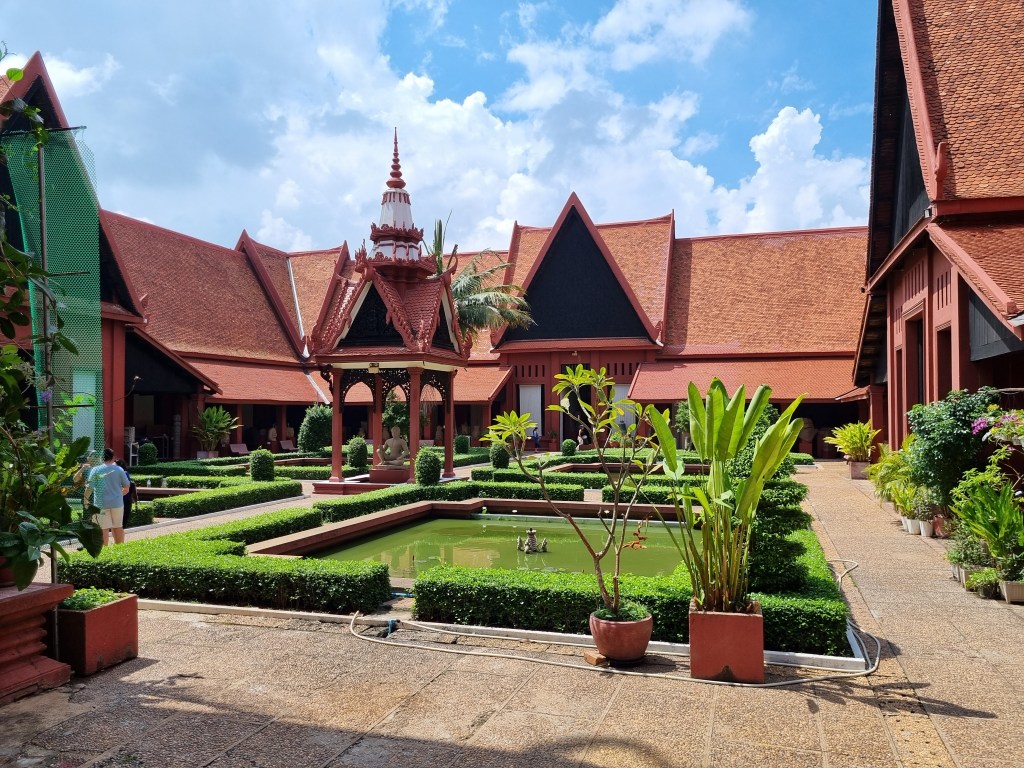
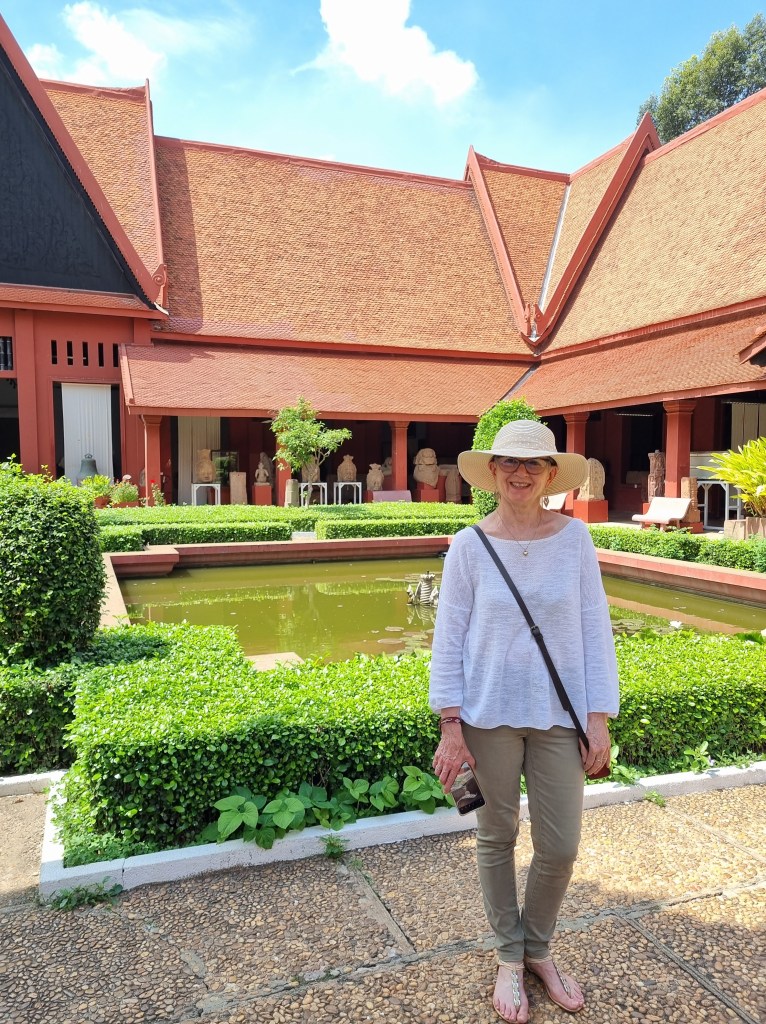
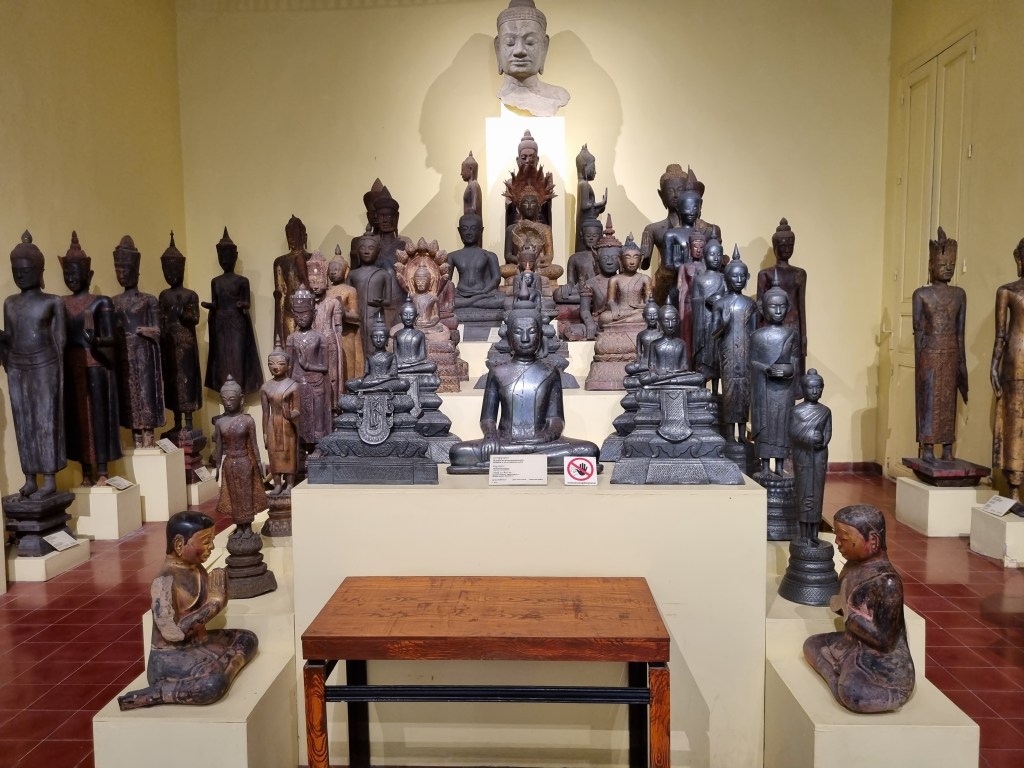
A short walk away from the Mekong took us to the National Museum of Cambodia. This Museum now has one of the largest collections of Khmer art and artifacts. During the regime of Khmer Rouge (from 1975 to 1979), aspects of Cambodian life including anything to do with their cultural history was damaged or destroyed. The museum was abandoned and fell into disrepair, its roof rotten and home to a vast colony of bats, the garden overgrown, and the collection in disarray, many objects damaged or stolen. Afterward the Khmer Rouge period, the museum was reopened and Cambodian artifacts were collected from many countries to replenish and record their cultural history.
A City that Grows on You
Our personal take on Phnom Penh – it’s a city that grows on you.
The longer you stay, the longer you want to stay to get to know more about its people, its history, its culture, its vibe. Five nights provided a mere glimpse.
Catherine & Jeff
 Food and Adventures Along the Way
Looks amazing. You should have been a travel writer!
LikeLike
Wouldn’t that be a great gig!
LikeLike